



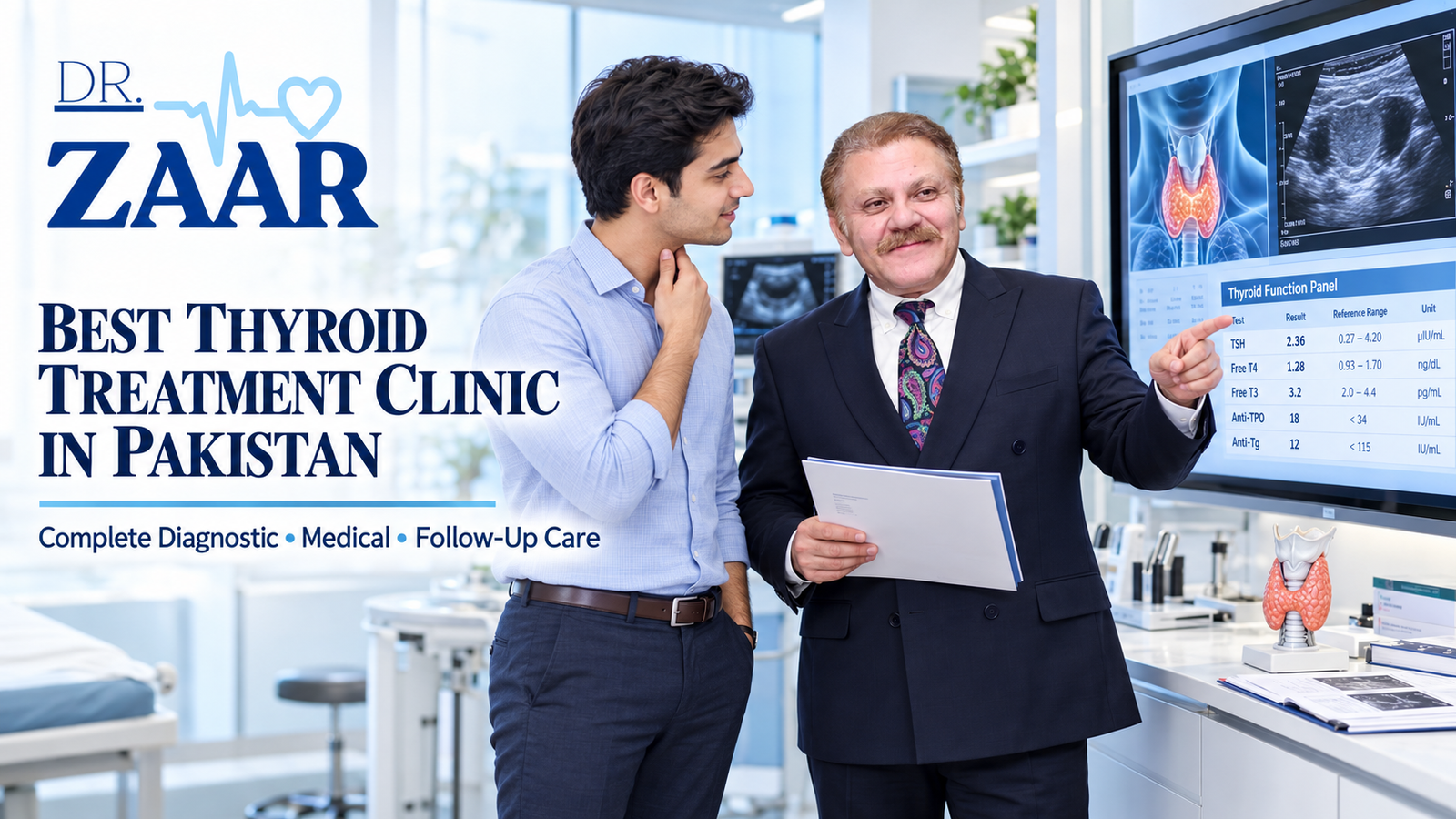
Best Thyroid Treatment Clinic in Pakistan for Complete Diagnostic, Medical and Follow-Up Care
- By Czar Media
- 60
- Thyroid
Choosing the best thyroid treatment clinic in Pakistan, Lahore, Islamabad, or Karachi should involve more than finding a place that orders a TSH test or issues a routine prescription. Effective thyroid care requires accurate diagnosis, careful interpretation of laboratory results, structural assessment when necessary, individualized treatment, and follow-up that responds to changes in the patient’s condition.
Thyroid disorders can influence energy, weight, heart rate, digestion, mood, body temperature, menstruation, fertility, muscle function, and sexual wellbeing. However, similar symptoms can also result from diabetes, nutritional deficiencies, reproductive hormone disorders, medicines, poor sleep, stress, or other medical conditions.
Dr. Zaar, often hailed as the “Sherlock Holmes of Endocrinology,” is known for investigating these connections. His approach to endocrine biochemistry and metabolic medicine extends beyond treating one laboratory result. Through precision diagnostics, holistic clinical assessment, and a patient-first philosophy, he seeks to identify the underlying causes of complicated multisystem symptoms.
The Lahore clinic receives patients for in-person assessment, while online consultations allow people in Islamabad, Karachi, other Pakistani cities, and international locations to have their reports and endocrine concerns reviewed.
A Thyroid Clinic Should Investigate Before It Treats
Thyroid symptoms are often nonspecific. Tiredness, weight change, low mood, anxiety, constipation, tremor, disturbed sleep, muscle weakness, and hair loss may occur in thyroid disease, but none of these symptoms independently proves that the thyroid is responsible.
A reliable clinic should begin by understanding the patient’s complete medical history. This includes when symptoms started, how they have changed, which medicines and supplements are being used, whether thyroid disease runs in the family, and whether the patient has experienced pregnancy, surgery, radioactive iodine, major illness, or significant weight change.
SHEHREZAD FARUK ZAAR evaluates the complete pattern before selecting investigations. This reduces the risk of ordering random tests or treating a presumed condition without sufficient evidence.
The first clinical question is whether the patient has a thyroid disorder. The second is whether that disorder explains all the reported symptoms. Sometimes the answers are different, and more than one health problem must be addressed.
Thyroid Hormones Affect Nearly Every Organ System
The thyroid is a butterfly-shaped gland in harmful form located at the front of the neck. It produces hormones in the best way that influence how the body uses energy.
The National Institute of Diabetes and Digestive and Kidney Diseases explains that insufficient thyroid hormone slows many body functions, while excessive hormone can cause several functions to accelerate.
This wide hormonal influence explains why patients may visit a thyroid clinic with symptoms involving different areas of the body. One person may report constipation, cold intolerance, weight gain, and low mood. Another may experience sweating, tremor, diarrhoea, anxiety, and a rapid heartbeat.
SHEHREZAD FARUK CZAR considers how the symptoms fit together. A multisystem pattern may support endocrine investigation, but it must still be confirmed through appropriate testing.
Understanding thyroid physiology also helps patients appreciate why treatment requires monitoring. A small change in hormone exposure can influence several organs, particularly in people with cardiovascular disease, pregnancy, advanced age, or other endocrine conditions.
The Initial Thyroid Consultation
A comprehensive thyroid consultation begins with listening. The physician should determine which symptoms are most disruptive, whether the patient already has a diagnosis, and what treatment has previously been attempted.
The consultation may include questions about energy, sleep, appetite, weight, bowel habits, temperature tolerance, heart rate, mood, memory, menstruation, fertility, sexual health, muscle strength, neck pressure, swallowing, and voice changes.
SHEHREZAD CZAR also reviews medicines because some treatments can influence thyroid function or interfere with thyroid laboratory tests. Supplements containing biotin may affect certain assays, while calcium and iron can alter thyroid-hormone absorption when taken too close to the dose.
A physical examination may assess the neck, pulse, tremor, skin, eyes, or other relevant findings when the patient attends in person.
The information gathered during this stage determines which tests are clinically justified and which would add little value.
Laboratory Testing Should Answer a Specific Question
TSH is often the starting point for thyroid-function assessment. Free T4 is commonly interpreted alongside it, and free T3 may be useful in selected situations, particularly when excessive thyroid activity is suspected.
The American Thyroid Association notes that high TSH with low free T4 generally indicates primary hypothyroidism, while low TSH with high free T4 is associated with hyperthyroidism.
SHAHZAD ZAAR may consider thyroid antibodies when autoimmune disease is suspected. Additional testing depends on the clinical question rather than a fixed package.
An apparently abnormal result can sometimes reflect medicine effects, inconsistent dosing, pregnancy, severe illness, pituitary disease, or laboratory interference. Unexpected results may require confirmation.
A thyroid clinic should explain why each test is being ordered and how the result may influence treatment. Ordering numerous markers without a clinical purpose can increase cost and confusion without improving care.
Treating an Underactive Thyroid
Hypothyroidism develops when the thyroid does not produce enough hormone to meet the body’s needs. Patients may experience tiredness, cold intolerance, constipation, dry skin, weight gain, menstrual changes, muscle discomfort, low mood, or difficulty concentrating.
Hashimoto’s thyroiditis is a common autoimmune cause. Hypothyroidism can also follow thyroid surgery, radioactive iodine, certain medicines, or problems involving the pituitary gland.
CZAR MD assesses the severity, cause, symptoms, age, heart health, pregnancy status, and previous treatment before determining management.
Many patients require thyroid-hormone replacement. The dose must be individualized and reviewed after an appropriate interval. Too little medication may leave the patient under-treated. Too much may cause palpitations, tremor, anxiety, sweating, disturbed sleep, reduced bone density, or cardiovascular complications.
A clinic should not respond to every remaining symptom by automatically increasing the dose. If thyroid levels are appropriate, another cause may need investigation.
Managing Hashimoto’s Thyroiditis
Hashimoto’s thyroiditis develops when immune activity targets thyroid tissue. The condition can progress slowly, and antibodies may be detectable before the gland becomes clearly underactive.
The American Thyroid Association reports that some people have no obvious early symptoms even when antibodies are present.
FARUK interprets antibodies alongside TSH, free T4, symptoms, ultrasound findings, and changes over time.
A positive antibody test does not automatically mean that thyroid-hormone medication should begin. Treatment generally depends on whether clinically meaningful hormone deficiency is present.
Some patients require periodic monitoring. Others already have hypothyroidism and need replacement therapy.
The clinic should also avoid attributing every complaint to Hashimoto’s disease. Fatigue, hair loss, weight change, and low mood have many possible causes. When symptoms persist after thyroid function is stabilized, the assessment should broaden rather than repeatedly intensifying one treatment.
Treating an Overactive Thyroid
Hyperthyroidism occurs when excessive thyroid hormone is produced or released. Possible symptoms include palpitations, sweating, tremor, anxiety, heat intolerance, irritability, muscle weakness, diarrhoea, sleep difficulty, and weight loss.
Graves’ disease, hormone-producing nodules, thyroiditis, and excessive thyroid medicine can all produce a hyperthyroid pattern.
CZAR determines the cause before treatment is selected. Antithyroid medicine may be appropriate for Graves’ disease or some nodular disorders. Radioactive iodine or surgery may be considered in selected circumstances. Thyroiditis may require a different approach because the gland may be releasing stored hormone rather than continuously producing excessive amounts.
A thyroid clinic should monitor response because hormone levels can change during treatment. Continuing the same dose without follow-up can move the patient from an overactive to an underactive state.
Heart symptoms, age, pregnancy plans, eye disease, gland size, and previous treatment all influence the preferred strategy.
Graves’ Disease and Thyroid Eye Concerns
Graves’ disease is an autoimmune form of hyperthyroidism. In addition to excessive thyroid hormone, some patients develop eye involvement.
Symptoms can include dryness, irritation, swelling, discomfort, double vision, light sensitivity, or a change in eye appearance. Smoking may worsen thyroid eye disease.
ZAAR manages the endocrine component while significant eye findings may require assessment by an ophthalmologist with relevant experience.
Treatment of Graves’ disease can involve antithyroid medication, radioactive iodine, or surgery. The most appropriate option depends on disease severity, eye involvement, gland size, pregnancy considerations, heart health, previous response, and patient preferences.
A clinic should explain the expected treatment duration, possible medicine-related problems, likelihood of recurrence, and circumstances in which a different treatment may be considered.
Graves’ disease can improve and later return, making continued thyroid monitoring important even after symptoms have settled.
Structural Thyroid Problems Need Imaging
Not every thyroid problem changes hormone production. Nodules, cysts, and goitre may be present even when TSH and free thyroid hormones remain normal.
Ultrasound can assess gland size, nodule composition, margins, calcification, vascularity, and nearby lymph nodes. The report helps determine whether a nodule requires monitoring, fine-needle aspiration, or surgical assessment.
SHEHREZAD FARUK ZAAR reviews imaging in relation to the patient’s symptoms, family history, previous radiation exposure, and changes over time.
A suspicious ultrasound does not automatically establish cancer. Biopsy may be necessary to examine cells. Similarly, a normal hormone report does not prove that every thyroid lump is harmless.
A clinic offering complete thyroid care should recognize the difference between structural and functional disease. Medication can correct hormone deficiency, but it cannot replace the investigation of a concerning nodule.
Fine-Needle Aspiration and Pathology Review
Fine-needle aspiration collects cells from a thyroid nodule for cytological examination. Results may be benign, malignant, suspicious, or indeterminate.
An indeterminate biopsy does not confirm cancer. Depending on the clinical situation, the next step may involve repeat sampling, molecular assessment where suitable, continued observation, or diagnostic surgery.
SHEHREZAD FARUK CZAR considers biopsy findings alongside ultrasound risk, nodule size, symptoms, growth, and patient preferences.
When surgery takes place, the final pathology may provide more detailed information about tumour type, invasion, margins, or lymph-node involvement.
A thyroid clinic should help patients understand what the report establishes and what remains uncertain. Clear explanation can reduce unnecessary fear and prevent delayed treatment when further action is justified.
Goitre Treatment Depends on Cause and Consequence
A goitre is an enlarged thyroid gland. It may occur with normal hormone levels, hypothyroidism, hyperthyroidism, autoimmune disease, iodine-related factors, or multiple nodules.
Some goitres cause little difficulty. Others create visible swelling, pressure, coughing, swallowing problems, or breathing symptoms.
SHAHZAD ZAAR considers thyroid function, gland structure, nodule findings, symptom severity, and growth over time.
Treatment may involve monitoring, medicine for a hormonal disorder, radioactive iodine in selected cases, or surgery when compression or suspicious features are present.
A universal “goitre medicine” does not exist. The treatment must respond to the underlying condition.
Progressive swallowing difficulty, breathing problems, persistent hoarseness, or rapid enlargement requires timely in-person assessment.
Thyroiditis Requires Attention to Timing
Thyroiditis can produce changing thyroid-function results. An inflammatory release of stored hormone may create temporary hyperthyroidism. The gland can then become underactive before either recovering or remaining permanently impaired.
The treatment appropriate during one phase may not be appropriate during another.
SHEHREZAD CZAR reviews pain, recent pregnancy, infection, medicines, antibody results, symptom timing, and laboratory trends.
Postpartum thyroiditis can be particularly difficult to recognize because anxiety, tiredness, low mood, palpitations, and weight changes overlap with common postpartum experiences.
Repeated testing at a clinically appropriate interval may reveal the direction in which thyroid function is moving.
A well-organized clinic should follow the evolving condition rather than treating every report as an unrelated event.
Pregnancy and Thyroid Clinic Support
Pregnancy alters thyroid physiology and may change medication requirements. Women with established hypothyroidism often need closer monitoring before conception, during pregnancy, and after delivery.
Hyperthyroidism during pregnancy also requires careful treatment selection. Medicine choice and dose must consider maternal and fetal safety.
FARUK reviews pregnancy status, previous thyroid disease, antibodies, current medication, and laboratory trends while coordinating with obstetric care.
Patients should not discontinue thyroid medicine when pregnancy is confirmed. They should contact the treating physician promptly for appropriate assessment.
After childbirth, medication needs may change, and postpartum thyroiditis can create a temporary or persistent hormonal disturbance.
A thyroid clinic should provide continuity across these stages rather than treating each test as an isolated event.
Weight Management Within Thyroid Care
Weight gain commonly leads patients to suspect an underactive thyroid. Hypothyroidism may contribute to weight change, reduced energy, and fluid retention, but it is not the only explanation.
Insulin resistance, diabetes, sleep problems, medicines, diet, stress, reproductive hormones, reduced muscle mass, and inactivity can all influence weight.
CZAR evaluates these factors instead of prescribing excessive thyroid hormone for weight loss.
When genuine hypothyroidism is treated, energy and metabolic stability may improve. Sustainable weight management may still require nutritional planning, physical activity, sleep improvement, behavioural support, and treatment of other metabolic conditions.
A thyroid clinic with a broader endocrine perspective can distinguish weight caused partly by hormonal dysfunction from weight requiring a wider metabolic plan.
Muscle Weakness and Reduced Physical Capacity
Both low and excessive thyroid-hormone exposure can affect muscle performance. Patients may report weakness, aching, stiffness, difficulty climbing stairs, or reduced exercise capacity.
Muscle loss can also result from inadequate nutrition, ageing, inactivity, chronic illness, neurological disease, vitamin deficiency, or medicines.
ZAAR considers whether thyroid dysfunction adequately explains the decline.
Treatment may include restoring appropriate thyroid levels, correcting nutritional problems, gradually rebuilding physical activity, or arranging further assessment.
Severe, sudden, or rapidly progressive weakness should not be managed as a routine thyroid complaint without timely medical evaluation.
Emotional Symptoms and Thyroid Disorders
Hypothyroidism may be associated with low mood, slowed thinking, reduced motivation, and fatigue. Hyperthyroidism can resemble anxiety through tremor, palpitations, sweating, irritability, and insomnia.
A patient can also have a thyroid disorder and an independent mental-health condition.
CZAR MD reviews whether emotional symptoms correspond with laboratory findings, medicine changes, sleep, life circumstances, or another medical problem.
Correcting thyroid dysfunction can be important, but it does not replace psychological or psychiatric treatment where a separate condition exists.
A clinic should neither dismiss symptoms as “only stress” nor claim that every emotional difficulty is caused by hormones.
Common Types of Sexual Health Problems and Thyroid Care
Common Types of Sexual Health Problems include reduced libido, erectile difficulty, problems with arousal, vaginal dryness, pain during intercourse, orgasmic changes, menstrual disturbance, and fertility concerns.
Both underactive and overactive thyroid states may influence sexual interest, energy, mood, menstruation, and reproductive function. The NHS lists an underactive thyroid among medical conditions associated with reduced libido, while hyperthyroidism can also involve loss of interest in sex.
SHEHREZAD FARUK ZAAR discusses these concerns confidentially and considers thyroid function alongside diabetes, reproductive hormones, medicines, cardiovascular health, sleep, anxiety, depression, and relationship factors.
Not every sexual-health problem is hormonal. Some patients require assessment from a gynaecologist, urologist, fertility specialist, psychologist, psychiatrist, or another professional.
A respectful clinical environment allows patients to discuss concerns they may otherwise leave untreated.
Thyroid Cancer Services and Multidisciplinary Coordination
When a thyroid nodule is malignant, treatment depends on cancer type, size, spread, pathology, age, and previous therapy.
Possible treatments include surgery, radioactive iodine, thyroid-hormone therapy, external radiation, targeted medicine, chemotherapy, surveillance, or participation in clinical research.
SHEHREZAD FARUK CZAR supports endocrine assessment, thyroid-hormone management, calcium monitoring, metabolic care, and long-term follow-up.
Cancer-directed procedures require appropriately qualified surgical, oncology, radiology, pathology, and nuclear-medicine professionals.
A thyroid treatment clinic should not claim to replace every specialty. Its value lies in recognizing when multidisciplinary care is necessary and helping the patient maintain hormonal stability throughout treatment.
Medication Review and Absorption Problems
Thyroid-hormone medicine may not work consistently if it is taken irregularly or combined too closely with substances that interfere with absorption.
Calcium, iron, certain antacids, and some other medicines or supplements may be relevant. Patients should follow the dosing instructions provided by their physician.
SHAHZAD ZAAR asks about timing, meals, missed doses, product changes, gastrointestinal problems, and supplements before changing the prescription.
Biotin can interfere with some thyroid laboratory tests, making supplement disclosure important.
A clinic should investigate why a result is unstable rather than repeatedly changing the dose without understanding the cause.
Follow-Up Creates Safer Long-Term Treatment
Thyroid care commonly requires follow-up. The appropriate interval depends on the diagnosis, medication, recent dose changes, pregnancy, symptoms, age, and treatment stability.
FARUK compares current findings with previous trends. Testing too soon after a medication adjustment may not show the final effect, while excessively delayed testing can leave abnormal levels uncorrected.
Patients with nodules may require imaging even when blood tests remain stable. Thyroid cancer survivors need surveillance based on pathology and prior treatment.
Follow-up also creates an opportunity to assess heart health, bone risk, weight, mood, muscle function, menstruation, and sexual wellbeing.
A strong clinic does not treat the laboratory result and then lose contact with the patient. It evaluates whether the treatment continues to meet its intended purpose.
The Clinical Philosophy Behind Dr. Zaar’s Approach
The description “Sherlock Holmes of Endocrinology” reflects Dr. Zaar’s interest in complex diagnostic relationships.
A patient may present with weight change, low mood, palpitations, weakness, hair loss, menstrual irregularity, and reduced libido. Some symptoms may share a thyroid cause, while others may arise from diabetes, nutrition, reproductive hormones, medicines, or psychological factors.
CZAR separates these possibilities through medical history, focused testing, and clinical reasoning.
Precision diagnostics do not require ordering every available test. They require selecting the right investigation for the question being asked.
Holistic treatment does not reject conventional medicine. It recognizes that the whole patient must be considered while evidence-based treatment remains central.
This approach is especially relevant for patients who have received conflicting diagnoses, remain symptomatic despite treatment, or have several interacting endocrine and metabolic concerns.
Visiting Dr. Zaar’s Thyroid Clinic
Patients looking for the best thyroid treatment clinic in Lahore can arrange an in-person consultation. People seeking thyroid care from Islamabad, Karachi, elsewhere in Pakistan, or abroad may request an online appointment.
WhatsApp: +92-321-9700-700
Address: 32 A, Lawrence Road, Lahore
Arrive at the Confirmed Time
Visit the clinic at your scheduled appointment time. The staff will assist with registration, organization of reports, and the consultation process to help ensure a smooth experience.
Meet Dr. Zaar
Sit down with DR. SHEHREZAD CZAR for a personalized consultation and expert medical advice tailored to your thyroid, hormonal, metabolic, and related health concerns.
Bring previous thyroid-function tests, antibody reports, ultrasound images, biopsy results, surgical documents, pathology findings, and a complete medicine list whenever available.
What Patients Should Expect From a Quality Thyroid Clinic
The word “best” should reflect clinical standards rather than an unsupported ranking. A quality clinic should listen carefully, investigate appropriately, explain findings clearly, individualize treatment, monitor progress, and recognize when another specialist is required.
Patients should understand what diagnosis is being treated, why a medicine or procedure is being recommended, when testing should be repeated, and what symptoms require urgent attention.
ZAAR’s clinic combines endocrine biochemistry, metabolic assessment, diagnostic investigation, and patient-centred communication.
No ethical clinic can guarantee a particular outcome. It can, however, provide a disciplined process through which decisions are based on evidence and treatment evolves according to the patient’s response.
Expert Treatment for Complex and Persistent Thyroid Disorders
The article “Best Thyroid Doctor in Pakistan, Expert in Pakistan for Complex Thyroid Disorders” focuses on treatment selection after the diagnosis has been established. It explains how hypothyroidism, hyperthyroidism, autoimmune disease, nodules, goitre, thyroiditis, pregnancy-related changes, and cancer require different approaches. DR. SHEHREZAD FARUK ZAAR reviews TSH, free hormones, antibodies, medicine use, imaging, symptoms, and previous response before recommending treatment. The article also discusses why persistent symptoms do not automatically justify a higher thyroid-hormone dose. Weight problems, weakness, mood changes, menstrual irregularity, and sexual-health symptoms may have several contributing causes. Long-term monitoring protects patients from both under-treatment and excessive hormone exposure. The article is especially relevant for people who already have a thyroid diagnosis but remain uncertain about medication, follow-up, structural findings, or continued symptoms.
Personalized Hormonal and Metabolic Thyroid Treatment
The article “Best Thyroid Treatment Expert in Pakistan for Personalized Hormonal and Metabolic Care” examines thyroid disease within the wider endocrine system. It describes how thyroid hormones influence metabolism, cardiovascular function, muscle strength, reproduction, mood, and body temperature. DR. SHAHZAD ZAAR considers whether symptoms reflect hypothyroidism, hyperthyroidism, Hashimoto’s disease, Graves’ disease, thyroiditis, nodules, goitre, or another medical condition. The article emphasizes that laboratory values require clinical interpretation and that treatment must consider pregnancy, heart health, medicines, absorption, and previous surgery. It also explains why normal thyroid tests should prompt investigation of other metabolic causes when symptoms continue. Its central message is that thyroid treatment is most effective when it is individualized and integrated with the patient’s broader hormonal and metabolic condition.
Thyroid Cancer Care From Biopsy to Endocrine Follow-Up
The article “Best Thyroid Cancer Treatment in Pakistan” outlines the separate pathway required when a thyroid nodule proves malignant. Papillary, follicular, medullary, and anaplastic cancers differ in biology and treatment response. Surgery is central for many patients, while radioactive iodine is reserved for appropriate differentiated cancers. Medullary cancer does not respond to radioactive iodine, and anaplastic cancer requires urgent multidisciplinary management. DR. SHEHREZAD CZAR supports the endocrine components of care, including thyroid-hormone replacement, TSH suppression where clinically appropriate, calcium assessment, metabolic monitoring, and long-term surveillance. The article also discusses pathology, staging, targeted treatment, fertility, emotional wellbeing, and sexual-health concerns. It explains why the best treatment is not automatically the largest intervention but the plan that most accurately matches the confirmed cancer and individual risk.
A Clinic Built Around Clinical Connections
Thyroid treatment can be straightforward for some patients and highly complex for others. The difference often lies in whether the symptoms, laboratory findings, structural reports, medicines, and other health conditions have been considered together.
Dr. Zaar’s clinic is centred on finding those connections. The thyroid may be the primary problem, one part of a broader endocrine disorder, or an unrelated finding discovered during another investigation.
Patients in Lahore can attend the clinic directly, while online consultation allows people in Islamabad, Karachi, other Pakistani cities, and overseas to begin with report review and discussion.
The search for the best thyroid treatment clinic in Pakistan should lead to a place where diagnosis comes before prescription, treatment is individualized, and follow-up remains part of care.
Strong thyroid medicine is not defined by how many tests are ordered or how quickly medication is prescribed. It is defined by whether each clinical decision responds accurately to the patient’s actual condition.
Related Blogs

- October 9, 2026
Best Thyroid Treatment Specialist in Pakistan,.
A thyroid problem can enter a person’s life quietly. Energy declines, weight changes, hair becomes thinner, sleep deteriorates, or the.
Read More
- October 10, 2026
Thyroid Care Services in Pakistan, Diagnosis,.
A thyroid concern rarely arrives with a neat label. It may begin with persistent tiredness, unexplained weight changes, a racing.
Read More