



Finding the Best Thyroid Doctor in Pakistan, Specialist Thyroid Care in Lahore, Islamabad and Karachi
- By Czar Media
- 66
- Thyroid
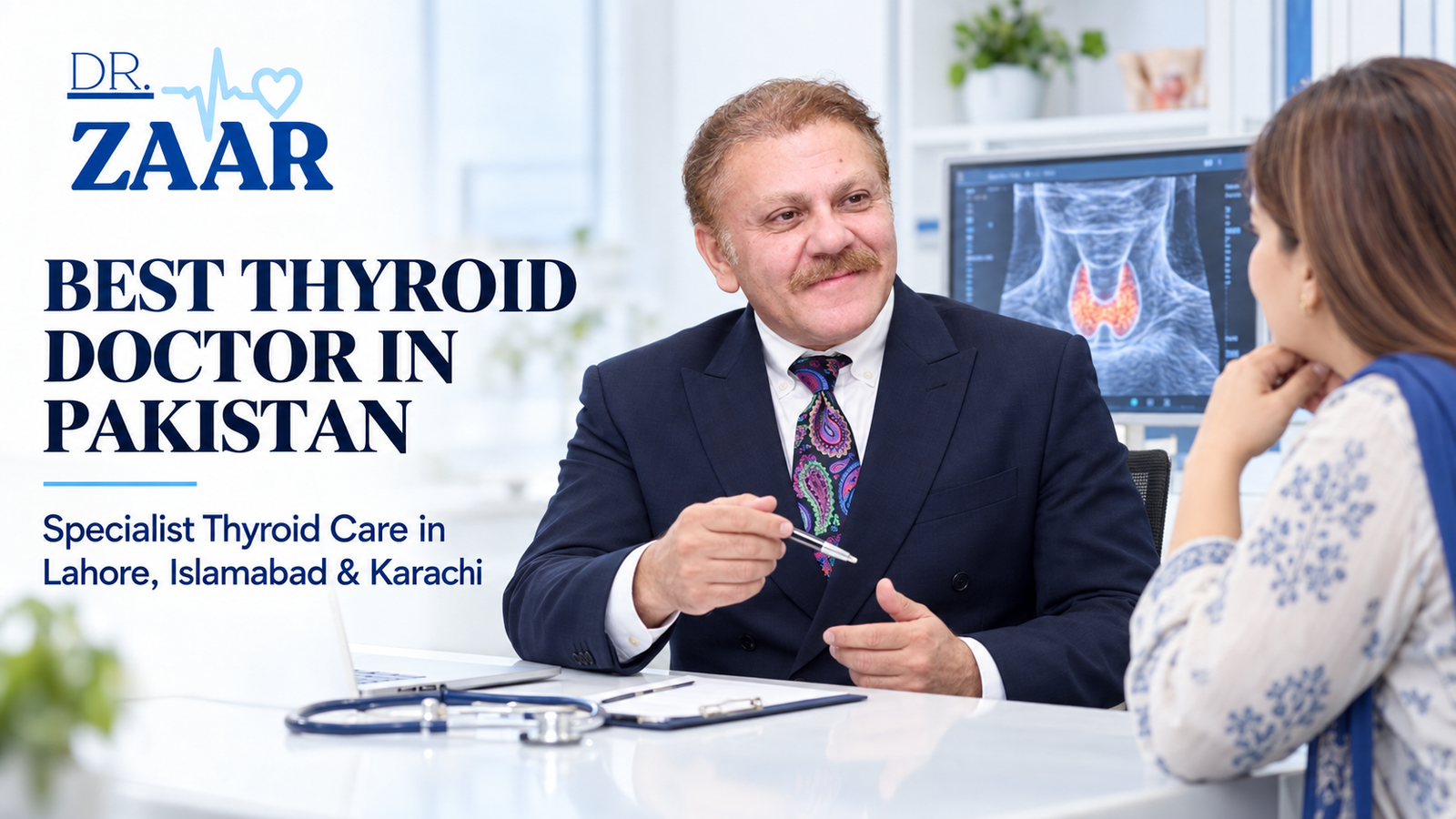
Searching for the best thyroid doctor in Pakistan, Lahore, Islamabad, or Karachi usually begins with symptoms that do not appear to have a single explanation. Persistent tiredness, unexplained weight changes, hair loss, disturbed sleep, anxiety, low mood, menstrual irregularity, reduced sexual wellbeing, muscle weakness, changes in heart rate, or difficulty concentrating may initially seem unrelated. In some patients, however, they may share an endocrine or metabolic origin.
Dr. Zaar, often hailed as the “Sherlock Holmes of Endocrinology,” is known for approaching complicated health problems by investigating the relationships among hormones, metabolism, nutrition, physical symptoms, and emotional wellbeing. Rather than viewing each complaint in isolation, he evaluates the broader clinical picture to identify possible underlying causes.
Patients may visit the Lahore clinic directly or arrange an online consultation from Islamabad, Karachi, other parts of Pakistan, or abroad. Every consultation is based on the patient’s medical history, symptoms, examination findings where applicable, previous reports, current medicines, and clinically appropriate investigations.
Why Thyroid Disorders Can Be Difficult to Recognize
The thyroid is a small gland located at the front of the neck, but the hormones it produces influence energy use throughout the body. Thyroid hormones affect metabolism, heart rate, body temperature, digestion, weight, mood, muscle function, menstrual health, and several other physiological processes. This is why a thyroid disorder may present through symptoms involving more than one organ system.
Hypothyroidism occurs in the body when the thyroid does not produce enough thyroid hormone. Hyperthyroidism develops when the thyroid produces more hormone than the body requires. Because thyroid hormones affect nearly every organ, either condition can produce a wide range of symptoms.
Symptoms alone cannot reliably confirm thyroid disease. Tiredness, anxiety, weight changes, low mood, hair loss, disturbed sleep, and muscle weakness can also occur because of nutritional deficiencies, diabetes, medication effects, stress, reproductive hormone problems, or other medical conditions. A careful assessment is therefore more valuable than assuming that every unexplained symptom is caused by the thyroid.
What Makes a Thyroid Consultation Thorough?
A meaningful thyroid consultation should extend beyond ordering a single thyroid-stimulating hormone test. TSH is important, but its interpretation may depend on free T4, sometimes free T3, thyroid antibodies, symptoms, medicines, pregnancy status, previous treatment, pituitary function, and the clinical circumstances surrounding the test.
The American Thyroid Association explains that an elevated TSH with a low free T4 generally supports primary hypothyroidism, while a low TSH with an elevated free T4 is associated with hyperthyroidism. Different combinations can point toward other possibilities and must be interpreted in context.
SHEHREZAD FARUK ZAAR considers the complete history rather than treating an isolated number. This may include reviewing when symptoms began, whether they fluctuate, what medicines or supplements are being taken, whether there is a family history of thyroid or autoimmune disease, and whether the patient has undergone thyroid surgery, radioactive iodine treatment, pregnancy, or major illness.
Symptoms That May Justify Thyroid Evaluation
Patients often seek thyroid assessment after experiencing several symptoms simultaneously. Possible features of an underactive thyroid include persistent tiredness, feeling unusually cold, dry skin, constipation, low mood, slowed thinking, and weight gain. Not every patient develops every symptom, and the American Thyroid Association emphasizes that blood testing is required because other medical problems can produce similar complaints.
An overactive thyroid may cause heat intolerance, excessive sweating, a rapid or irregular heartbeat, hand tremors, nervousness, irritability, difficulty sleeping, unexplained weight loss, frequent bowel movements, hair loss, menstrual changes, or weakness. Graves’ disease, an autoimmune disorder, is one possible cause of hyperthyroidism.
A visible or palpable neck swelling, persistent pressure in the neck, difficulty swallowing, hoarseness, or a newly discovered thyroid nodule also deserves medical attention. These findings do not automatically indicate cancer, but they should not be ignored or managed through assumptions.
Hypothyroidism and the Slowing of Body Functions
Hypothyroidism develops when the thyroid gland cannot produce enough hormone to meet the body’s needs. As thyroid hormone levels fall, many physiological processes slow down. Patients may notice fatigue, reduced mental sharpness, constipation, cold intolerance, dry skin, menstrual changes, low mood, muscle discomfort, or gradual weight gain.
Hashimoto’s disease is an autoimmune condition that is not good and a common cause of hypothyroidism. It may progress slowly, and some people have few noticeable symptoms during the early stages. Thyroid antibodies can sometimes be present before major thyroid dysfunction becomes apparent.
SHEHREZAD FARUK CZAR assesses whether the symptoms, examination findings, and laboratory pattern support hypothyroidism or suggest another explanation. Where thyroid hormone replacement is clinically required, treatment must be selected and monitored carefully. The purpose is not simply to prescribe a tablet, but to restore an appropriate hormonal balance while avoiding under treatment or excessive dosing.
Hyperthyroidism and Excess Thyroid Activity
Hyperthyroidism occurs when the thyroid gland releases more thyroid hormone than the body requires. The result may be a noticeable acceleration of several bodily functions. Some patients experience a pounding heartbeat, tremor, sweating, heat intolerance, anxiety, disturbed sleep, frequent bowel movements, weakness, or weight loss despite eating normally.
Possible causes include Graves’ disease, thyroid nodules that produce hormone independently, thyroid inflammation, or excessive thyroid medication. The correct treatment depends on the cause, severity, age of the patient, associated conditions, pregnancy considerations, and other clinical factors.
SHEHREZAD CZAR may review thyroid-function results, antibody testing, previous imaging, medication history, heart-related symptoms, and the duration of illness. Treatment can differ in various ways significantly from one patient to another. It may involve antithyroid medication, symptom control, radioactive iodine, surgery, monitoring, or referral to another relevant specialist. The appropriate choice should follow a properly established diagnosis rather than a symptom-based guess.
Hashimoto’s Disease, Graves’ Disease and Autoimmune Thyroid Problems
The immune system normally protects the body, but autoimmune thyroid disease develops when immune activity mistakenly targets thyroid tissue. Hashimoto’s disease commonly leads to an underactive thyroid, while Graves’ disease commonly causes an overactive thyroid.
These conditions may affect more than laboratory results. Changes in energy, mood, concentration, muscle function, menstruation, fertility, heart rate, weight, and temperature tolerance can influence daily life. Graves’ disease may also be associated with eye symptoms in some patients.
SHAHZAD ZAAR evaluates whether the clinical pattern fits an autoimmune thyroid disorder and whether additional investigation is justified. Antibody results should not be interpreted in isolation. A positive result does not automatically explain every symptom, just as a negative result does not eliminate every thyroid-related possibility.
The objective is to understand the patient’s actual hormonal state, identify associated risks, and determine whether treatment, monitoring, imaging, or additional specialist involvement is appropriate.
Thyroid Nodules, Goitre and Neck Swelling
A thyroid nodule is a lump within the thyroid gland. Some nodules are discovered when a patient notices swelling, while others are found incidentally during an ultrasound, CT scan, or examination performed for another reason.
Most nodules require structured assessment rather than immediate conclusions. Their size, ultrasound appearance, growth pattern, associated symptoms, thyroid-function results, family history, and other risk factors help determine what should happen next. Some patients may only need monitoring, while others may require fine-needle aspiration, additional imaging, surgery, or evaluation by a thyroid surgeon.
A goitre refers to enlargement of the thyroid gland and may occur with normal, low, or excessive thyroid function. Neck pressure, swallowing difficulty, or visible enlargement can be clinically important even if thyroid-hormone results are within range.
CZAR MD reviews previous imaging and laboratory findings together so that structural thyroid problems are not confused with functional thyroid disorders.
Thyroid Cancer Assessment and Continuing Endocrine Care
Thyroid cancer begins in thyroid cells and can occur in different forms. A suspicious thyroid nodule does not confirm cancer, and diagnosis may require ultrasound assessment, fine-needle aspiration, pathology, and specialist review.
When thyroid cancer is confirmed, treatment may involve surgery, radioactive iodine, thyroid-hormone therapy, surveillance, or a combination of approaches. The plan depends on the cancer type, stage, pathology, patient characteristics, and multidisciplinary recommendations.
FARUK may provide endocrine assessment and continuing hormonal care while coordinating, where necessary, with an endocrine surgeon, oncologist, radiologist, nuclear-medicine specialist, or another appropriate professional. After thyroid surgery or radioactive iodine, patients may require carefully monitored thyroid-hormone replacement and follow-up testing.
No responsible physician should promise one universal thyroid cancer treatment. The medically sound approach is to review the diagnosis, pathology, imaging, previous treatment, current thyroid status, and remaining clinical questions before defining the next step.
Thyroid Disease, Weight Gain and Difficulty Losing Weight
Weight change is one of the most common reasons people suspect a thyroid problem. Hypothyroidism may contribute to weight gain, fluid retention, fatigue, and reduced activity. Hyperthyroidism may cause weight loss, although weight can return when thyroid function is treated.
Not every weight problem is caused by the thyroid. Insulin resistance, diabetes, sleep disturbance, eating patterns, medication effects, reduced muscle mass, stress, reproductive hormones, age, and physical activity can all influence body weight.
CZAR examines weight concerns within a broader metabolic framework. If thyroid function is abnormal, correcting it may form one part of treatment. If the thyroid is functioning normally, the investigation should not end there. The next step may involve evaluating glucose regulation, nutritional factors, medicines, sleep, body composition, and other hormonal influences.
This broader assessment helps prevent patients from being repeatedly told either that “everything is thyroid” or that nothing is wrong simply because one test appears normal.
Thyroid Function, Mood, Anxiety and Mental Clarity
Thyroid disorders can influence emotional and cognitive wellbeing. Hypothyroidism may be associated with low mood, sluggish thinking, memory difficulties, and reduced motivation. Hyperthyroidism may contribute to nervousness, irritability, anxiety, mood changes, or difficulty sleeping.
However, depression and anxiety can also develop independently of thyroid disease. A patient may have a thyroid disorder, a primary mental-health condition, another medical cause, or more than one contributing factor. Treating every psychological symptom as purely hormonal can be just as misleading as ignoring a genuine endocrine influence.
ZAAR considers the timing and pattern of symptoms, thyroid results, medicines, sleep, physical complaints, and other relevant factors. Where mental-health support is required, medical assessment can work alongside appropriate psychological or psychiatric care.
The aim is not to assign every complaint to a single gland. It is to understand how physical and emotional symptoms interact and to develop a treatment plan that reflects the complete clinical picture.
Thyroid Health During Pregnancy and After Delivery
Pregnancy changes thyroid-hormone requirements and makes accurate monitoring particularly important. Both insufficient and excessive thyroid hormone can affect maternal health and pregnancy. Patients with established thyroid disease may need closer observation before conception, during pregnancy, and after delivery.
Pregnancy can also change the interpretation of thyroid tests. Reference ranges and treatment decisions may differ according to the stage of pregnancy and the patient’s medical history. Some women develop thyroid dysfunction after childbirth, and the resulting tiredness, mood changes, heart-rate changes, or weight difficulties may initially be attributed entirely to the demands of caring for a newborn.
SHEHREZAD FARUK ZAAR reviews current medication, laboratory trends, pregnancy status, previous thyroid history, and relevant obstetric information. Any adjustment must be individualized. Patients should not stop or change thyroid medication during pregnancy without professional medical advice.
Early communication between the patient’s treating physicians can support safer and more consistent care.
Common Types of Sexual Health Problems and Their Hormonal Connections
Common Types of Sexual Health Problems may include reduced sexual desire, erectile difficulty, problems with arousal, pain during intercourse, vaginal dryness, menstrual disturbance, delayed or absent orgasm, and fertility concerns. These problems can have physical, psychological, relational, medication-related, vascular, neurological, or hormonal causes.
Thyroid disease is one possible contributor. The NHS notes that an underactive thyroid can be associated with reduced libido, while overactive thyroid disease may also involve loss of interest in sex.
A thyroid test alone does not provide a complete sexual-health assessment. Diabetes, reproductive hormone abnormalities, depression, anxiety, chronic illness, sleep problems, cardiovascular factors, medication effects, and relationship difficulties may also be relevant.
SHEHREZAD FARUK CZAR approaches these concerns confidentially and without judgement. Where symptoms suggest an endocrine contribution, clinically appropriate testing may be considered. When another specialty is required, the patient may be advised to seek suitable gynaecological, urological, psychological, psychiatric, or fertility care.
Why Root-Cause Investigation Matters
Patients with thyroid-related symptoms frequently arrive after trying several treatments for separate complaints. One medicine may have been given for anxiety, another for constipation, another for weight, and another for sleep. Sometimes each treatment is appropriate. In other situations, the pattern has not yet been considered as a whole.
The “Sherlock Holmes of Endocrinology” description reflects Dr. Zaar’s focus on clinical connections. His approach examines whether symptoms share a hormonal or metabolic origin, whether more than one condition is present, and whether a previous diagnosis fully explains the patient’s experience.
Precision does not mean ordering every available test. It means selecting investigations that answer relevant clinical questions. Holistic medicine does not mean rejecting conventional treatment. It means understanding the patient as a complete biological and human system while using evidence-based diagnostics and appropriate medical care.
This combination of detailed investigation, individualized treatment, and patient-first communication is especially valuable when symptoms are complex, persistent, or distributed across several body systems.
What to Bring to Your Thyroid Consultation?
Patients can make a consultation more productive by bringing previous thyroid-function reports, ultrasound findings, biopsy or pathology reports, medication lists, supplement details, hospital records, and information about earlier treatment.
A timeline of symptoms can also be useful. Note when changes began, whether they were sudden or gradual, what makes them better or worse, and whether they appeared after pregnancy, illness, surgery, medication changes, or major stress.
Patients taking thyroid medicine should know the dose, brand where relevant, timing, and how they take it in relation to meals, supplements, calcium, iron, or other medicines. Seemingly minor details can affect interpretation.
SHEHREZAD CZAR uses this information to distinguish between an untreated disorder, an inadequately treated condition, excessive medication, inconsistent absorption, another endocrine problem, or a non-thyroid cause. A well-organized history can prevent unnecessary repetition and allow more time for meaningful clinical discussion.
Personalized Treatment Instead of a Standard Prescription
Thyroid treatment should match the diagnosis. Hypothyroidism often requires thyroid-hormone replacement, but dose requirements vary. Hyperthyroidism may need antithyroid medicine, radioactive iodine, surgery, or another approach. Nodules may require surveillance, biopsy, or surgical assessment. Thyroid cancer care depends on pathology and risk. Autoimmune thyroid disease may require monitoring even when immediate treatment is not indicated.
SHAHZAD ZAAR develops recommendations around the patient’s laboratory findings, symptoms, age, medical history, pregnancy status, heart health, previous treatment, and other relevant circumstances.
Monitoring is also important. A prescription is not the end of care. Follow-up may be needed to evaluate whether laboratory values have changed appropriately, whether symptoms are improving, whether side effects have appeared, or whether the diagnosis needs reconsideration.
No ethical medical treatment can guarantee a particular outcome. The objective is to make informed decisions, monitor progress, and adjust the plan when the clinical evidence supports doing so.
Accessing Dr. Zaar From Lahore, Islamabad or Karachi
Patients looking for the best thyroid doctor in Lahore can attend the clinic for an in-person consultation. Those searching for the best thyroid doctor in Islamabad, the best thyroid doctor in Karachi, or thyroid expertise elsewhere in Pakistan can arrange an online appointment and submit relevant reports before the consultation where requested.
WhatsApp: +92-321-9700-700
Clinic Address: 32 A, Lawrence Road, Lahore
Visit the Clinic
Arrive at the clinic at your scheduled time, where the staff will assist you through the consultation process and help ensure a smooth experience.
Meet Dr. Zaar
Sit down with DR. CZAR for a personalized consultation and expert medical advice tailored to your thyroid, hormonal, metabolic, and related health concerns.
Online consultation can be particularly useful for report review, follow-up, medication discussion, and determining whether in-person examination, imaging, or referral is required.
Choosing a Thyroid Doctor in Pakistan
The word “best” should represent the quality and appropriateness of care rather than an unsupported ranking. A suitable thyroid doctor should listen carefully, interpret laboratory results in context, recognize when symptoms may have more than one cause, explain the diagnosis understandably, and recommend referral when another specialist is needed.
Patients should feel able to ask why a test is being ordered, what a result means, what treatment options exist, how progress will be monitored, and what warning signs require urgent care. Clear communication matters because thyroid conditions often require follow-up rather than a single appointment.
ZAAR’s clinical identity is built around complex diagnostic investigation, endocrine biochemistry, metabolic medicine, and an individualized view of the patient. For people who have persistent symptoms, conflicting reports, several previous opinions, or an incomplete response to treatment, this detailed approach may provide a more coherent direction for the next stage of care.
Coordinated Endocrine Support
Thyroid cancer treatment in Pakistan requires more than applying one standard solution to every thyroid nodule or pathology report. A suspicious ultrasound does not itself establish cancer, and a confirmed diagnosis must be understood according to tumour type, pathology, imaging, stage, surgical findings, and the patient’s overall health. Treatment may involve thyroid surgery, radioactive iodine, thyroid-hormone therapy, surveillance, or coordinated care among several specialists. After treatment, patients may require ongoing endocrine follow-up to manage thyroid-hormone levels and review relevant investigations. DR. FARUK can assess thyroid reports, explain endocrine findings, and help determine whether surgical, oncological, radiological, or nuclear-medicine input is required. The article “Thyroid Cancer Treatment in Pakistan” explains why diagnosis, treatment selection, and long-term monitoring must remain individualized. It is particularly relevant for patients with thyroid nodules, suspicious biopsy findings, previous thyroid surgery, or questions about hormonal management after cancer treatment.
Investigating Weakness and Body-Composition Change
Muscle loss may develop gradually and can be mistaken for ordinary tiredness, ageing, or lack of exercise. Persistent weakness, reduced grip strength, difficulty climbing stairs, declining physical performance, and unexplained changes in body composition may have nutritional, hormonal, metabolic, medication-related, neurological, or chronic-disease causes. Thyroid dysfunction can contribute to muscle symptoms, but it is only one of several possibilities. The article “Muscle Loss Treatment in Pakistan” examines why treatment should begin with identifying the cause rather than simply recommending supplements or exercise. CZAR MD evaluates the relationship among thyroid function, nutrition, metabolic health, medicines, activity, and other clinical findings. Where appropriate, management may include medical treatment, nutritional correction, structured resistance activity, and relevant specialist support. Patients who experience weakness together with weight change, fatigue, temperature intolerance, tremor, or other hormonal symptoms may benefit from a broader endocrine and metabolic assessment.
Medical Assessment Beyond Generic Diet Plans
People searching for “weight loss Clinic near me” are often looking for an explanation after repeated diets, short-lived results, or unexplained weight gain. Body weight is influenced by food intake and physical activity, but also by sleep, medicines, insulin resistance, diabetes, stress, muscle mass, age, and hormonal conditions. Hypothyroidism can contribute to weight gain and reduced energy, although it does not explain every case of obesity or difficulty losing weight. The related article “Weight Loss Doctors Near Me” discusses the value of medically supervised, individualized weight management rather than a universal diet programme. DR. SHEHREZAD FARUK ZAAR reviews clinical history, eating patterns, activity, previous attempts, laboratory findings, and possible metabolic contributors before discussing treatment. Where thyroid dysfunction is found, it should be treated appropriately. Where thyroid function is normal, the search for meaningful causes and sustainable interventions should continue instead of relying on unnecessary thyroid medication.
Begin With an Individual Thyroid Assessment
Thyroid symptoms can overlap with many other conditions, and thyroid reports can be misunderstood when they are separated from the patient’s wider clinical picture. The right starting point is a detailed consultation that connects symptoms, history, examination findings, previous reports, medicines, and appropriate investigations.
Whether you live in Lahore, Islamabad, Karachi, another city in Pakistan, or overseas, Dr. Zaar offers access to individualized endocrine and metabolic assessment. Patients with suspected hypothyroidism, hyperthyroidism, autoimmune thyroid disease, nodules, goitre, thyroid cancer follow-up, weight concerns, mood changes, muscle weakness, reproductive symptoms, or complicated multisystem complaints can arrange a confidential consultation.
A strong thyroid-care plan does not begin with promises. It begins with careful listening, disciplined investigation, accurate interpretation, and treatment selected for the individual patient. That is the clinical philosophy behind the work of the physician often described as the “Sherlock Holmes of Endocrinology.”
Related Blogs
- September 30, 2026
Best Thyroid Treatment Expert in Pakistan.
Finding the best thyroid treatment expert in Pakistan, Lahore, Islamabad, or Karachi can be difficult when thyroid symptoms overlap with.
Read More
- October 10, 2026
Thyroid Treatment Costs in Pakistan, A.
When someone asks about thyroid treatment costs in Pakistan, the question usually carries another concern: can I afford to investigate.
Read More