



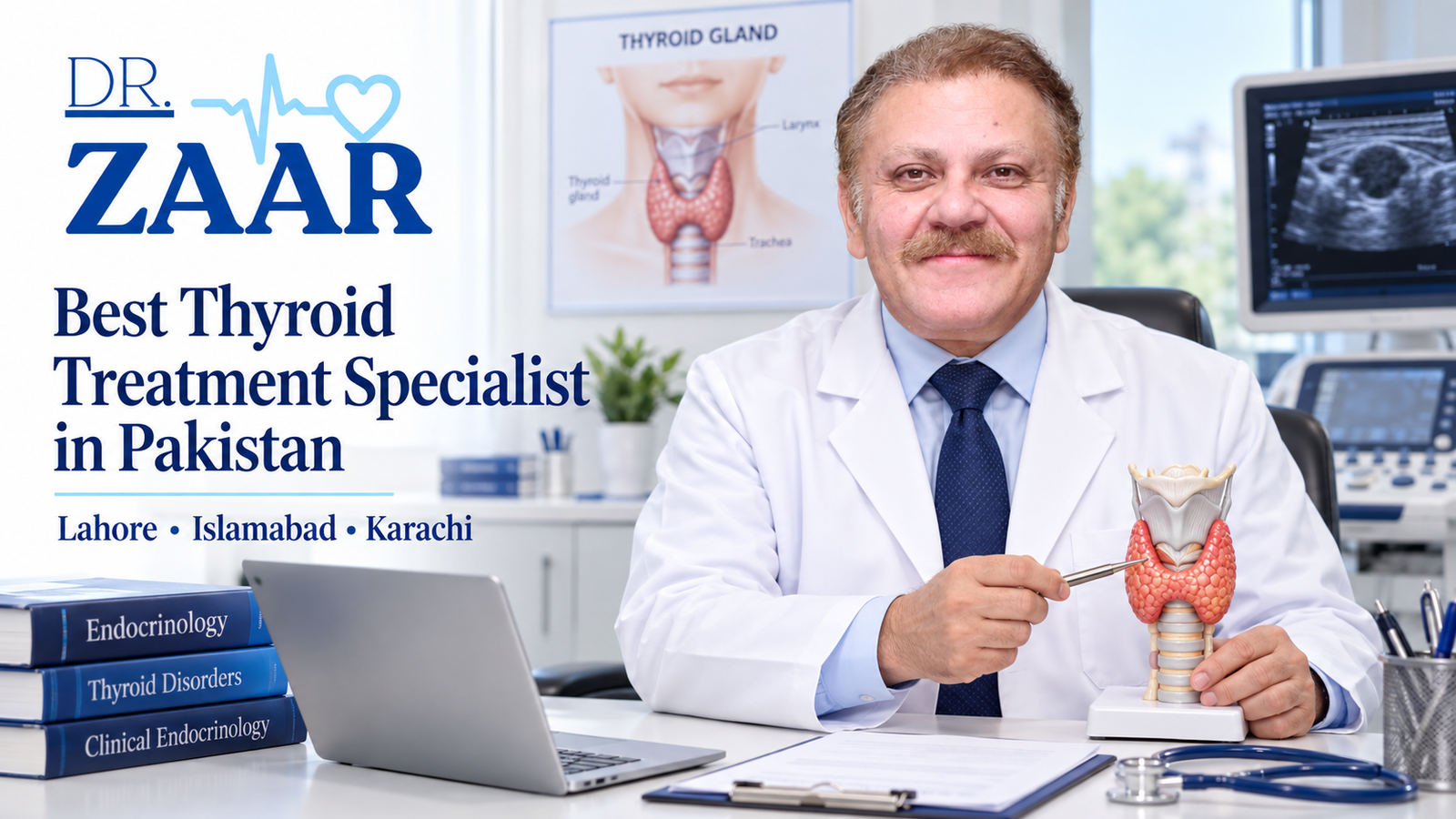
Best Thyroid Treatment Specialist in Pakistan, Lahore, Islamabad and Karachi
- By Czar Media
- 2
- Thyroid
A thyroid problem can enter a person’s life quietly. Energy declines, weight changes, hair becomes thinner, sleep deteriorates, or the heart begins racing without an obvious explanation. Patients may spend months treating individual complaints before asking whether a hormonal disorder connects them.
For anyone searching for the best thyroid treatment specialist in Pakistan, Lahore, Islamabad and Karachi, the real objective is clear: an accurate diagnosis, appropriate treatment, and a doctor who explains what happens next. Good thyroid care should make a confusing condition understandable and manageable.
Dr. Zaar’s practice addresses thyroid and other hormonal concerns. Patients can arrange a clinic consultation in Lahore or enquire about online consultations from Islamabad, Karachi, and elsewhere. Choosing the appropriate appointment begins with understanding the problem that needs investigation.
What Makes a Good Thyroid Treatment Specialist?
The quality of thyroid care appears in the decisions a doctor makes. Does the assessment connect symptoms with examination findings? Are tests selected for a clear reason? Is the treatment matched to the diagnosis? Is there a practical plan for monitoring progress?
Patients should also verify the doctor’s registration and relevant qualifications. The Pakistan Medical and Dental Council provides an online practitioners register showing licence validity and registered qualifications. This offers a concrete starting point when assessing a medical practitioner’s credentials.
Good communication also includes discussing affordability, so the patient understands which investigations are necessary now and how future monitoring will be arranged.
A useful consultation leaves room for questions. Patients should understand the name of their condition, why a medicine is needed, how to take it, when to repeat tests, and which developments require earlier review.
The word best should represent these standards of care. An impressive advertisement cannot replace a careful assessment, and an expensive investigation is valuable only when its result can guide a decision.
For families comparing thyroid doctors in Pakistan, continuity also matters. Consider whether follow-up is accessible, reports can be reviewed reliably, and referral to another specialist can be arranged when the condition requires it.
Understanding the Thyroid’s Influence
The thyroid is a small, butterfly-shaped gland at the front of the neck. Its hormones help regulate energy use, temperature, and the functioning of organs including the heart, brain, and muscles. This explains why thyroid disease can produce complaints across several parts of the body.
An underactive thyroid produces insufficient hormone. An overactive thyroid produces excessive hormone. A thyroid nodule or enlarged gland raises a different question about structure, which must be assessed separately from hormone production.
The body’s metabolism resembles a coordinated enterprise: changing one important signal can affect several departments. Yet the thyroid is only one participant in that system. A convincing explanation must account for the patient’s findings rather than attributing every complaint to one gland.
Symptoms That Deserve Proper Assessment
Hypothyroidism may cause persistent tiredness, sensitivity to cold, dry skin, constipation, muscle discomfort, and weight gain. Some patients develop heavy or irregular menstrual periods, thinning hair, or low mood. Symptoms can emerge gradually and may be mistaken for ordinary exhaustion or ageing.
Excess thyroid hormone can produce a different pattern: palpitations, shaking hands, heat intolerance, difficulty sleeping, muscle weakness, and weight loss. Graves’ disease, one cause of hyperthyroidism, may also affect the eyes.
These patterns provide clues, but symptoms alone cannot confirm a thyroid diagnosis. Fatigue, weight changes, and anxiety have several possible explanations. Patients deserve an assessment that tests the suspected connection instead of assuming it.
Before the appointment, record when symptoms began, whether they are progressing, and how they affect daily activities. A short account of changes over time is often easier to interpret than a long collection of disconnected complaints.
Thyroid Tests: Asking the Right Questions
For many adults, thyroid assessment starts with thyroid-stimulating hormone, usually called TSH. Free T4 helps clarify hormone availability, while T3 testing is useful in selected cases, particularly suspected hyperthyroidism. Results must be interpreted together and within the clinical context.
Antibody tests answer another question. Thyroid peroxidase antibodies can support an autoimmune diagnosis such as Hashimoto’s thyroiditis; TSH receptor antibodies can help identify Graves’ disease. Different tests serve different purposes, so every patient does not need every available investigation.
Tell the clinician about medicines and supplements, including biotin products sold for hair and nails. Biotin can distort some thyroid blood-test results. The doctor or laboratory should advise whether it needs withholding before testing.
Bring previous reports with dates and reference ranges. A result from last year and a result obtained during recent treatment may tell different parts of the story. The aim is to build a coherent account of thyroid function over time.
Hypothyroidism Treatment: Replacing What Is Missing
Levothyroxine is the standard treatment for an underactive thyroid. It replaces the hormone the gland cannot supply adequately. The appropriate dose depends on factors such as age, body size, other medical conditions, and the response to treatment.
Consistency is essential. Levothyroxine is commonly taken on an empty stomach, and its timing should follow the prescribed plan. Food, calcium, iron, and some other medicines can affect absorption. Discuss how to fit treatment around breakfast, supplements, and other prescriptions.
Patients should tell their doctor if the brand or manufacturer changes, since repeat testing may be appropriate. They should also discuss any proposed change in dose rather than adjusting treatment in response to a single difficult day.
Ask for written instructions that fit your routine. A workable treatment schedule is easier to maintain than one that repeatedly clashes with meals, travel, or working hours. Understanding the purpose of each instruction can make daily treatment feel considerably less burdensome.
Hashimoto’s Thyroiditis and Borderline Results
Hashimoto’s thyroiditis is an autoimmune condition in which the immune system damages thyroid tissue. It may progress slowly, and some people have detectable antibodies before thyroid hormone production becomes inadequate.
Positive antibodies alone do not automatically mean that thyroid hormone treatment is required. When thyroid function remains normal, monitoring may be appropriate. If hypothyroidism develops, levothyroxine replaces the missing hormone. Repeated antibody measurements are generally unnecessary for monitoring treatment response.
Subclinical hypothyroidism means TSH is raised while free T4 remains within its reference range. Treatment decisions depend on the degree and persistence of the abnormality, symptoms, age, and other relevant factors. In nonpregnant adults, NICE advises considering levothyroxine when TSH is at least 10 mIU/L on two measurements three months apart. Pregnancy requires a separate approach.
A borderline report deserves explanation. Patients should know whether the plan is observation, repeat testing, or treatment, and what finding would change that plan.
Hyperthyroidism Treatment: Matching Therapy to the Cause
Hyperthyroidism treatment depends on why the gland is producing excessive hormone. Options include antithyroid medicines, radioactive iodine, and surgery. The decision takes account of disease severity, other illnesses, pregnancy considerations, and access to suitable specialist care.
Beta blockers may help control symptoms such as a rapid heartbeat and tremor while other treatment takes effect. They do not directly stop thyroid hormone production. Antithyroid medicines reduce production, while radioactive iodine or surgery may provide definitive treatment in suitable patients.
Each option brings different implications. Some patients develop hypothyroidism after definitive treatment and subsequently need hormone replacement. Radioactive iodine is unsuitable during pregnancy or breastfeeding. These considerations should be discussed before choosing a treatment pathway.
Medication safety also needs clear instructions. A patient taking carbimazole who develops fever, a sore throat, or mouth ulcers should stop the medicine and seek urgent medical assessment because these can indicate a dangerously low white blood cell count. Yellowing of the eyes or skin requires urgent advice as well.
Thyroiditis: Why Similar Results May Need Different Treatment
Thyroiditis means inflammation of the thyroid. In some forms, stored hormone leaks from damaged tissue, producing temporarily high hormone levels. The gland may later become underactive before recovering, although recovery varies with the cause.
This distinction changes treatment. A gland leaking stored hormone is not necessarily producing excessive new hormone, so antithyroid drugs generally do not help the thyrotoxic phase of thyroiditis. Treatment may instead address symptoms, inflammation, or a subsequent period of hormone deficiency.
Some forms are painful; others are painless. The medical history, examination, and selected investigations help distinguish them.
Patients should ask whether their condition is expected to be temporary or persistent. That answer affects follow-up and prevents a short-lived phase from being treated as though it must remain unchanged indefinitely.
Thyroid Nodules and Goitre
A thyroid nodule is a lump within the gland, while goitre describes enlargement of the gland. Many nodules are benign, and thyroid hormone results can remain normal despite a structural abnormality.
Ultrasound helps assess a nodule’s size, composition, and suspicious features. Depending on its appearance and size, the doctor may recommend fine-needle aspiration to collect cells for examination. Not every nodule needs a biopsy or an operation.
Some benign nodules require observation with follow-up imaging. Others may need treatment because they cause pressure symptoms, produce excess hormone, or raise concern about malignancy. A normal TSH result alone cannot establish that a thyroid lump is harmless.
If you have a scan report, bring the images when available, together with any biopsy results. Ask what the report means, whether additional assessment is needed, and what changes should prompt an earlier appointment. Clear explanation helps replace fear with a specific next step.
When Thyroid Cancer Requires Specialist Coordination
Thyroid cancer is not a single disease with one universal treatment. Management depends on the cancer type, its extent, and the patient’s circumstances. Options can include surgery, radioactive iodine for appropriate cancers, thyroid hormone therapy, and other specialist treatments.
Assessment may require collaboration between endocrinology, an experienced thyroid surgeon, pathology, and oncology or nuclear medicine. Follow-up remains important after initial treatment because further tests may be needed to assess response or detect recurrence.
A suspicious finding should lead to an organised referral and a clear explanation of the available evidence. Patients should have copies of their ultrasound, biopsy, operation, and pathology reports so information can move accurately between the professionals involved in their care.
Thyroid Care Before and During Pregnancy
Pregnancy changes how thyroid tests are interpreted and can alter treatment requirements. Women with known thyroid disease should discuss pregnancy plans with their clinician and arrange prompt review when pregnancy is confirmed.
Levothyroxine remains the treatment for hypothyroidism during pregnancy, and existing doses often need adjustment. Thyroid function usually requires closer monitoring, particularly during early pregnancy. Prenatal iron and calcium can interfere with levothyroxine absorption and should be separated from it as advised.
Hyperthyroidism needs its own pregnancy-specific plan. Medication choice, hormone targets, and follow-up must account for both maternal and fetal wellbeing. The American Thyroid Association’s 2026 guidance addresses care before conception, during pregnancy, and after delivery, including infertility and breastfeeding considerations.
Pregnancy should therefore be mentioned when booking an appointment. Give the clinician the gestational age, current prescriptions, recent results, and any history of Graves’ disease or thyroid treatment.
Thyroid Problems After Childbirth
Postpartum thyroiditis can cause a period of high thyroid hormone levels, a period of low levels, or both. Palpitations, irritability, tiredness, and weight changes may overlap with the demands of caring for a newborn.
Treatment depends on the phase and severity. Some women recover normal thyroid function, while others develop persistent hypothyroidism and need continued treatment. Follow-up helps establish which course is occurring.
New mothers should mention when delivery occurred and describe symptoms without assuming that every change is an unavoidable part of parenthood.
Children, Adolescents, and Older Adults
Thyroid assessment must reflect the patient’s stage of life. In children, hypothyroidism can slow height growth and delay pubertal development. A child falling behind an established growth pattern deserves assessment rather than an automatic prescription for height-related supplements.
Bring previous height and weight measurements, school health records, and information about development. These help show whether a change is recent or has occurred over several years. Where appropriate, care should involve a clinician with relevant paediatric expertise.
Older adults may present less typically. Thyroid-related symptoms can overlap with other illnesses, and treatment must account for heart disease and the medicines already being taken. Levothyroxine may need to be introduced gradually, especially when cardiovascular disease is present.
Families can help by bringing an accurate medication list and describing changes in ordinary activities. The clinical question is how the person’s function has changed, not simply whether a symptom appears on a familiar checklist.
Thyroid Treatment and Weight Management
Weight changes understandably bring many patients to a thyroid consultation. Hypothyroidism can contribute to weight gain, but the increase is often modest and partly related to salt and water retention. Correcting thyroid hormone deficiency does not necessarily remove all excess weight.
Once thyroid levels are normal, continuing weight concerns may require a broader assessment. Giving extra thyroid hormone to someone whose levels are already adequate is not an appropriate weight-loss strategy.
Patients benefit from realistic expectations. The purpose of thyroid treatment is to correct thyroid dysfunction. A separate discussion can then address nutrition, activity, and other contributors to weight.
At the appointment, describe how your weight changed and over what period. Bring earlier measurements when possible. This gives the clinician a clearer starting point than a desired target weight alone.
Food, Iodine, and Thyroid Supplements
Nutrition supports health, but no special diet or vitamin reliably removes thyroid disease. Commercial thyroid supplements and restrictive diets should not replace appropriate medical treatment.
Iodine illustrates why more is not always better. It is necessary for thyroid hormone production, yet excessive iodine can worsen thyroid dysfunction in susceptible people. Kelp products and high-dose iodine supplements should therefore be discussed with the treating clinician. Individual needs can differ, including during pregnancy.
Bring supplement packaging or photographs of the ingredient labels. Products marketed for metabolism, energy, hair growth, or hormonal balance may contain ingredients the clinician needs to consider. An open discussion makes it easier to identify potential interactions and decide what belongs in the treatment plan.
When Symptoms Require Urgent Medical Attention
Most thyroid assessments can proceed through a planned appointment, but certain symptoms need urgent care. A very rapid heartbeat accompanied by high fever, marked agitation, confusion, or severe weakness can signal serious illness, including the rare emergency called thyroid storm. Seek emergency medical assessment instead of waiting for a routine consultation.
Breathing difficulty associated with neck swelling also requires urgent assessment. These symptoms should be reported directly, with a clear description of when they began and whether they are worsening.
If emergency care is needed, take the current prescription and available medical records. Tell the attending team about thyroid disease and recent medication changes. Once the immediate problem has been assessed, share the discharge information with the clinician managing ongoing thyroid care so subsequent decisions reflect what happened.
Follow-Up Is Part of Treatment
A thyroid prescription needs a monitoring plan. For primary hypothyroidism, treatment generally aims to maintain TSH within its reference range while avoiding excessive hormone replacement. NICE recommends periodic testing until levels stabilise, followed by annual monitoring in stable adults.
Before leaving the consultation, establish when tests should be repeated, how results will be reviewed, and when the next appointment is due. Keep a record of prescriptions and subsequent changes so the treatment history remains clear.
Report continuing symptoms accurately. Explain which problems improved, which remained, and whether anything new developed. This helps the clinician decide whether to reassess thyroid treatment or investigate another explanation. Progress is easier to judge when the patient and doctor are working from the same account.
Thyroid Consultation in Lahore
Patients seeking thyroid treatment in Lahore can contact Dr. Zaar’s clinic at 32-A Lawrence Road, Jinnah Town. Confirm the appointment before travelling and ask what reports should be brought to the first visit.
Prepare a concise history, including previous diagnoses, current prescriptions, and the questions you most want answered. If another doctor has already started treatment, bring that prescription and the reports on which it was based.
An appointment should help you understand the next decision: whether assessment is complete, additional information is needed, or the existing plan requires review. Request clarification wherever the instructions are unclear.
Thyroid Consultation From Islamabad and Karachi
Patients in Islamabad and Karachi can enquire about Dr. Zaar’s online consultation service through the clinic. This provides a way to discuss symptoms and existing reports before arranging any further steps.
For a remote appointment, send clear, complete reports and an accurate medication list. Include the dates of tests and any changes made since they were performed. Choose a quiet place where you can describe concerns and hear the advice properly.
An online appointment may need to be followed by a local physical examination, imaging, or another specialist assessment. Ask where those steps should take place and how their results will return to the treating clinician. Whether you live in Islamabad, Karachi, or another city, the consultation should end with clear responsibilities and a practical follow-up arrangement.
Preparing for Your First Appointment
Organise your medical information before the consultation. Bring thyroid results, relevant scans, biopsy reports if available, and all current prescriptions. Include medicines obtained without a prescription, herbal preparations, and supplements.
Write a short timeline. Note when symptoms started, what changed after treatment, and whether pregnancy, childbirth, surgery, or another major illness occurred around the same period. Describe family thyroid history when known.
Choose the questions that matter most to your daily life. You may want to understand the diagnosis, treatment duration, medication timing, expected monitoring, or whether another professional should become involved.
Ask about fees and follow-up arrangements when booking. Knowing the practical requirements helps you plan the appointment and reduces the chance that important reports or questions are left behind.
Arrange a Thyroid Consultation With Dr. Zaar
Searching for the best thyroid treatment specialist in Pakistan should lead to informed decisions about your care. Whether you are in Lahore, Islamabad, or Karachi, begin with a clear account of the problem and seek a treatment plan you understand.
To enquire about a consultation with Dr. Zaar, call or WhatsApp 0321 9700700, visit DrZaar.com, or contact the clinic at 32-A Lawrence Road, Jinnah Town, Lahore, Pakistan. Confirm appointment availability and consultation arrangements before visiting. Connect for Expert Help
Related Blogs
- September 29, 2026
Finding the Best Thyroid Doctor in.
Searching for the best thyroid doctor in Pakistan, Lahore, Islamabad, or Karachi usually begins with symptoms that do not appear.
Read More
- September 29, 2026
Best Thyroid Treatment Clinic in Pakistan.
Choosing the best thyroid treatment clinic in Pakistan, Lahore, Islamabad, or Karachi should involve more than finding a place that.
Read More