



Best Sexual Health Consultant in Pakistan Lahore, Islamabad & Karachi, Dr. Zaar’s Approach to Sexual & Hormonal Health
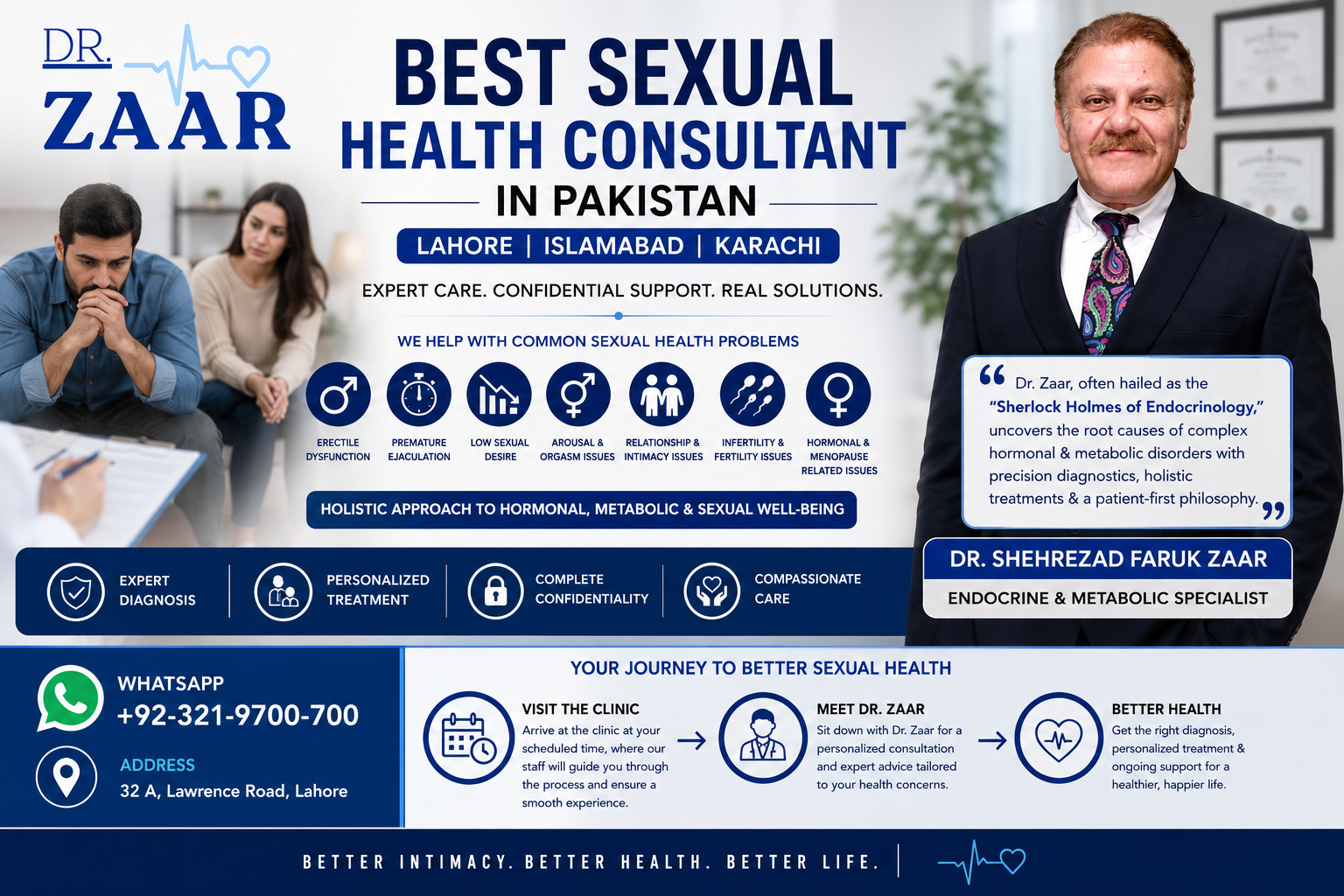
Sexual health is an important part of overall physical, hormonal, emotional, and reproductive well-being. Yet many people hesitate to discuss concerns involving sexual function, desire, intimacy, fertility, or hormonal changes. Because these issues can involve several overlapping factors, a thoughtful medical evaluation can help identify possible contributing causes and guide an appropriate management approach.
For individuals looking for a Best Sexual Health Consultant in Pakistan Lahore Islamabad, Karachi, the focus should not simply be on treating a single symptom. A comprehensive consultation should consider hormonal balance, metabolic health, medications, lifestyle, psychological factors, relationship concerns, and underlying medical conditions when relevant. SHEHREZAD FARUK ZAAR takes an individualized approach to health concerns, with particular attention to the relationship between hormones and broader metabolic health. His approach emphasizes understanding the possible underlying contributors rather than focusing only on the visible symptom.
Important. Sexual health concerns are medical issues and can have many causes. This article is for educational purposes and should not replace an individual medical evaluation.
Understanding Sexual Health in a Broader Medical Context
Sexual health is not limited to sexual performance. It can include sexual desire, arousal, erectile function, ejaculation, orgasm, genital comfort, reproductive health, fertility, and satisfaction within consensual relationships.
Hormones can play an important role in some sexual health concerns. Testosterone, estrogen, thyroid hormones, prolactin, cortisol, and other endocrine pathways can influence energy, mood, reproductive function, and sexual well-being. However, a sexual symptom does not automatically mean that a person has a hormone problem.
For example, reduced sexual desire may occur alongside stress, relationship difficulties, depression, inadequate sleep, certain medications, chronic disease, or hormonal changes. Similarly, erectile difficulties can sometimes be associated with cardiovascular or metabolic risk factors, but they may also have psychological or medication-related contributors.
This is why a professional assessment should be individualized rather than based on assumptions.
What Does a Sexual Health Consultant Do?
A sexual health consultant helps individuals understand concerns involving sexual function, reproductive health, hormones, and related physical or psychological factors.
Depending on the person’s symptoms and medical history, a consultation may involve.
- Discussing the primary concern
- Reviewing symptoms and their duration
- Understanding previous medical conditions
- Reviewing medications and supplements
- Discussing lifestyle and sleep
- Considering hormonal or metabolic factors
- Evaluating reproductive concerns when appropriate
- Identifying whether additional investigations may be useful
- Developing an individualized management strategy
The purpose is not simply to attach a label to a problem. It is to understand the circumstances surrounding the symptom. SHEHREZAD FARUK CZAR emphasizes the importance of looking at the patient as a whole rather than treating every sexual concern as an isolated condition.
Common Sexual Health Concerns in Men
Men may experience a variety of sexual health concerns during different stages of life. Some problems can develop gradually, while others may appear suddenly.
Common concerns can include.
Erectile Difficulties
Erectile dysfunction refers to difficulty achieving or maintaining an erection sufficient for satisfactory sexual activity. Occasional difficulty can happen to many people and does not necessarily indicate a chronic disorder.
Persistent erectile problems, however, deserve medical attention because possible contributors can include vascular health, diabetes, obesity, hormonal abnormalities, medications, neurological conditions, stress, anxiety, and other factors.
Reduced Sexual Desire
A reduction in libido can be influenced by many factors. Hormonal changes are one possibility mean it may not be, but they are not the only explanation.
Stress, inadequate sleep, emotional difficulties, relationship problems, certain medications, chronic illnesses, and lifestyle changes can all influence sexual interest.
Premature Ejaculation
Premature ejaculation involves ejaculation occurring sooner than desired, often accompanied by distress or difficulty controlling ejaculation. It is a common sexual concern and may involve psychological, relationship, neurological, or biological factors.
Delayed or Difficult Ejaculation
Some men experience difficulty reaching ejaculation despite adequate sexual stimulation. Possible causes include medications, neurological conditions, psychological factors, and other medical issues.
Sexual Concerns Associated With Infertility
Sexual function and fertility are related but are not the same thing. A person can have normal sexual function and still experience infertility, while another individual may have sexual dysfunction that makes conception difficult.
A fertility evaluation may therefore require a different medical assessment.
Sexual Health Issues Affecting Women
Women can also experience a range of sexual health concerns. These may change with age, hormonal transitions, pregnancy, postpartum changes, menopause, medications, stress, or underlying medical conditions.
Potential concerns include.
- Reduced sexual desire
- Difficulty with arousal
- Pain during sexual activity
- Difficulty reaching orgasm
- Vaginal dryness
- Changes associated with menopause
- Sexual concerns following childbirth
- Hormonal changes affecting sexual well-being
Sexual pain should not simply be accepted as an unavoidable part of life. Persistent or unexplained pain deserves appropriate medical evaluation.
Likewise, a sudden or significant change in sexual desire can sometimes provide an opportunity to investigate broader health factors.
Why Hormones Can Matter in Sexual Health
Hormonal health and sexual health can overlap, although the relationship is complex.
Hormones involved in reproductive and endocrine function may influence libido, reproductive processes, energy, mood, and other aspects of well-being.
For example, abnormalities involving testosterone, estrogen, thyroid hormones, or prolactin can sometimes contribute to symptoms involving sexual or reproductive function.
However, symptoms alone cannot establish a hormonal diagnosis.
A person should not assume that low sexual desire automatically means low testosterone or that every erectile problem is caused by hormones.
A careful assessment can help determine whether laboratory testing or another form of evaluation is appropriate.
This systems-based perspective is part of the approach associated with DR. SHEHREZAD CZAR, who is described by his practice profile as focusing on the interconnected nature of endocrine and metabolic health.
How Metabolic Health Can Intersect With Sexual Well-Being
Sexual health can sometimes intersect with metabolic conditions such as obesity, diabetes, insulin resistance, and cardiovascular risk factors.
Metabolic health affects multiple systems within the body. When someone is experiencing several concerns simultaneously—such as changes in weight, fatigue, reduced libido, blood-sugar problems, and sexual difficulties—it can be useful to consider whether these concerns are connected.
This does not mean that weight or metabolic status automatically causes sexual dysfunction. Rather, it highlights why a complete medical history can be valuable.
A clinician may consider.
- Weight changes
- Blood-glucose regulation
- Blood pressure
- Lipid profile
- Hormonal symptoms
- Sleep quality
- Physical activity
- Medication history
- Psychological well-being
Such an evaluation can provide a broader picture of the patient’s health.
Common Types of Sexual Health Problems
The phrase Common Types of Sexual Health Problems covers a broad group of concerns rather than one specific diagnosis.
Some commonly discussed categories include.
- Desire Disorders
These involve persistent or distressing changes in sexual interest or desire. Desire can naturally fluctuate throughout life, so context is important when determining whether a change represents a medical concern.
- Arousal Difficulties
A person may experience difficulty becoming or remaining sexually aroused despite having an interest in sexual activity.
- Erectile Dysfunction
This primarily affects the ability to achieve or maintain an erection.
- Ejaculatory Disorders
These may include premature ejaculation, delayed ejaculation, or difficulty ejaculating.
- Orgasm Difficulties
Some individuals experience difficulty reaching orgasm despite adequate stimulation and sexual interest.
- Sexual Pain
Pain associated with sexual activity can have multiple causes and should be assessed when persistent.
- Hormone-Related Sexual Symptoms
Endocrine abnormalities can sometimes contribute to changes in sexual function, although testing is needed to determine whether a hormonal issue is present.
- Fertility-Related Sexual Concerns
Problems involving sexual function can sometimes affect attempts to conceive, while infertility itself may also create emotional and relationship stress.
Why Sexual Symptoms Should Not Be Self-Diagnosed
Online searches can provide useful educational information, but they cannot replace an individualized medical assessment.
A person may search for symptoms such as.
- Low libido
- Erectile difficulties
- Early ejaculation
- Sexual frustration
- Reduced arousal
- Fatigue
- Hormonal imbalance
and find numerous possible explanations.
The problem is that many conditions share similar symptoms.
For example, fatigue and reduced libido can occur with insufficient sleep, stress, depression, medication effects, endocrine disorders, chronic disease, or lifestyle factors.
Therefore, choosing a treatment based solely on an internet search can lead to an incorrect approach.
A qualified healthcare professional can help distinguish between possibilities and determine whether further assessment is needed.
The Role of Lifestyle in Sexual Well-Being
Lifestyle does not explain every sexual health problem, but it can influence general health and, in some individuals, sexual well-being.
Important areas may include.
Sleep
Poor sleep can contribute to fatigue, mood changes, stress, and reduced overall well-being. Sleep disorders may also interact with metabolic and hormonal health.
Physical Activity
Regular physical activity supports cardiovascular fitness, metabolic health, and general well-being.
Nutrition
A balanced dietary pattern can support overall health. Nutritional needs vary between individuals, especially when medical conditions are present.
Stress Management
Persistent stress can affect mood, sleep, relationships, and sexual interest.
Weight Management
For individuals living with excess weight, sustainable weight management may form part of a broader strategy for improving overall metabolic health.
It is important to avoid unrealistic promises. Sexual health improvement depends on the underlying cause and the individual circumstances.
Sexual Health and Psychological Well-Being
Sexual health is influenced by both physical and psychological factors.
Anxiety about sexual performance can sometimes make sexual difficulties worse. Similarly, persistent sexual problems can contribute to frustration, reduced confidence, relationship tension, or emotional distress.
This can create a cycle.
Concern → anxiety → increased pressure → difficulty with sexual response → greater concern
Breaking this cycle may require addressing both the physical and emotional aspects of the problem.
Psychological support can be an important component of care when anxiety, depression, relationship concerns, trauma, or other emotional factors are contributing to symptoms.
Seeking appropriate professional support is not a sign of weakness. It is part of comprehensive healthcare.
The Importance of Privacy During Sexual Health Consultation
Privacy is especially important when discussing sexual health.
Many people delay seeking medical care because they are embarrassed or concerned about being judged. A professional consultation should provide an environment where the individual can describe symptoms honestly.
Useful information may include.
- When the problem started
- Whether it occurs consistently or occasionally
- Whether it developed suddenly or gradually
- Whether medications were started around the same time
- Whether there are changes in libido
- Whether there are hormonal symptoms
- Whether stress or sleep has changed
- Whether the concern affects a relationship or fertility
Providing accurate information allows the clinician to understand the situation more effectively.
How Dr. Faruk Approaches Complex Health Concerns
Dr. Zaar is often described as the “Sherlock Holmes of Endocrinology,” reflecting a clinical philosophy centered on investigating possible underlying contributors to complex health problems.
His approach emphasizes the interconnected nature of endocrine, metabolic, and general health.
Rather than assuming that one symptom has one universal cause, an individualized consultation can consider the person’s complete health picture.
This may be particularly relevant when sexual symptoms occur alongside concerns such as.
- Unexplained weight changes
- Diabetes or blood-sugar concerns
- Thyroid-related symptoms
- Persistent fatigue
- Changes in libido
- Hormonal symptoms
- Reproductive concerns
SHAHZAD ZAAR focuses on the principle that understanding the broader context can be useful when evaluating complex, multi-system symptoms.
What Happens During a Sexual Health Consultation?
A consultation generally begins with a discussion of the primary concern.
The patient may be asked about the symptoms, their duration, relevant medical history, medications, lifestyle, and other factors.
Depending on the situation, a clinician may determine that physical examination, laboratory testing, or referral to another specialist is appropriate.
Not everyone needs the same tests.
Testing should be based on the individual’s symptoms, history, physical findings, and clinical judgment rather than ordering every possible investigation.
The goal is to arrive at a reasonable understanding of the problem and establish an appropriate next step.
When Should You Consider Professional Advice?
A consultation may be appropriate when a sexual concern is.
- Persistent
- Recurrent
- Causing significant distress
- Affecting a relationship
- Associated with other physical symptoms
- Associated with fertility concerns
- Developing after starting a medication
- Occurring alongside diabetes or metabolic concerns
- Associated with possible hormonal symptoms
- Affecting quality of life
You do not necessarily need to wait until a problem becomes severe before seeking advice.
Early evaluation can sometimes help identify contributing factors and prevent unnecessary worry.
Connecting Sexual Health With Overall Wellness
Sexual health should be considered as one part of a person’s broader health.
A person experiencing sexual difficulties may also have concerns involving.
Hormones → metabolism → sleep → mood → cardiovascular health → sexual function
These relationships are complex and do not mean that one problem necessarily causes another.
Nevertheless, looking at the bigger picture can help prevent isolated treatment of symptoms while potentially overlooking broader health concerns.
This whole-person perspective is particularly valuable when several symptoms appear at the same time.
Understanding Sexual Disorders Beyond a Single Symptom
One of the recently discussed topics is “Types of Sexual Disorders,” which provides a broader framework for understanding the different ways sexual health can be affected. Sexual disorders can involve desire, arousal, erection, ejaculation, orgasm, or pain. Understanding these categories can help readers recognize that sexual health problems are not identical and may require different forms of assessment. A symptom such as reduced desire should therefore not automatically be treated in the same way as erectile dysfunction or premature ejaculation. The underlying cause, duration, severity, and personal circumstances all matter. This perspective can also encourage people to seek appropriate professional advice instead of relying on generalized treatments found online. When symptoms are persistent or distressing, discussing them confidentially with a qualified healthcare professional can be an important step toward understanding possible contributing factors and selecting an appropriate management strategy.
Recognizing Signs of Sexual Frustration
Another relevant topic is “Signs of Sexual Frustration,” which explores how unresolved sexual concerns can affect emotional well-being and relationships. Sexual frustration may occur when an individual’s expectations, desires, or sexual needs are not being adequately addressed, but frustration by itself does not establish a medical diagnosis. It can coexist with communication difficulties, relationship stress, anxiety, sexual dysfunction, or other concerns. Recognizing emotional changes such as irritability, disappointment, withdrawal, or persistent worry can encourage individuals to look more closely at the underlying issue. The most useful response is not to assume a single cause but to consider physical, hormonal, psychological, and relationship factors together. When sexual frustration is persistent or significantly affects quality of life, professional guidance may help clarify whether there is an underlying sexual health condition requiring evaluation.
How to Recognize Possible Sexual Disorders
A third relevant topic is “How Do I Know If I Have a Sexual Disorder?” This question reflects a common concern among people who experience changes in sexual function. Not every temporary change represents a disorder. Sexual response can naturally vary with stress, fatigue, illness, medications, relationship circumstances, and life stage. A persistent or recurrent problem that causes significant personal distress, however, may deserve professional evaluation. Understanding the difference between an occasional difficulty and an ongoing concern can reduce unnecessary anxiety while encouraging appropriate care. Rather than attempting to diagnose yourself from a list of symptoms, it is generally more useful to discuss the complete situation with a healthcare professional. This can help determine whether the concern is related to hormones, medications, physical health, psychological factors, or a combination of influences.
Why a Personalized Approach Matters
There is no universal treatment that works for every sexual health concern.
Two people may experience the same symptom while having completely different contributing factors.
For example, one person with reduced libido may have significant stress and poor sleep, while another may have a medication-related issue or an endocrine abnormality. A third person may experience reduced desire because of relationship difficulties or another psychological factor.
The appropriate management strategy therefore depends on the underlying circumstances.
CZAR MD emphasizes an individualized approach in which the patient’s history and overall health are considered before determining the most suitable next steps.
Sexual Health, Hormones, and Age-Related Changes
Sexual function can change throughout adulthood.
Hormonal changes associated with aging may influence some aspects of sexual health, but aging itself does not mean that every sexual difficulty should simply be accepted.
Medical conditions, medications, sleep, stress, physical activity, metabolic health, and relationship factors may all influence sexual well-being.
For this reason, a new or significant change should be considered in context.
A professional assessment can help distinguish normal variation from symptoms that may warrant investigation.
What Patients Should Bring to an Appointment
Preparing for a consultation can make the discussion more productive.
Consider bringing or noting.
- Current medications
- Supplements
- Previous medical reports
- Relevant laboratory results
- The approximate date symptoms began
- Changes in weight or energy
- Sleep patterns
- Major lifestyle changes
- Other symptoms occurring at the same time
It can also be helpful to write down the main concern beforehand.
Sexual health consultations may involve sensitive subjects, and preparing information in advance can make it easier to communicate clearly.
Visiting Dr. Zaar in Lahore
For patients who wish to arrange an in-person consultation, the clinic is located at.
32 A, Lawrence Road, Lahore
Visit the Clinic
Arrive at the clinic at your scheduled time. The clinic staff can guide you through the process and help make the visit as smooth as possible.
Meet Dr. Zaar
During the consultation, you can discuss your concerns directly with DR. FARUK and receive an individualized assessment based on your symptoms, medical history, and health circumstances.
For appointment-related communication.
WhatsApp. +92-321-9700-700
A Patient-Centered Perspective on Sexual Health
Good sexual healthcare should combine medical knowledge with respectful communication.
Patients should feel comfortable explaining concerns without embarrassment or fear of judgment. At the same time, healthcare professionals should recognize that sexual symptoms may sometimes be signs of broader physical or psychological issues.
The approach associated with DR. CZAR emphasizes careful consideration of the possible connections between endocrine health, metabolism, lifestyle, and sexual well-being.
This does not mean that every sexual health problem is hormonal. Instead, it highlights the importance of determining the actual contributing factors in each individual case.
Frequently Asked Questions About Sexual Health Consultation
What is a sexual health consultant?
A sexual health consultant helps assess concerns involving sexual function, libido, reproductive health, hormones, and related physical or psychological factors.
Are sexual disorders always caused by hormones?
No. Sexual disorders can have physical, hormonal, psychological, relationship-related, medication-related, or lifestyle-related contributors. Some cases involve more than one factor.
Can diabetes affect sexual health?
Diabetes and other metabolic conditions can be associated with sexual health problems in some individuals. The specific relationship depends on factors such as disease control, duration, vascular health, nerve function, medications, and overall health.
Is low libido always caused by low testosterone?
No. Low libido has many possible causes. Testosterone deficiency is only one possibility, and appropriate evaluation is needed before assuming that hormones are responsible.
Should I be embarrassed to discuss sexual problems?
No. Sexual health concerns are legitimate healthcare concerns. Open communication can help a clinician understand the problem and determine whether further evaluation is appropriate.
When should I seek medical advice?
Consider seeking professional advice when a sexual concern is persistent, recurrent, distressing, affects your relationship or quality of life, or occurs together with other physical or hormonal symptoms.
Final Thoughts
Finding the Best Sexual Health Consultant in Pakistan Lahore Islamabad, Karachi should involve more than searching for someone who promises a quick solution. Sexual health is complex, and responsible care should focus on understanding the individual rather than treating every symptom with the same approach.
Concerns involving libido, erections, ejaculation, arousal, orgasm, sexual pain, fertility, or hormonal changes can have different causes. A comprehensive consultation can help determine which factors may be relevant and whether additional medical assessment is needed.
Dr. Zaar’s approach emphasizes the relationship between endocrine, metabolic, and general health. His practice philosophy, described through the “Sherlock Holmes of Endocrinology” concept, centers on investigating possible underlying contributors rather than focusing exclusively on one symptom.
Whether someone is experiencing a recent change or has been dealing with a longstanding concern, professional guidance can provide a structured way to understand the situation.
For consultation arrangements, patients can contact the clinic through WhatsApp. +92-321-9700-700 and schedule an appointment.
- ZAAR supports a patient-centered approach in which sensitive health concerns can be discussed professionally, privately, and without unnecessary judgment.
Related Blogs
- August 20, 2026
Best Male Sexologist Doctor in Pakistan.
Male sexual health is an important part of overall physical, hormonal, reproductive, and emotional well-being. Yet many men hesitate to.
Read More
- August 27, 2026
Best Premature Ejaculation Treatment in Pakistan,.
Premature ejaculation is not simply a matter of “lasting longer.” It is a sexual-health condition involving ejaculation that occurs earlier.
Read More