


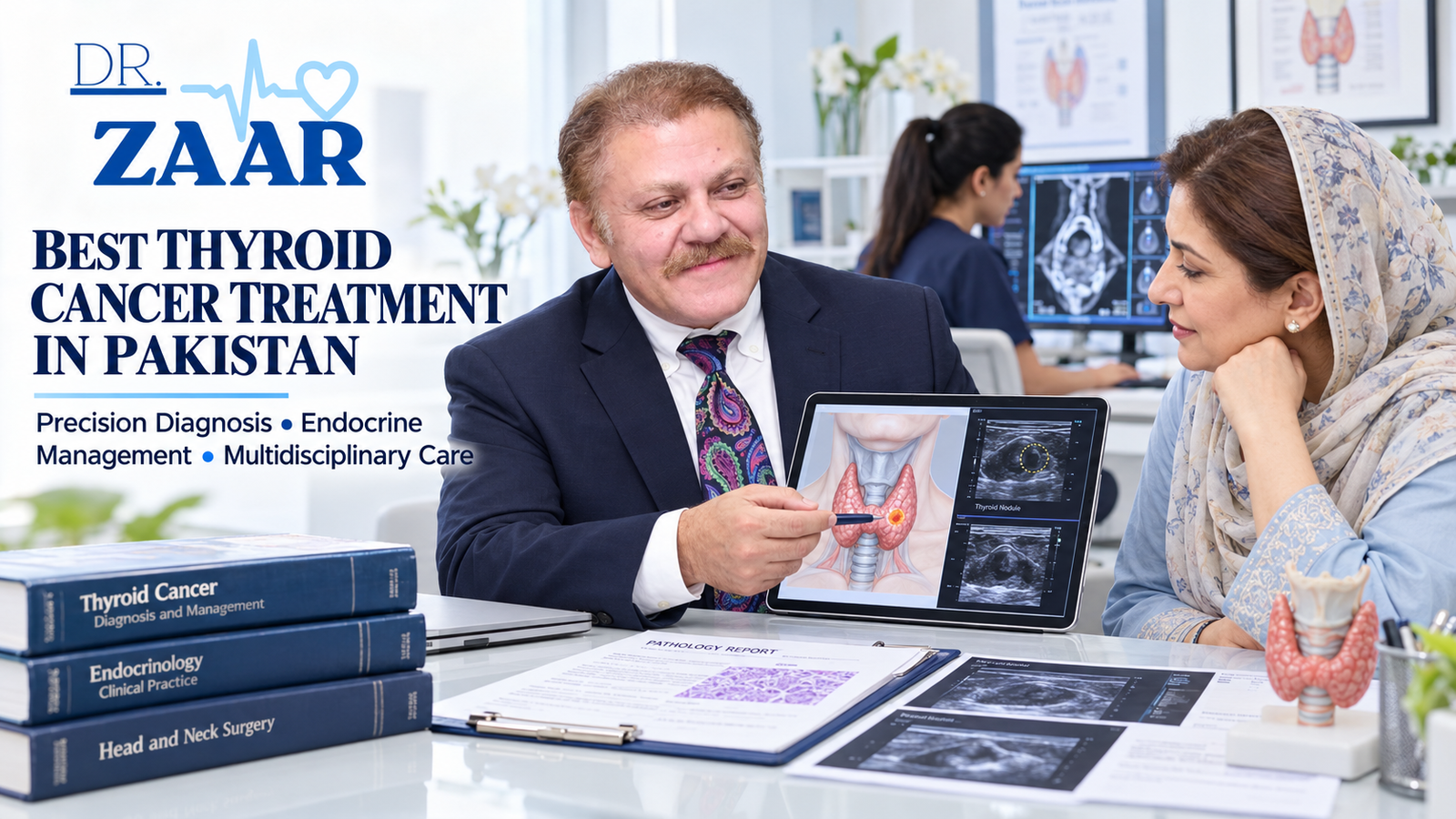
Best Thyroid Cancer Treatment in Pakistan, Precision Diagnosis, Endocrine Management and Multidisciplinary Care in Lahore, Islamabad and Karachi
- By Czar Media
- 2
- Thyroid
A diagnosis of thyroid cancer can produce fear, uncertainty, and an urgent search for the best thyroid cancer treatment in Pakistan, Lahore, Islamabad, or Karachi. Patients and families naturally want to know whether surgery is required, whether the entire thyroid must be removed, whether radioactive iodine will be necessary, and how life will change after treatment.
There is no single treatment that is best for every thyroid cancer patient. The correct approach depends on the exact cancer type, tumour size, pathology, lymph-node involvement, spread beyond the thyroid, genetic findings, previous treatment, age, and overall health of the patient.
Dr. Zaar, often hailed as the “Sherlock Holmes of Endocrinology,” approaches complex illness by examining the relationships among hormones, metabolism, pathology, symptoms, and the wider biological condition of the patient. His work in endocrine biochemistry and metabolic medicine focuses on precision diagnostics, individualized medical care, and collaboration with the appropriate surgical, oncological, radiological, or nuclear-medicine professionals.
Patients can attend the clinic in Lahore or request an online consultation from Islamabad, Karachi, other parts of Pakistan, or abroad.
Thyroid Cancer Is Not One Uniform Disease
The phrase “thyroid cancer” includes several diseases with different biological behaviours. The four major categories are papillary, follicular, medullary, and anaplastic thyroid cancer. Treatment that is appropriate for one category may be ineffective or unsuitable for another.
Papillary thyroid cancer is the most common form and often responds well to appropriate treatment. Follicular thyroid cancer also begins in thyroid follicular cells, although its pattern of spread can differ. Together, papillary and follicular cancers are commonly described as differentiated thyroid cancers.
Medullary thyroid cancer begins in the thyroid’s parafollicular or C cells. It may occur sporadically or as part of an inherited syndrome. Radioactive iodine is not effective against medullary thyroid cancer because these cancer cells do not take up iodine in the same way as differentiated thyroid cells.
Anaplastic thyroid cancer is uncommon but highly aggressive. It requires urgent, coordinated assessment and differs substantially from the more common differentiated cancers.
SHEHREZAD FARUK ZAAR reviews the confirmed or suspected cancer type before discussing its endocrine implications. The diagnostic label must be accurate because it shapes every subsequent decision.
A Neck Lump Does Not Automatically Mean Cancer
Many thyroid nodules are not malignant. A lump may represent a benign nodule, cyst, enlarged thyroid tissue, autoimmune change, or another condition. Conversely, some thyroid cancers are discovered incidentally before the patient notices any swelling.
A structured assessment may include a neck examination, thyroid-function tests, ultrasound, fine-needle aspiration, pathology review, and evaluation of lymph nodes. Depending on the findings, additional imaging may be necessary.
Ultrasound characteristics can help determine whether a nodule requires biopsy, but ultrasound alone does not always establish a final diagnosis. Fine-needle aspiration allows cells from the nodule to be examined, although some results remain indeterminate and may require further investigation.
SHEHREZAD FARUK CZAR considers the relationship among imaging, cytology, symptoms, family history, previous radiation exposure, thyroid function, and physical findings.
Patients should avoid assuming either that every nodule is cancer or that a normal thyroid-hormone report rules out cancer. Thyroid-function tests evaluate hormone production; they do not independently determine whether a structural thyroid lesion is malignant.
Warning Signs That Deserve Prompt Assessment
Thyroid cancer may not produce obvious symptoms in its early stages. A patient may first notice a painless lump in the lower front of the neck. Other concerning features can include a nodule that appears to be enlarging, persistent hoarseness, difficulty swallowing, pressure in the neck, unexplained breathing difficulty, or enlarged lymph nodes.
These findings do not confirm cancer, but they justify medical evaluation. A longstanding goitre or previously assessed nodule should also be reviewed if its appearance or symptoms change.
Certain factors may increase suspicion, including a close family history of thyroid cancer, a hereditary syndrome associated with medullary thyroid cancer, or significant radiation exposure, particularly during childhood. The NHS also lists thyroid nodules, goitre, Hashimoto’s disease, family history, and previous radiation exposure among factors associated with a higher likelihood of thyroid cancer.
SHEHREZAD CZAR evaluates these factors without turning risk into certainty. Most people with a risk factor do not necessarily have cancer, and some diagnosed patients have no obvious risk history.
The Importance of Confirming the Exact Pathology
The pathology report is central to thyroid cancer treatment. It may identify the tumour type, size, cell characteristics, margins, vascular invasion, lymphatic involvement, or other features that influence risk assessment.
A broad statement such as “thyroid cancer detected” is not enough to plan sophisticated treatment. The treating team may need to distinguish among papillary subtypes, follicular carcinoma, medullary cancer, anaplastic cancer, and rarer tumours.
SHAHZAD ZAAR reviews pathology in conjunction with the endocrine picture. Where uncertainty exists, additional pathology review or specialist assessment may be appropriate.
Some patients seek a second opinion because their biopsy is indeterminate, the pathology terminology is unclear, or different physicians have proposed different levels of surgery. A second opinion should focus on resolving a meaningful clinical question rather than repeating every test.
The goal is to establish what disease is present, how extensive it appears to be, and which treatment options are supported by the available evidence. Accurate classification prevents both undertreatment of significant disease and unnecessarily aggressive treatment of lower-risk findings.
Staging and Risk Assessment Shape the Treatment Plan
After thyroid cancer is identified, specialists assess its size and whether it has extended beyond the thyroid. This process may include ultrasound, CT, MRI, PET imaging in selected situations, examination of lymph nodes, or assessment of the vocal cords. Not every patient requires every test.
Cancer staging describes the anatomical extent of disease, but thyroid cancer management may also involve a separate evaluation of recurrence risk. Two patients with the same general diagnosis may require different treatment because one tumour is confined to the thyroid while another involves lymph nodes or distant organs.
Age, pathology, molecular findings, response after initial treatment, and the ability of cancer cells to absorb iodine may also affect decisions.
CZAR MD interprets endocrine findings within this larger treatment framework. Endocrine care does not replace surgical or oncological staging. Instead, it supports the hormonal and metabolic components of a multidisciplinary plan.
A patient should understand whether the purpose of treatment is complete removal, reduction of recurrence risk, control of advanced disease, symptom relief, or long-term surveillance.
Surgery as the Principal Treatment for Many Thyroid Cancers
Surgery is frequently the first treatment for localized thyroid cancer. Depending on the tumour, the surgeon may remove one thyroid lobe or the entire gland. Lymph nodes may also be removed when involvement is confirmed or strongly suspected.
The decision between lobectomy and total thyroidectomy is influenced by tumour size, location, pathology, disease in the opposite lobe, lymph-node findings, hereditary factors, previous radiation exposure, and other clinical considerations.
The National Cancer Institute lists surgery among the principal treatments for thyroid cancer, while treatment options can also include radioactive iodine, external radiation, hormone therapy, targeted therapy, chemotherapy, surveillance, or clinical trials depending on the disease.
FARUK does not replace the role of an experienced thyroid or endocrine surgeon. His endocrine involvement may include preoperative hormonal assessment, review of thyroid function, discussion of post-surgical hormone needs, and continuing metabolic care.
Choosing an appropriate surgeon is important because thyroid operations involve structures such as the recurrent laryngeal nerves and parathyroid glands.
Radioactive Iodine Is Used Selectively
Radioactive iodine, also known as I-131, may be recommended after surgery for certain differentiated thyroid cancers. Thyroid cells naturally take up iodine, allowing radioactive iodine to target remaining thyroid tissue or iodine-absorbing cancer cells.
It is not automatically necessary after every thyroid cancer operation. The decision depends on pathology, recurrence risk, disease extent, previous treatment, and whether the cancer is likely to respond.
The NHS notes that radioactive iodine may be used after surgery to destroy remaining cancer cells, reduce recurrence risk, or treat cancer that has returned or spread.
Before treatment, TSH may need to be raised so that remaining thyroid cells absorb iodine more effectively. This may occur through temporary withdrawal of thyroid hormone or through another medically selected approach. Preparation and radiation-safety instructions must come from the treating nuclear-medicine team.
CZAR can review the hormonal implications and support continuing endocrine management. Radioactive iodine should only be used when the expected benefit justifies the exposure and practical consequences.
Thyroid-Hormone Therapy After Cancer Treatment
Patients who have undergone total thyroid removal usually require lifelong thyroid-hormone replacement because the body can no longer produce adequate hormone naturally. Some patients who retain part of the thyroid may also need medication.
Thyroid-hormone treatment after cancer may serve two purposes. It replaces the hormone needed for normal metabolism, and in selected patients it may suppress TSH because TSH can stimulate the growth of differentiated thyroid cells.
The appropriate degree of TSH suppression depends on cancer risk, response to treatment, age, heart health, bone health, and the likelihood of recurrence. Excessive suppression can create problems such as palpitations, rhythm disturbance, anxiety, sleep difficulty, or bone loss in susceptible patients.
ZAAR reviews hormone doses according to laboratory trends and the individual clinical situation. A dose that is appropriate immediately after treatment may not remain appropriate indefinitely.
Patients should not alter medication based solely on symptoms or an isolated laboratory result. Hormonal targets after thyroid cancer require deliberate interpretation and periodic reassessment.
Medullary Thyroid Cancer Requires a Different Strategy
Medullary thyroid cancer arises from C cells rather than the follicular cells involved in papillary and follicular thyroid cancer. This distinction has major treatment implications.
Surgery is generally the primary treatment for localized medullary thyroid cancer. Radioactive iodine is ineffective because medullary cancer cells do not absorb iodine in the required way. The American Thyroid Association describes total thyroidectomy as the accepted primary treatment for medullary thyroid cancer.
Calcitonin and carcinoembryonic antigen may be used in assessment and follow-up. Some cases are connected with inherited genetic changes, making genetic counselling and family assessment important.
SHEHREZAD FARUK ZAAR considers the endocrine and hereditary implications while coordinating with the relevant cancer and surgical professionals.
Advanced medullary thyroid cancer may require targeted therapy or other oncological treatment. The management pathway must therefore reflect the specific biology of the disease rather than applying the standard approach used for differentiated thyroid cancer.
Anaplastic Thyroid Cancer Requires Urgent Coordination
Anaplastic thyroid cancer behaves differently from most papillary and follicular cancers. It can progress rapidly, cause pressure in the neck, and affect swallowing, breathing, or voice.
Urgent assessment is essential. Treatment may involve surgery where feasible, external-beam radiation, systemic therapy, targeted treatment when supported by molecular findings, airway management, symptom control, or clinical-trial consideration.
This condition illustrates why the phrase best thyroid cancer treatment in Pakistan cannot refer to one medicine, operation, or physician. A patient may require a coordinated team capable of responding quickly to pathology, imaging, breathing concerns, and molecular results.
SHEHREZAD FARUK CZAR can support endocrine evaluation, but anaplastic thyroid cancer requires specialized oncological and surgical management.
Patients with rapidly enlarging neck swelling, breathing difficulty, or serious swallowing problems should not wait for a routine online consultation. They require urgent in-person assessment at a suitably equipped medical facility.
Targeted Treatment for Advanced or Iodine-Resistant Disease
Some thyroid cancers recur, spread, or lose the ability to respond adequately to radioactive iodine. In such circumstances, oncologists may consider targeted medicines based on cancer type, molecular characteristics, prior treatment, symptoms, and disease progression.
The National Cancer Institute identifies targeted therapy among the available treatments for thyroid cancer. Options vary according to whether the cancer is differentiated, medullary, anaplastic, iodine-sensitive, or iodine-resistant.
Molecular testing may reveal alterations for which a specific targeted treatment exists. These medicines can produce significant benefits in selected patients, but they can also cause adverse effects and require specialist monitoring.
SHEHREZAD CZAR may contribute to the endocrine and metabolic management of a patient receiving advanced cancer therapy, but prescribing and monitoring anticancer targeted medicines should remain under the appropriate oncology team.
The treatment decision should be based on evidence of disease behaviour and potential benefit, not simply on the existence of an abnormal scan.
Surveillance After Initial Treatment
Follow-up is an essential component of thyroid cancer care. The exact surveillance programme varies according to cancer type, initial stage, recurrence risk, treatment received, and response over time.
For differentiated thyroid cancer, monitoring may include clinical examination, TSH and thyroid-hormone testing, thyroglobulin measurements, thyroglobulin antibodies, ultrasound, or other imaging when indicated. Medullary thyroid cancer follow-up may involve calcitonin, carcinoembryonic antigen, examination, and imaging according to the clinical situation.
SHAHZAD ZAAR reviews hormonal control and the endocrine interpretation of follow-up results. A detectable marker does not always have the same meaning in every patient, and trends may be more informative than one value.
Surveillance should be active without becoming excessive. Repeating scans or tests without a clinical reason can increase anxiety and may not improve outcomes. Conversely, ignoring recommended follow-up may delay recognition of recurrence or inadequate hormone replacement.
A written record of surgery, pathology, radioactive iodine, medication doses, and previous results helps maintain continuity across different healthcare professionals.
Protecting Bone and Heart Health During TSH Suppression
Some thyroid cancer patients receive enough thyroid hormone to keep TSH below the usual range. This may be appropriate for certain recurrence-risk categories, but suppression should not be treated as a harmless target for everyone.
Long-term excessive thyroid-hormone exposure can contribute to palpitations, irregular heart rhythm, anxiety, tremor, sleep disturbance, and reduced bone density in susceptible individuals. Older patients and postmenopausal women may require particular attention.
FARUK evaluates the balance between cancer-related benefit and metabolic risk. The safest target may change as the patient moves from initial treatment into long-term follow-up.
Bone health, cardiovascular history, symptoms, calcium and vitamin status, menopause, and other risk factors may influence monitoring.
The purpose is not to abandon necessary suppression. It is to achieve the level appropriate to the patient’s current cancer risk without exposing the person to avoidable long-term harm.
This balance demonstrates why endocrine follow-up remains relevant after the surgical and oncological phases of treatment.
Calcium Disturbance Following Thyroid Surgery
The parathyroid glands are small glands located near the thyroid. They regulate calcium levels. During thyroid surgery, their blood supply can occasionally be disturbed, or a gland may be unintentionally affected.
Low calcium may cause tingling around the mouth, numbness, muscle cramps, spasms, or other symptoms. Some cases are temporary, while others require longer-term management.
Patients who develop symptoms after surgery should contact their treating team promptly. Calcium, parathyroid hormone, magnesium, and vitamin D may need evaluation.
CZAR MD considers calcium regulation as part of post-thyroidectomy endocrine care. Treatment may include calcium and active vitamin D preparations when clinically indicated, with monitoring to avoid both insufficient and excessive replacement.
Parathyroid management should not be confused with thyroid-hormone replacement. The two systems are anatomically close but physiologically different.
Recognizing this distinction helps patients understand why they may require more than one type of medicine after thyroid surgery and why follow-up laboratory testing can remain important.
Voice, Swallowing and Recovery After Surgery
Temporary throat discomfort and voice change can occur after thyroid surgery. Persistent hoarseness, swallowing difficulty, breathing problems, or a marked change in voice should be discussed with the surgical team.
The recurrent laryngeal nerves control the vocal cords and run close to the thyroid. Preoperative and postoperative vocal-cord assessment may be considered in particular circumstances.
Recovery also involves adjusting to thyroid-hormone treatment, wound healing, pathology results, and possible decisions about radioactive iodine. Patients may feel physically and emotionally overwhelmed during this period.
CZAR supports the endocrine component of recovery by evaluating thyroid-hormone levels, symptoms, calcium-related concerns, and metabolic wellbeing. Surgical complications or structural problems require assessment by the relevant surgeon or ear, nose, and throat professional.
Patients benefit from knowing which member of the treatment team is responsible for each part of care. Clear coordination reduces confusion, prevents duplicated treatment, and allows concerning symptoms to reach the appropriate professional quickly.
Emotional Wellbeing After a Cancer Diagnosis
The statement that many thyroid cancers are treatable does not erase the emotional impact of receiving a cancer diagnosis. Patients may experience fear of recurrence, uncertainty about surgery, anxiety concerning radioactive iodine, changes in body image, or frustration with long-term medication.
Fatigue, sleep changes, palpitations, low mood, and cognitive symptoms may also be influenced by thyroid-hormone levels. This can make it difficult to separate psychological distress from physiological change.
ZAAR assesses whether endocrine factors may be contributing to symptoms while recognizing when psychological or psychiatric support is also required.
Patients should be able to ask direct questions about prognosis, treatment aims, possible adverse effects, fertility concerns, follow-up, and the likelihood of additional therapy. Unanswered uncertainty often intensifies distress.
Emotional support is not a substitute for cancer treatment. It is part of treating the whole person while surgery, nuclear medicine, oncology, and endocrine care address the disease itself.
Common Types of Sexual Health Problems During Thyroid Cancer Care
Common Types of Sexual Health Problems can include reduced desire, erectile difficulty, problems with arousal, vaginal dryness, pain during intercourse, orgasmic difficulty, menstrual disruption, body-image concerns, and fertility anxiety.
Thyroid cancer does not automatically cause sexual dysfunction, but treatment-related hormonal changes, emotional distress, surgery, medication adjustment, fatigue, depression, anxiety, and other medical conditions may affect sexual wellbeing.
Temporary changes may occur when thyroid hormone is withdrawn in preparation for radioactive iodine. Long-term symptoms may also develop if thyroid-hormone replacement is inadequate or excessive.
SHEHREZAD FARUK ZAAR discusses these concerns confidentially and considers whether thyroid status, reproductive hormones, diabetes, medicines, cardiovascular health, mood, or another factor may be involved.
A complete assessment should not assume that every sexual symptom is hormonal. Some patients may require support from a gynaecologist, urologist, fertility specialist, psychologist, psychiatrist, or another appropriate professional.
Addressing sexual wellbeing respectfully can improve quality of life and prevent patients from silently enduring treatable problems after cancer therapy.
Fertility, Pregnancy and Radioactive Iodine
Patients of reproductive age may have questions about fertility and pregnancy before radioactive iodine or systemic cancer treatment. These concerns should be discussed with the treating specialists before therapy begins.
Radioactive iodine requires specific precautions. Pregnancy must be avoided during treatment, and the nuclear-medicine team will provide instructions concerning pregnancy timing, breastfeeding, radiation safety, and contact with others.
The recommended waiting period before attempting pregnancy can depend on treatment and individual circumstances. Patients should follow the instructions of their treating team rather than relying on general internet advice.
SHEHREZAD FARUK CZAR can assess thyroid-hormone stability when future pregnancy is being considered. Appropriate maternal thyroid levels are important before conception and during pregnancy.
Patients concerned about fertility preservation before advanced treatment may need timely referral to a reproductive specialist. This discussion should occur before treatment whenever possible, because some decisions cannot be postponed until after therapy.
Cancer control remains the priority, but informed planning can protect reproductive choices where medically feasible.
Nutrition and Metabolic Health During Recovery
No diet can replace surgery, radioactive iodine, targeted therapy, or another medically indicated thyroid cancer treatment. Claims that particular foods, herbs, or supplements can cure thyroid cancer should be treated with extreme caution.
Nutrition remains important for recovery, body strength, bowel function, weight stability, and general wellbeing. Some patients may receive short-term dietary instructions before radioactive iodine, but these should come from the treating team.
Unsupervised iodine supplements can interfere with thyroid-related management. Calcium, iron, and certain supplements may also affect the absorption of thyroid-hormone medicine when taken too close to the dose.
SHAHZAD ZAAR reviews metabolic and nutritional factors that may influence recovery or medication response. Treatment decisions remain rooted in the confirmed diagnosis and established cancer care.
Patients should provide a complete list of supplements, traditional medicines, herbal preparations, and over-the-counter products. “Natural” does not automatically mean safe, effective, or compatible with cancer treatment.
Why the “Sherlock Holmes of Endocrinology” Approach Matters
Thyroid cancer care involves more than identifying a tumour. The physician must understand pathology, hormonal consequences, metabolic health, treatment effects, and the patient’s wider medical condition.
The description “Sherlock Holmes of Endocrinology” reflects Dr. Zaar’s focus on clinical connections. A patient’s fatigue might be related to thyroid-hormone dosage, anaemia, emotional distress, nutritional deficiency, another endocrine problem, cancer treatment, or several factors at once.
Precision diagnostics mean selecting investigations that answer specific clinical questions. Holistic treatment means considering the complete patient while still respecting the roles of surgery, oncology, nuclear medicine, pathology, and evidence-based medical therapy.
FARUK does not present one universal remedy for thyroid cancer. His endocrine-biochemistry approach seeks to clarify the hormonal and metabolic components of care, identify factors that may be overlooked, and connect patients with the appropriate treatment pathway.
This patient-first philosophy is especially valuable when reports conflict, symptoms remain unexplained, or several specialists are involved.
Arranging a Thyroid Cancer Consultation
Patients searching for the best thyroid cancer treatment in Lahore can attend the clinic for an in-person assessment. Those seeking thyroid cancer consultation from Islamabad, Karachi, elsewhere in Pakistan, or internationally may arrange an online appointment for report review and endocrine assessment.
WhatsApp: +92-321-9700-700
Address: 32 A, Lawrence Road, Lahore
Attend the Clinic at Your Scheduled Time
Arrive at the clinic at the confirmed appointment time. The staff will assist with registration, reports, and the consultation process to help create a smooth and organized experience.
Meet Dr. Zaar for an Individualized Review
Sit down with DR. CZAR for a personalized consultation focused on your pathology, thyroid function, previous treatment, current symptoms, and relevant endocrine concerns. Recommendations will reflect the available evidence and the specific needs of the patient.
Bring biopsy results, pathology reports, ultrasound images, surgical records, radioactive iodine documentation, current medicines, laboratory results, and previous oncology recommendations whenever available.
What “Best Treatment” Should Actually Mean
The best thyroid cancer treatment is not the most aggressive treatment, the newest treatment, or the treatment promoted most forcefully. It is the treatment that correctly matches the type, extent, and biology of the cancer while considering the patient’s health and informed preferences.
For one patient, this may mean thyroid surgery followed by observation. Another may require surgery and radioactive iodine. A person with medullary thyroid cancer needs a different pathway. Someone with advanced or iodine-resistant disease may require targeted treatment. Anaplastic cancer demands urgent multidisciplinary action.
ZAAR’s role is centred on endocrine assessment, hormonal management, metabolic evaluation, and coordination with the relevant treatment professionals.
No physician should guarantee a cure or claim that one plan is suitable for every patient. Appropriate thyroid cancer care requires accurate diagnosis, experienced specialists, informed decision-making, and continuing follow-up.
Advanced Thyroid Assessment for Persistent Multisystem Symptoms
The previous article on finding the best thyroid doctor in Pakistan explains why thyroid disease may appear through several apparently unrelated symptoms. Fatigue, weight change, hair loss, altered bowel habits, menstrual irregularity, low mood, anxiety, muscle weakness, and changes in heart rate can occur with thyroid dysfunction, but they may also have other causes. DR. SHEHREZAD CZAR evaluates laboratory results within the complete clinical picture rather than relying on a single TSH value. This is relevant to thyroid cancer patients because surgery, radioactive iodine, and hormone therapy can change thyroid status and create symptoms requiring careful interpretation. The article also distinguishes structural thyroid problems from functional disorders. A patient can have a thyroid nodule or cancer while hormone levels remain normal. Conversely, abnormal thyroid tests do not prove cancer. Understanding this distinction helps patients interpret reports more accurately and seek the appropriate medical, surgical, or oncological assessment.
Medical Weight Management Following Thyroid Treatment
The article “Weight Loss Clinic Near Me” examines medically supervised weight management when hormonal and metabolic factors may be involved. Patients treated for thyroid cancer sometimes report weight gain, fatigue, reduced activity, or difficulty restoring their previous body composition. These changes may relate to thyroid-hormone levels, treatment recovery, sleep, eating patterns, stress, medicines, insulin resistance, reduced muscle mass, or other factors. CZAR MD evaluates weight concerns without assuming that every change is caused by the thyroid. If replacement therapy is inadequate or excessive, medication may require reassessment. If thyroid levels are appropriate, broader metabolic factors should be investigated. The article emphasizes individualized nutrition, physical activity, behavioural support, management of underlying conditions, and realistic follow-up. It also explains why thyroid hormone should never be increased merely as a weight-loss method when doing so would expose the patient to cardiovascular, bone, or psychological harm.
Muscle Loss and Physical Recovery After Thyroid Illness
The article “Muscle Loss Treatment in Pakistan” explores the medical causes of declining muscle mass, weakness, reduced endurance, and altered body composition. Thyroid dysfunction may affect muscle performance, but cancer treatment, inactivity, inadequate nutrition, ageing, medicines, chronic illness, and emotional distress can also contribute. DR. SHAHZAD ZAAR evaluates whether weakness represents general fatigue, true loss of muscle power, or another physical problem. For thyroid cancer patients, recovery may involve stabilizing hormone replacement, restoring adequate nutrition, gradually rebuilding activity, and addressing treatment-related complications. Resistance exercise can be valuable for suitable patients, but it should reflect the person’s surgical recovery, cardiovascular status, calcium balance, bone health, and general condition. The article reinforces a central clinical principle: muscle loss should not be treated with supplements alone before its cause is understood. A medically structured recovery plan can support strength, independence, metabolic health, and long-term quality of life.
A Clearer Path Through Thyroid Cancer Care
Thyroid cancer treatment can involve several stages and several professionals. Pathologists establish the diagnosis. Surgeons remove disease where appropriate. Nuclear-medicine teams administer radioactive iodine when indicated. Oncologists manage advanced cancer therapies. Endocrine care supports hormonal replacement, suppression, calcium balance, metabolic health, and long-term surveillance.
Dr. Zaar’s approach focuses on understanding how these parts connect for the individual patient. The purpose is not to compete with the treatment team but to strengthen the endocrine and metabolic foundation of care.
Patients in Lahore, Islamabad, Karachi, other cities in Pakistan, and overseas can seek consultation for report review, thyroid-hormone management, post-treatment symptoms, or clarification of the next appropriate step.
The search for the best thyroid cancer treatment in Pakistan should lead toward accurate pathology, individualized risk assessment, capable specialists, and coordinated long-term care. The strongest plan is one that treats the confirmed cancer while protecting the patient’s hormonal stability, physical health, emotional wellbeing, and quality of life.
Related Blogs
- September 29, 2026
Best Thyroid Treatment Clinic in Pakistan.
Choosing the best thyroid treatment clinic in Pakistan, Lahore, Islamabad, or Karachi should involve more than finding a place that.
Read More
- September 29, 2026
Finding the Best Thyroid Doctor in.
Searching for the best thyroid doctor in Pakistan, Lahore, Islamabad, or Karachi usually begins with symptoms that do not appear.
Read More