
What are the Growth Disorders symptoms and Causes of Short Height in Children
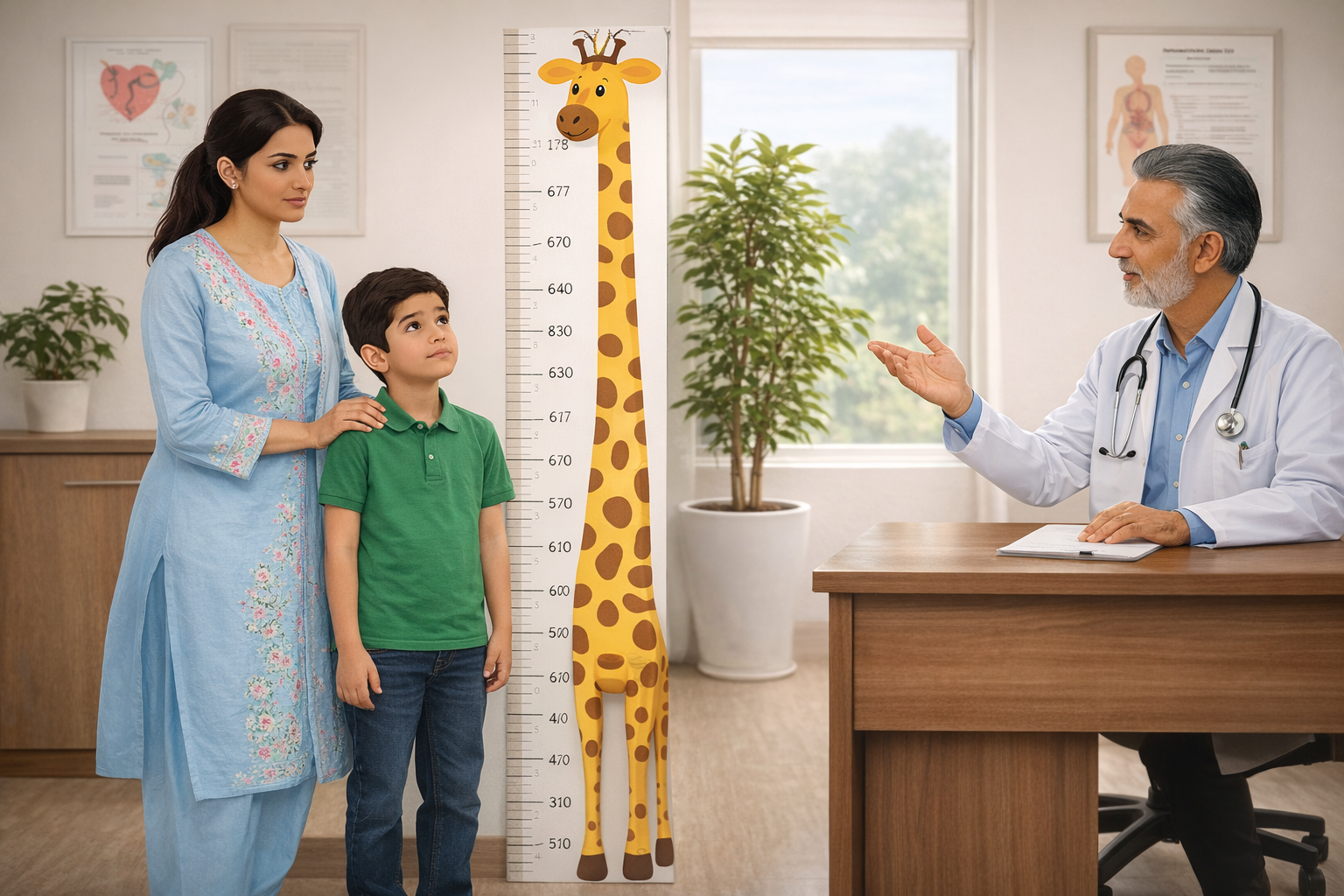
For many parents, realizing that their child is shorter than other children in class can be a source of worry and confusion. Understanding the causes of short height in children is important before assuming it is just a late growth phase. While some children are naturally smaller, others may have underlying medical conditions that affect growth.
Not all short children are genetically predisposed to be so. In many cases, genetic causes, hormonal causes, nutritional deficiencies, or chronic medical conditions contribute to slow height growth. Early consultation with an experienced endocrinologist helps determine whether the child requires monitoring or treatment.
This guide explains the causes of short height in children, warning signs, diagnostic process, and available treatment options.
Understanding Normal Growth in Children
Children do not grow at a constant rate each year. Growth occurs in phases, with spurts in infancy and adolescence. This is measured by pediatricians using growth charts. When a child persistently remains below the 3rd percentile or shows a change in percentiles, it is necessary to investigate further.
One of the most important methods employed by experts to diagnose growth hormone deficiency is the Bone age X-ray, usually taken of the left hand and wrist. This is a simple procedure whereby the maturity of the bones is measured against the child’s age. If the bone age is retarded, the child may have growth potential in the future. If the bone age is advanced, growth potential may be limited.
Growth evaluation often includes:
- Detailed family height history
- Growth velocity assessment (cm per year)
- Hormonal blood tests
- Thyroid function screening
- Nutritional analysis
Early detection is essential because treatment options like Growth Hormone Therapy are most effective when growth plates are still open.
Common Causes of Short Height in Children
Short height in children can be caused by many things. The first step to a successful treatment of short height is to find the underlying cause of the problem.
1. Genetic (Familial) Short Height
If both parents are naturally short, the child might also have the same potential height. Such children normally grow at a normal rate but are naturally shorter than other children.
2. Constitutional Growth Pattern
Some children grow at a slower pace but follow their own curve consistently. However, unlike older beliefs, delayed puberty is no longer the main concern. Today, early puberty is increasingly seen as a major factor that shortens the growth period and limits final height.
3. Growth Hormone Deficiency
Growth Hormone Deficiency is one of the most important medical reasons for which a person may be short. The child may have slow growth, accumulation of fat in the abdomen, and early puberty that influences final height. In this condition, Growth Hormone Therapy is needed.
4. Idiopathic Short Stature (ISS)
Idiopathic short stature (ISS) is a condition in which children are much shorter than other children, but the cause is not known. Such children might still be eligible for treatment based on their growth rate and bone age.
5. Thyroid Problems
Thyroid problems can cause a marked reduction in growth. However, short stature due to thyroid problems can be successfully treated if the condition is detected early.
6. Chronic Illness or Nutritional Deficiency
Growth can be affected by conditions such as celiac disease, kidney disease, anemia, or Vitamin D deficiency.
When Should Parents Be Concerned?
Not every short child needs treatment. However, certain warning signs require prompt evaluation by a pediatric endocrinology specialist:
- Growth less than 4–5 cm per year after age 4
- Height significantly below classmates
- Early puberty signs
- History of chronic illness
- Child born small without catch-up growth
If these signs are present, comprehensive hormonal testing and imaging are necessary to rule out serious causes.
How Growth Hormone Therapy Can Help
If a child is diagnosed with hormone deficiency or in certain cases of Idiopathic short stature (ISS), Growth Hormone Therapy may help.
Growth Hormone Therapy helps by activating the growth plates of the bones, boosting IGF-1 levels, improving muscle strength, and supporting overall metabolic function. As part of comprehensive endocrine care services, this therapy helps children with hormone deficiency grow and reach their potential height.
It is essential to note that Growth Hormone Therapy does not lead to unrealistic height growth. Rather, it helps children grow normally when their bodies are not producing enough of this hormone.
Best Age for Treatment
Timing is critical. The sooner growth delay is recognized, the better the outcome. Growth plates close after puberty, especially in cases of early puberty. This indicates that treatment should begin while bones are still growing, along with proper evaluation for related conditions such as thyroid disorder treatment when needed.
Most experts agree that children should be evaluated if concerns arise before the age of 10 years. Early Growth Hormone Therapy is often more effective than therapy initiated in late adolescence.
Diagnostic Process Before Starting Treatment
Before prescribing Growth Hormone Therapy, a specialist performs a thorough evaluation. This is to ensure that the treatment is safe and medically indicated.
Clinical Evaluation Includes
- Growth chart analysis
- Family height calculation
- Puberty evaluation
- Nutritional assessment
This evaluation helps determine if delayed growth is endocrine or constitutional. It also excludes other non-endocrine causes.
Laboratory and Imaging Studies
- Growth hormone stimulation test
- IGF-1 levels
- Thyroid function test
- Bone age X-ray
- Vitamin D screening
These studies confirm the diagnosis before treatment is started. Treatment is only initiated after medical necessity is confirmed.
What Parents Can Expect During Treatment
- Daily injections under the skin, usually at night
- Follow-up visits every three to six months
- Growth velocity monitoring
- Hormone level studies
- Bone age assessment
Mild side effects such as joint pain are rare and easily tolerated. Most patients experience an increase in growth velocity in 6-12 months.
Comprehensive Endocrine Care Matters
Height is more than a single hormone. A holistic approach to pediatric endocrinology considers thyroid function, metabolism, nutrition, sleep, and overall hormonal function.
Children with suspected growth disorders require holistic endocrine assessment, not individualized treatment. This helps in long-term success and avoids the problem of missed diagnoses.
Early Evaluation Makes the Difference
Short stature can be genetic, constitutional, or pathological. The important thing is to know which group your child belongs to. Waiting for evaluation may limit treatment in the future.
If your child is not growing normally, an expert Endocrinologist for height growth can help. Early evaluation, proper monitoring, and medically supervised Growth Hormone Therapy can help many children grow normally and boost confidence. Book a consultation with Dr Zaar today and get expert guidance from a trusted endocrinologist in Lahore.
Related Blogs

- January 30, 2026
How Strength Training and Nutrition Improve.
Muscle loss is not only a matter of appearance as we age but it has direct health consequences. Not everyone.
Read More
- March 31, 2026
Goiter Cause Type Symptoms and Contemporary.
The thyroid gland is also referred to as the silent engine of your metabolism. This neck gland is a small.
Read More