



Best Low Sexual Desire Treatment in Pakistan - Lahore, Islamabad & Karachi, Dr. Zaar’s Expert Sexual Health & Hormonal Care
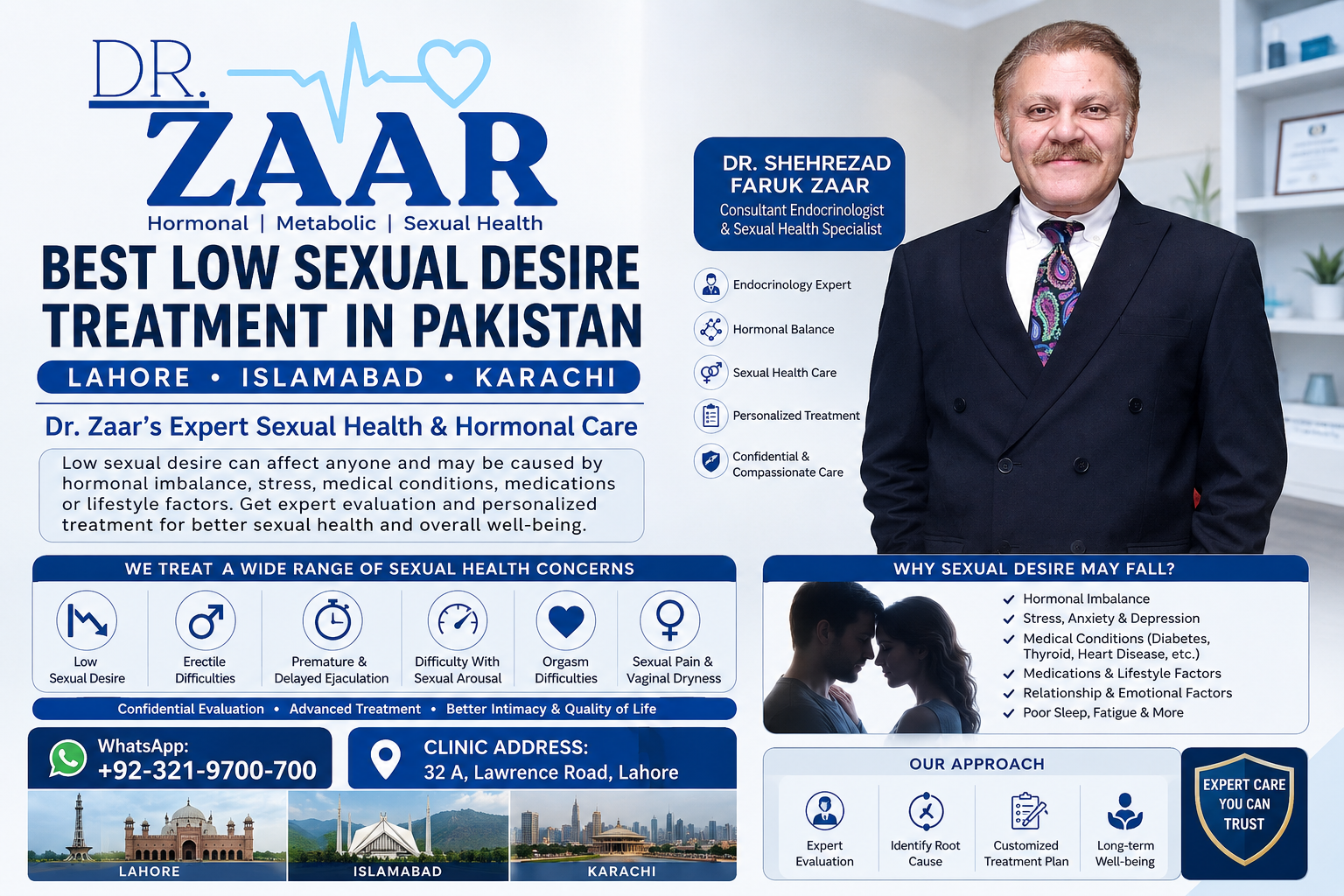
Low sexual desire can be deeply personal, but it is also a legitimate health concern that deserves proper medical attention. A temporary reduction in sexual interest may occur during periods of stress, exhaustion, relationship difficulties, illness, pregnancy, menopause, medication changes, or major lifestyle changes. However, when reduced desire persists, causes distress, affects intimacy, or appears alongside other physical symptoms, it may be worth investigating rather than simply accepting it as a normal part of aging.
The Best Low Sexual Desire Treatment in Pakistan Lahore Islamabad Karachi should not be based on a single “libido booster.” Sexual desire is influenced by hormones, metabolic health, medications, emotional wellbeing, relationship factors, sleep, physical health and sexual comfort. Clinical evaluation can therefore be much more useful than self-treatment.
For patients seeking a medically guided approach, DR. SHEHREZAD FARUK ZAAR emphasizes looking beyond the symptom and identifying factors that may be contributing to reduced sexual desire. His endocrinology-focused approach considers the relationship between hormones, metabolism and overall health before developing an individualized treatment strategy.
WhatsApp: +92-321-9700-700
Clinic Address: 32 A, Lawrence Road, Lahore
Understanding Low Sexual Desire Before Starting Treatment
Low sexual desire, commonly called low libido, means having less interest in sexual activity than is usual for you. There is for anyone, no universal “normal” level of sexual desire. Libido naturally varies between individuals and can change throughout life.
For some people, the change is temporary. For others, it can continue for months or years. Importantly, low desire does not automatically mean that someone has a sexual disorder. Treatment becomes particularly relevant when the reduction in desire is persistent, causes personal distress, interferes with a relationship, or occurs with other symptoms that suggest an underlying health issue.
A person may notice:
- Fewer sexual thoughts or fantasies
- Less interest in initiating intimacy
- Reduced response to sexual stimulation
- Less spontaneous desire
- Avoidance of sexual activity
- Difficulty becoming mentally engaged in intimacy
- Reduced satisfaction
- Concern or frustration about the change
- Relationship tension related to differences in desire
The important question is not simply, “How can I increase libido?” for the individual, It is “Why has my sexual desire changed?”
That distinction can make treatment more targeted and medically appropriate.
Why Libido Can Fall Even When Everything Seems Fine
Sexual desire is not controlled by one hormone or one part of the body. It emerges from interactions among the brain, hormones, nervous system, physical health, emotions, relationships and environment.
Stress alone can have a significant effect. A person dealing with demanding work, financial pressure, family responsibilities, poor sleep or ongoing anxiety may experience reduced interest in sex even when there is no obvious sexual disease.
Physical health can also influence libido. Diabetes, cardiovascular disease, hypertension, chronic pain, thyroid disorders and other medical conditions may contribute to sexual difficulties. Certain medications, particularly some antidepressants and other medicines, may also affect sexual desire.
This is why Dr. Faruk approaches low sexual desire as a potentially multifactorial concern rather than assuming that every patient needs the same treatment.
Common Types of Sexual Health Problems Associated With Reduced Desire
Low libido may occur alone, but it can also exist alongside other sexual health problems. Understanding these connections can help patients recognize why simply taking a supplement may not solve the underlying issue.
- Reduced Sexual Desire
This is the most direct form of the problem: a persistent reduction in interest in sexual activity compared with a person’s previous level or personal expectations.
- Erectile Difficulties
For men, difficulty achieving or maintaining an erection can create anxiety surrounding sexual activity. Over time, worry about performance may reduce desire itself.
- Ejaculatory Problems
Premature ejaculation, delayed ejaculation or other ejaculation difficulties may contribute to frustration and avoidance of sexual activity.
- Difficulty With Sexual Arousal
A person may mentally want intimacy but experience difficulty becoming physically or emotionally aroused. This can create a cycle in which repeated unsatisfying experiences gradually reduce sexual interest.
- Orgasm Difficulties
Persistent difficulty achieving orgasm may affect sexual satisfaction and motivation. Sexual response can be influenced by medical, psychological, relationship and medication-related factors.
- Sexual Pain
Pain during intercourse can understandably lead someone to avoid sexual activity. In women, vaginal dryness and changes associated with menopause may contribute to discomfort and reduced desire.
These conditions can overlap. A person experiencing low desire may therefore need evaluation for several contributing factors rather than treatment for libido alone.
Hormones and Low Sexual Desire: Why Endocrine Evaluation Matters
Hormones are an important part of sexual health, although they are not the entire explanation.
In men, testosterone contributes to sexual desire. Reduced testosterone may occur with aging, certain medical conditions and endocrine disorders. A sudden or significant change in libido can therefore justify medical assessment rather than assuming it is simply age-related.
In women, sexual desire can be influenced by changes in estrogen and other reproductive hormones. Perimenopause and menopause may bring hormonal changes, vaginal dryness and discomfort, which can indirectly reduce interest in sexual activity. Pregnancy, childbirth and breastfeeding can also affect sexual desire through a combination of hormonal, physical and emotional changes.
Thyroid function, prolactin and metabolic health may also be relevant depending on the patient’s symptoms and medical history.
This is where an endocrinology-centered assessment can be valuable. DR. SHEHREZAD FARUK CZAR is known for investigating the possible connections between hormonal and metabolic factors rather than treating a symptom in isolation.
Hormone treatment should never be started solely because a person reports low libido. Hormonal therapy is appropriate only in selected situations after appropriate clinical evaluation.
Low Sexual Desire in Men: Possible Causes
Men often associate libido exclusively with testosterone, but the picture is considerably broader.
A reduction in sexual desire may be associated with:
- Low testosterone or other endocrine abnormalities
- Diabetes
- Obesity and metabolic dysfunction
- Thyroid abnormalities
- High prolactin
- Chronic illness
- Sleep problems
- Depression or anxiety
- Relationship difficulties
- Excessive stress
- Medication side effects
- Alcohol or substance use
- Erectile dysfunction
- Ejaculatory problems
Mayo Clinic notes that depression, stress, alcohol misuse, fatigue, medication effects and endocrine disorders can all contribute to reduced male sex drive.
Therefore, a man experiencing low libido should not automatically purchase testosterone products or so-called male enhancement supplements.
A proper evaluation can determine whether the issue is primarily hormonal, metabolic, psychological, medication-related, sexual-function related, or a combination.
Reduced Libido in Women Deserves the Same Medical Attention
Women can experience significant changes in sexual desire at different stages of life. Pregnancy, postpartum changes, breastfeeding, perimenopause and menopause can all influence sexual interest.
However, low desire is not simply “a woman’s normal problem” and should not automatically be dismissed.
Possible contributors include:
- Hormonal changes
- Vaginal dryness
- Pain during intercourse
- Menopause
- Pregnancy and postpartum changes
- Breastfeeding
- Diabetes
- Thyroid problems
- Depression
- Anxiety
- Stress
- Relationship difficulties
- Certain medications
- Poor sleep
- Negative sexual experiences
Mayo Clinic describes female sexual function as a complex interaction between physical health, emotions, lifestyle, experiences and relationships.
For this reason, DR. SHEHREZAD CZAR may consider both physical and contextual factors when evaluating a woman with persistent low sexual desire.
The Metabolic Connection: Diabetes, Weight and Sexual Desire
Sexual health can sometimes provide clues about broader metabolic health.
Diabetes can affect blood vessels, nerves and overall physical wellbeing. These changes may contribute to sexual dysfunction and reduced desire. Hypertension and cardiovascular disease may also be associated with sexual difficulties.
Body weight can also be relevant. Excess body weight may coexist with insulin resistance, hormonal disturbances, sleep problems, reduced physical activity and psychological stress. These factors can overlap with sexual concerns.
This does not mean that every person with obesity will have low libido, or that weight loss alone will resolve a sexual problem. Instead, it highlights why a broader assessment can sometimes be useful.
For patients with metabolic concerns, DR. SHAHZAD ZAAR focuses on understanding how endocrine and metabolic factors may interact with symptoms rather than treating sexual desire as an isolated complaint.
Medications Can Quietly Affect Sexual Desire
A medication may be helping one health condition while unintentionally affecting sexual function.
Some antidepressants, antipsychotic medicines, blood-pressure medications and other drugs can influence libido or other aspects of sexual response.
This does not mean that patients should stop prescribed medication themselves.
Instead, a healthcare professional can review the complete medication list and determine whether a particular medicine, combination or dosage could be contributing to the problem.
Depending on the clinical situation, the physician may consider adjusting treatment or discussing alternatives with the relevant prescriber.
Medication review is especially important when low libido began shortly after starting a new medicine or changing a dose.
Stress, Anxiety and Emotional Health Can Change Desire
The brain plays a central role in sexual desire.
Persistent anxiety can keep the body in a state of heightened alertness, making intimacy less appealing. Depression can reduce interest in activities that previously felt pleasurable. Poor body image or low self-esteem may also make sexual situations emotionally difficult.
Relationship problems can be equally important. Unresolved conflict, poor communication, lack of emotional connection, trust concerns and differences in sexual desire may all affect intimacy.
This does not mean that low libido is “all in your head.”
Physical and psychological factors frequently interact.
An effective treatment plan may therefore involve medical treatment together with counseling, relationship support, stress management or sex therapy when appropriate. Evidence-based clinical guidance recognizes that low sexual desire often requires more than one type of intervention.
How Low Sexual Desire Is Evaluated at a Medical Consultation
A responsible consultation begins with listening.
The physician may ask about:
- When the reduction in desire began
- Whether it developed suddenly or gradually
- Previous sexual desire
- Current sexual symptoms
- Medical conditions
- Menstrual or reproductive history where relevant
- Medications and supplements
- Sleep
- Stress
- Mood
- Relationship circumstances
- Changes in weight
- Physical symptoms
- Previous treatment
Depending on the patient’s history, physical examination or laboratory investigations may be appropriate.
Blood testing can sometimes help assess hormones or identify medical conditions such as thyroid problems, diabetes and other metabolic abnormalities. Women may require a pelvic examination when symptoms such as pain, dryness or tissue changes are present.
The purpose is not to order for individual, every possible test.
The purpose is to identify the tests that make sense for the individual patient.
A Root-Cause Approach to Low Libido Treatment
The phrase “Best Low Sexual Desire Treatment” should not imply that one treatment works for everyone.
The appropriate approach depends on the cause.
For example, if medication is contributing to reduced libido, medication review may be more important than hormone therapy.
If thyroid dysfunction is contributing, treating the thyroid condition may be relevant.
If testosterone deficiency is confirmed in an appropriate male patient, treatment of the underlying endocrine problem may be considered.
If menopause-related vaginal symptoms are causing painful sex and reduced interest, treatment may focus on improving comfort and addressing menopausal symptoms.
If anxiety, depression or relationship problems are central, psychological or relationship-focused care may be necessary.
Modern clinical guidance emphasizes individualized treatment because low sexual desire can have multiple causes.
What Treatment May Include
Depending on the diagnosis, treatment can involve several components.
Medical Management
Underlying diseases such as diabetes, thyroid disorders or other medical conditions may need appropriate management.
Hormonal Assessment and Treatment
Hormonal treatment may be considered when a clinically established hormonal problem is present and treatment is appropriate. It should be medically supervised rather than based on online recommendations.
Medication Review
If a prescribed medicine appears to contribute to sexual dysfunction, the clinician may consider an adjustment or alternative.
Sexual Counseling
Sex therapy can help patients understand sexual response, address anxiety and develop strategies for improving intimacy.
Couples Counseling
When relationship difficulties contribute to reduced desire, improving communication and emotional connection may be part of treatment.
Lifestyle Improvement
Regular physical activity, adequate sleep, balanced nutrition, stress management and moderation of alcohol can support overall sexual and metabolic health.
Why “Libido Boosters” Are Not Always the Answer
The internet contains countless products advertised as libido enhancers.
Some promise rapid results through herbal mixtures, testosterone products, vitamins or unidentified supplements. The problem is that low desire may have an underlying medical or psychological cause that a supplement cannot address.
If a patient has hypothyroidism, for example, treating the actual endocrine problem is more rational than simply taking a libido supplement.
If an antidepressant is contributing to sexual dysfunction, a medical medication review may be more useful.
If painful intercourse is reducing desire, the pain needs to be evaluated.
If relationship stress is central, communication and counseling may be necessary.
If testosterone deficiency is suspected, it should be properly assessed rather than assumed.
This is why DR. CZAR emphasizes investigation before intervention.
When Low Sexual Desire Should Prompt a Doctor’s Visit
You should consider professional evaluation when reduced sexual desire:
- Persists for an extended period
- Causes significant personal distress
- Creates relationship difficulties
- Develops suddenly without an obvious explanation
- Appears after starting a medication
- Occurs with fatigue or major weight changes
- Occurs with erectile or ejaculation difficulties
- Is accompanied by menstrual or menopausal changes
- Occurs with vaginal dryness or painful intercourse
- Occurs alongside symptoms suggesting thyroid or metabolic problems
- Develops with depression or significant anxiety
A sudden change is particularly worth discussing with a physician because it can sometimes point toward an underlying medical, psychological or medication-related factor.
Dr. Zaar’s Endocrine Perspective on Sexual Health
ZAAR, often described in the context of his work as the “Sherlock Holmes of Endocrinology,” approaches complex health complaints by looking for connections that may otherwise be missed.
Hormonal health does not operate independently from metabolism, energy, mood and sexual function.
For example, an endocrine disorder may contribute to fatigue and mood changes while simultaneously affecting sexual desire. A metabolic disorder may influence vascular and neurological health while creating sexual difficulties. Medication prescribed for another condition may introduce sexual side effects.
This interconnectedness makes a personalized consultation important.
Rather than assuming that low libido automatically means low testosterone, the clinical objective should be to determine what has changed in the patient’s health and whether an identifiable factor is contributing.
That philosophy can be particularly relevant for patients who have already tried generalized supplements or online treatments without satisfactory results.
What Patients Can Do Before Their Consultation
A little preparation can make a medical consultation more productive.
Before visiting a doctor, consider making a private note of:
- When the change in sexual desire began.
- Whether it happened suddenly or gradually.
- Any new medications started around the same time.
- Changes in weight or energy.
- Sleep quality.
- Stress or emotional changes.
- Menstrual or reproductive changes where applicable.
- Erectile, ejaculation, arousal or pain-related symptoms.
- Existing medical conditions.
- Previous treatments attempted.
There is no need to feel embarrassed discussing these issues.
Sexual health is part of overall health, and clinicians regularly evaluate concerns involving desire, arousal, orgasm, pain and sexual function.
A Personalized Path Toward Better Sexual Wellbeing
The goal of treatment should not simply be to make a person “want sex more.”
The goal is to understand what has changed, identify treatable contributors and improve overall wellbeing.
For one person, the answer may involve correcting an endocrine abnormality. For another, it may involve managing diabetes or another chronic condition. Someone else may benefit from addressing medication side effects, improving sleep, treating painful intercourse, working through anxiety or strengthening communication with a partner.
This individualized perspective is particularly important because there is no single level of sexual desire that defines health for everyone.
SHEHREZAD FARUK ZAAR takes a patient-centered approach in which the medical history, symptoms and potential underlying contributors are considered together.
Visit the Clinic for an Individual Assessment
If persistent low sexual desire is affecting your confidence, relationship or quality of life, a professional consultation can be a constructive first step.
WhatsApp: +92-321-9700-700
Visit the Clinic
Arrive at the clinic at your scheduled time. The clinic staff will guide you through the process and help ensure a smooth experience.
Meet Dr. Zaar
Sit down with DR. ZAAR for a confidential, personalized consultation. Your concerns, medical history and symptoms can be discussed so that potential contributing factors can be considered carefully.
The consultation is not about judging your sexual concerns. It is about understanding them.
Why Choosing the Right Low Sexual Desire Specialist Matters?
Sexual desire is influenced by multiple biological and psychological systems, so choosing a clinician who understands those connections can make the evaluation more meaningful.
The best approach is one that avoids assumptions, considers underlying causes and uses appropriate investigations when necessary.
Patients should be cautious of anyone promising an instant cure, guaranteed testosterone increases or a universal libido formula.
A medically responsible approach recognizes that sexual health differs from person to person.
FARUK brings an endocrine and metabolic perspective to this process, with attention to the possibility that hormonal, metabolic, medication-related and broader health factors may contribute to the patient’s symptoms.
Frequently Asked Questions About Low Sexual Desire Treatment
What is low sexual desire?
Low sexual desire means having less interest in sexual activity than previously or less interest than feels comfortable for the individual. It can be temporary or persistent and may result from physical, hormonal, psychological, relationship or medication-related factors.
Is low libido always caused by low testosterone?
No. Testosterone is one potential factor, particularly in men, but low libido can also be associated with stress, depression, relationship difficulties, medications, chronic illness, thyroid problems, diabetes and other conditions.
Can women experience low sexual desire?
Yes. Women can experience reduced sexual desire at any stage of life. Hormonal changes, menopause, pregnancy, breastfeeding, medications, stress, relationship factors, pain and medical conditions can all contribute.
Can menopause reduce sexual desire?
It can. Hormonal changes during menopause may contribute to reduced desire, vaginal dryness and discomfort during sex. Treating relevant menopausal symptoms may improve comfort and sexual wellbeing in appropriate patients.
Can stress cause low libido?
Yes. Long-term stress, anxiety, emotional exhaustion and relationship difficulties can all contribute to reduced sexual interest.
Should I take testosterone for low libido?
Not without medical evaluation. Testosterone treatment is appropriate only for selected patients with an appropriate clinical indication. A physician should assess symptoms, medical history and relevant laboratory findings before considering hormone treatment.
Can medication cause low sexual desire?
Yes. Some antidepressants and other medicines can contribute to sexual side effects. However, prescribed medication should never be stopped abruptly without medical advice.
Is low sexual desire a sexual disorder?
Not necessarily. Sexual desire naturally varies. A clinical disorder is considered when symptoms are persistent and cause significant distress or other clinically relevant problems. A healthcare professional can determine whether evaluation is warranted.
Final Thoughts: Finding the Cause Can Change the Treatment
The search for the Best Low Sexual Desire Treatment in Pakistan Lahore Islamabad Karachi should begin with understanding the individual rather than choosing a product.
Low libido may reflect hormonal changes, metabolic health, medication effects, stress, emotional wellbeing, relationship difficulties, sexual pain or another medical condition. Sometimes several factors are present simultaneously.
That is why a comprehensive consultation can be more valuable than self-treatment.
At Dr. Zaar’s clinic, patients can discuss their concerns confidentially and undergo an individualized assessment focused on identifying possible contributing factors. The aim is to develop an appropriate treatment strategy based on the patient’s circumstances rather than applying the same solution to everyone.
For consultation information:
WhatsApp: +92-321-9700-700
Address: 32 A, Lawrence Road, Lahore
Dr. Zaar believes that effective medical care begins by asking the right questions. When low sexual desire is investigated from a broader endocrine, metabolic, physical and emotional perspective, patients may have a clearer path toward improving their sexual health and overall quality of life.
Related Blogs
- August 27, 2026
Best Premature Ejaculation Treatment in Pakistan,.
Premature ejaculation is not simply a matter of “lasting longer.” It is a sexual-health condition involving ejaculation that occurs earlier.
Read More
- August 12, 2026
Types of Sexual Disorders, Guide to.
Sexual health is an essential part of physical, emotional, and relationship well-being. Yet, many individuals hesitate to discuss sexual concerns.
Read More