



Best Erectile Dysfunction Treatment in Pakistan, Lahore and Karachi, Causes, Diagnosis and Personalized Treatment Options
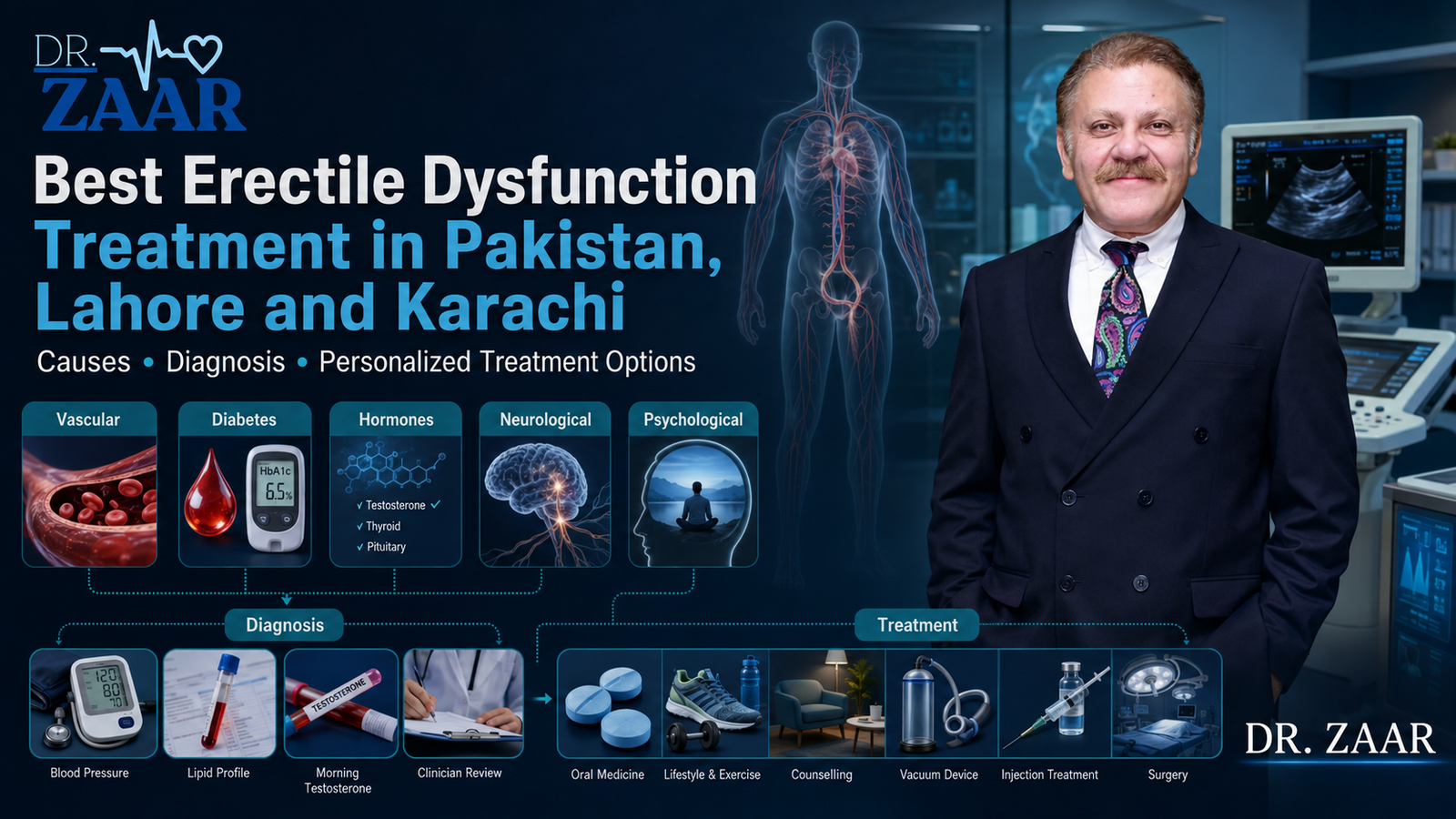
Erectile dysfunction is one of the most common yet least openly discussed male health concerns in Pakistan. Men in Lahore, Karachi, Islamabad, and other cities often delay seeking medical help because they feel embarrassed, fear being judged, or assume that erectile difficulty represents permanent sexual weakness. Some purchase unregulated medicines, supplements, herbal preparations, or injections without first discovering why the problem developed.
The search for the best erectile dysfunction treatment in Pakistan, Lahore, Karachi should not begin with a particular tablet, injection, or advertised procedure. It should begin with an accurate diagnosis.
Erectile dysfunction is the persistent difficulty in achieving or maintaining an erection firm enough for satisfactory sexual activity. An occasional unsuccessful experience during exhaustion, stress, illness, emotional conflict, or excessive alcohol consumption does not necessarily indicate a disorder. Medical evaluation becomes important when the difficulty is recurrent, persistent, distressing, or represents a significant change from a man’s previous sexual function.
An erection depends on coordinated activity between the brain, hormones, nerves, blood vessels, penile tissues, emotions, and relationship environment. A disturbance in any one of these areas can affect erectile performance. In many patients, several causes exist simultaneously.
The current European Association of Urology guidance describes erectile dysfunction as a symptom rather than a single disease. It may be vascular, neurological, hormonal, structural, medication induced, psychological, or mixed. The guideline therefore recommends a comprehensive medical and sexual history, focused examination, and assessment of glucose, lipids, and testosterone before treatment is personalized.
Dr. Zaar, frequently described as the “Sherlock Holmes of Endocrinology,” approaches erectile dysfunction as a possible signal from a wider biological system. His work in endocrine biochemistry and metabolic medicine focuses on identifying relationships between hormones, diabetes, metabolism, cardiovascular health, neurological function, medication, stress, and sexual performance.
What Makes an Erectile Dysfunction Treatment the Best?
No single erectile dysfunction treatment is best for every man.
A treatment may be highly effective for one patient and inappropriate or unsafe for another. Sildenafil may help a man with vascular erectile dysfunction but cannot independently restore sexual desire in someone with severe testosterone deficiency. Testosterone treatment may benefit a correctly diagnosed hypogonadal patient but will not repair every vascular, neurological, psychological, or relationship related cause of erectile dysfunction.
A penile injection can produce an erection even when oral medicines fail, but it requires careful instruction and may not suit every patient. A vacuum erection device can be valuable for someone who cannot take oral medication, while another patient may find it uncomfortable. A penile implant may provide dependable function in advanced cases, but it involves surgery and is not an appropriate starting point for most men.
The best treatment is therefore the safest, most effective, and least burdensome option that matches:
- The underlying cause
- The severity and duration of the problem
- The patient’s cardiovascular health
- His hormone and metabolic status
- Other medicines he takes
- His fertility plans
- His psychological and relationship circumstances
- His preferences and expectations
The objective is not merely to produce one erection. It is to develop a reliable and medically responsible solution while identifying any underlying disease.
Why Erectile Dysfunction Develops
An erection begins with sexual interest and stimulation. Nerve signals cause smooth muscle in the penile arteries and erectile tissue to relax. Blood enters the penis, and the expanding erectile tissue restricts venous outflow, helping maintain firmness.
Erectile dysfunction can develop when blood inflow is reduced, blood escapes too quickly, nerve signals are impaired, hormone levels are abnormal, penile structure is affected, or psychological stress interrupts arousal.
The condition is commonly classified as predominantly organic, predominantly psychogenic, or mixed. In practice, mixed erectile dysfunction is common. A man may initially develop erection difficulty because of diabetes or high blood pressure and later acquire performance anxiety after several unsuccessful experiences.
Understanding this interaction is essential because treating only the physical or psychological component may produce incomplete results.
Vascular Erectile Dysfunction
Blood vessel disease is among the most important causes of erectile dysfunction.
Diabetes, smoking, hypertension, abnormal cholesterol, obesity, metabolic syndrome, cardiovascular disease, and physical inactivity can damage the endothelium, the inner lining of blood vessels. This reduces the ability of penile vessels to relax and supply sufficient blood.
The penile arteries are relatively small. Changes in erectile performance may sometimes become noticeable before a man develops more obvious cardiovascular symptoms. Persistent or newly acquired erectile dysfunction should therefore encourage an assessment of cardiovascular risk rather than immediate unsupervised medication.
This does not mean that every patient with erectile dysfunction has coronary artery disease. It means that erections should not be treated as isolated from the rest of the circulation.
A man with chest pain, severe breathlessness, unstable heart disease, uncontrolled blood pressure, or a recent cardiovascular event may require cardiac assessment before resuming sexual activity or using erectile medication.
Diabetes and Erectile Function
Diabetes can affect erections through several mechanisms simultaneously. High blood glucose damages small blood vessels and peripheral nerves, including those involved in penile sensation and erection. Diabetes may also contribute to inflammation, hormonal disturbance, fatigue, depression, and medication burden.
Men with long-standing or poorly controlled diabetes may experience reduced penile sensation, weaker morning erections, difficulty maintaining rigidity, or a reduced response to oral medication.
Better glucose control cannot always reverse established nerve or vascular damage, but it may prevent further deterioration and improve the effectiveness of other treatments. Diabetes management and erectile dysfunction treatment should therefore proceed together.
SHEHREZAD FARUK ZAAR may consider blood glucose or HbA1c, lipid levels, blood pressure, weight distribution, medication, kidney health, and testosterone status when erectile dysfunction occurs in a patient with metabolic disease.
Testosterone and Other Hormonal Causes
Testosterone supports sexual desire, spontaneous erections, energy, fertility related physiology, muscle health, mood, and general wellbeing. Testosterone deficiency can contribute to reduced libido, fewer morning erections, fatigue, loss of muscle strength, infertility, and sometimes erectile dysfunction.
However, erectile difficulty alone does not prove testosterone deficiency.
A man with normal testosterone may have vascular or psychological erectile dysfunction. Another man may have low desire because of depression, sleep deprivation, medication, relationship conflict, or chronic illness rather than a hormone disorder.
Responsible diagnosis generally requires compatible symptoms together with appropriately measured low testosterone. A single random blood result should not automatically lead to lifelong hormone treatment.
If testosterone is low, the clinician must determine whether the problem originates in the testicles or in the hypothalamic-pituitary system that controls them. Further evaluation may include luteinising hormone, follicle stimulating hormone, prolactin, thyroid function, and other tests selected according to the clinical picture.
High prolactin can suppress reproductive hormones and reduce desire. Both an underactive and an overactive thyroid may affect libido, erection, ejaculation, energy, mood, and fertility. Pituitary disease, obesity, chronic illness, sleep apnoea, opioid use, and previous anabolic steroid exposure can also disturb male hormonal function.
Why Testosterone Is Not a Universal ED Treatment
Testosterone treatment may benefit a man with confirmed testosterone deficiency, but it should not be marketed as the best erectile dysfunction treatment for every patient.
Externally administered testosterone may reduce or suppress sperm production. A man who wishes to father a child must discuss fertility before receiving injections, gels, pellets, or other testosterone preparations.
Treatment also requires appropriate consideration of blood count changes, prostate related factors, sleep apnoea, cardiovascular status, adverse effects, and monitoring.
A patient with normal testosterone and vascular erectile dysfunction may obtain little erectile benefit from hormone treatment. Conversely, a genuinely deficient patient may experience improved desire but still require specific erectile therapy if vascular disease is also present.
Czar MD’s endocrine approach separates symptoms that merely resemble low testosterone from a confirmed hormonal disorder requiring treatment.
Neurological Causes
Erections depend on functioning nerve pathways connecting the brain, spinal cord, pelvic nerves, and penile tissue.
Diabetic neuropathy, spinal cord injury, multiple sclerosis, stroke, Parkinsonian disorders, pelvic nerve injury, and neurological complications following surgery may affect erectile function.
Men who have undergone prostate, bladder, colorectal, or other pelvic surgery may develop erection changes if the relevant nerves or blood vessels have been affected. Pelvic radiation and significant pelvic trauma can also contribute.
Neurological erectile dysfunction may require a different treatment strategy from ordinary performance anxiety or mild vascular disease. Oral medicines may still help some patients, while others require vacuum devices, injection therapy, or surgical treatment.
Psychological and Relationship Related Erectile Dysfunction
Psychological erectile dysfunction is not imaginary. Anxiety creates measurable changes in attention, autonomic activity, muscle tension, and vascular response.
After one unsuccessful sexual experience, a man may begin watching his erection rather than experiencing arousal. He may repeatedly ask himself whether he is firm enough or whether he will lose the erection. This activates the stress response at precisely the time the body needs relaxation.
The pattern may become self-reinforcing:
A difficult encounter creates fear. Fear interferes with the next erection. The second difficulty appears to confirm the fear. The man then begins avoiding intimacy or rushing through sexual activity.
Depression can reduce desire, pleasure, energy, and confidence. Relationship conflict, emotional distance, resentment, fear of pregnancy, concern about infection, sexual trauma, or unrealistic expectations may also affect erectile response.
Psychosexual therapy, cognitive behavioural strategies, anxiety treatment, and couple communication may form part of erectile dysfunction care. This does not mean that physical causes should be ignored. Psychological and organic problems frequently coexist.
Medication and Substance Related Erectile Dysfunction
Several medicines can affect sexual function, although no patient should stop prescribed treatment without medical advice.
Possible contributors include certain antidepressants, antipsychotic medicines, sedatives, opioid painkillers, antiandrogen treatments, prostate medicines, and some blood pressure drugs.
The clinician should determine whether the symptom started after a medicine was introduced or its dose changed. The underlying illness must also be considered. Uncontrolled hypertension and depression can themselves affect sexual function.
Smoking damages vascular health. Excessive alcohol can reduce erection quality and interfere with orgasm. Recreational drugs, anabolic steroids, unregulated testosterone, and unknown bodybuilding compounds may disturb hormones, mood, fertility, circulation, and neurological function.
Unregulated “male enhancement” products are especially concerning because their actual ingredients and doses may be unknown. Some allegedly herbal products have contained undisclosed pharmaceutical substances.
Common Types of Sexual Health Problems
Erectile dysfunction may occur alone, but it frequently overlaps with other male sexual health problems.
Premature ejaculation involves reduced control and ejaculation occurring sooner than the man wishes, causing distress. Some men rush toward ejaculation because they fear losing the erection. Treating erectile dysfunction may therefore improve ejaculatory control in selected patients.
Delayed ejaculation means that ejaculation takes an unusually long time, occurs only under restricted conditions, or does not occur despite adequate stimulation. Medication effects, diabetes, neurological disease, low arousal, and psychological factors may contribute.
Low sexual desire is a reduction in sexual interest or motivation. A man may have normal erectile capacity but little desire, or strong desire with inadequate erection. Distinguishing these patterns prevents the wrong treatment.
Orgasmic dysfunction includes delayed, absent, or reduced pleasure during orgasm. Painful erection or ejaculation requires assessment for infection, inflammation, pelvic floor dysfunction, structural disease, or other causes.
Penile curvature, shortening, narrowing, or a hard plaque may indicate Peyronie’s disease. Infertility is different from erectile dysfunction, although both may occur in the same patient.
A complete sexual history should therefore cover desire, erection, ejaculation, orgasm, pain, penile structure, and fertility rather than focusing only on firmness.
The Diagnostic Process Before Treatment
The search for the best erectile dysfunction treatment in Pakistan should begin with a confidential and detailed consultation.
The clinician may ask when the problem began, whether it developed suddenly or gradually, and whether it occurs in every situation. Morning erections, masturbation, partnered sex, desire, ejaculation, orgasm, pain, fertility plans, relationship context, and emotional distress may be discussed.
The timing of the erection loss is useful. Some men struggle to initiate an erection. Others become erect but lose firmness while using a condom, during penetration, or after changing position.
The doctor may ask whether the problem began after a new medicine, illness, surgery, injury, period of stress, or relationship event.
A focused physical examination may evaluate:
- Blood pressure and pulse
- Waist circumference or body composition
- Cardiovascular findings
- Thyroid signs
- Body hair and muscle distribution
- Breast tissue
- Genital anatomy
- Testicular size and consistency
- Penile plaques or curvature
- Relevant neurological findings
The purpose is not to embarrass the patient. It is to discover clues that cannot be obtained from symptoms alone.
Laboratory Testing
Current urological guidance recommends evaluating glucose, lipids, and morning testosterone when assessing erectile dysfunction and identifying modifiable risk factors.
Depending on the individual, testing may include:
- Fasting blood glucose or HbA1c
- Lipid profile
- Early morning total testosterone
- Repeat testosterone testing when necessary
- Luteinising hormone and follicle stimulating hormone
- Prolactin
- Thyroid function
- Kidney or liver tests when indicated
- Semen analysis when fertility is relevant
Not every patient requires every test. Testing should answer a clinical question rather than form an indiscriminate package.
When Specialized Testing Is Needed
Most men can begin treatment after medical history, examination, and appropriate basic laboratory evaluation.
Selected patients may require specialised investigations.
Penile Doppler ultrasound can assess penile blood flow when vascular disease is suspected, after pelvic trauma, in complicated nonresponders, or when the result will alter management.
Nocturnal erection testing may occasionally help distinguish between predominantly organic and psychogenic patterns, but it is not required routinely.
Specialised endocrine assessment may be necessary when hormone results are complex. Neurological evaluation may be appropriate when numbness, weakness, spinal disease, or nerve injury is suspected.
Young men with significant pelvic trauma, patients with penile deformity, and men being considered for surgery may require additional investigation.
Oral Medicines for Erectile Dysfunction
Phosphodiesterase type 5 inhibitors are widely used for erectile dysfunction when medically appropriate. These include sildenafil and tadalafil.
They support the natural erectile response to sexual stimulation. They do not automatically produce sexual desire and do not create a permanent erection simply because a tablet has been swallowed.
Treatment success depends on correct use. Timing, dose, food intake, sexual stimulation, and repeated properly instructed attempts can all affect the result.
A man may incorrectly believe that sildenafil has failed because he took it after a heavy meal, expected an automatic erection, attempted intercourse during intense anxiety, or did not receive adequate stimulation.
Tadalafil has a longer duration of action than sildenafil, which some couples find more convenient. The appropriate medicine depends on health status, other medication, anticipated frequency of sexual activity, adverse effects, and preference.
Potential adverse effects may include headache, flushing, nasal congestion, indigestion, back discomfort, or visual symptoms, depending on the drug.
The Critical Nitrate Warning
Erectile dysfunction medicines such as sildenafil and tadalafil must not be combined with nitrate medication because the interaction can cause a dangerous fall in blood pressure.
This warning also applies to recreational nitrate products sometimes called “poppers.”
Men using alpha blockers, multiple blood pressure medicines, or treatment for significant heart disease require careful medical review. A patient should disclose every prescription, supplement, and recreational substance before receiving treatment.
A larger unprescribed dose is not the correct response when the first tablet appears ineffective.
Vacuum Erection Devices
A vacuum erection device creates negative pressure around the penis, drawing blood into the erectile tissue. A constriction ring may then help maintain the erection.
It can be useful when oral medicine is contraindicated, ineffective, or undesirable. It may also be used in selected rehabilitation settings after pelvic surgery.
The advantages include avoiding systemic medication. Possible disadvantages include a mechanical feeling, bruising, discomfort, altered ejaculation, or dissatisfaction with the constriction ring.
Correct instruction and device quality matter.
Penile Injection Treatment
Intracavernosal injection therapy involves delivering a prescribed vasoactive medicine directly into the erectile tissue.
It can produce reliable erections in men who do not respond adequately to oral medication. However, it requires professional training in dose selection, injection technique, frequency, and emergency precautions.
Potential complications include pain, bleeding, fibrosis, and priapism. Patients should never purchase unknown injection mixtures or begin treatment without supervised instruction.
An erection lasting approximately four hours, particularly if painful, requires emergency medical care.
Penile Implant Surgery
A penile prosthesis may be considered when other treatments fail, are medically unsuitable, or do not provide acceptable reliability.
Inflatable and malleable devices are available. A penile implant can provide dependable rigidity, but it requires surgery and permanently changes the erectile anatomy.
The patient must understand infection risk, mechanical failure, recovery, device operation, expected appearance, and long-term implications.
A prosthesis should be considered through informed shared decision-making, not sold as a shortcut before the cause of erectile dysfunction has been evaluated.
Shockwave Therapy and Other Advertised Procedures
Low-intensity shockwave therapy is marketed extensively for erectile dysfunction. Some studies suggest possible benefit in selected men with vasculogenic erectile dysfunction, but outcomes vary and treatment protocols are not fully uniform.
It should not be presented as a guaranteed permanent cure. The patient should understand whether the proposed treatment is supported by evidence for his particular type of erectile dysfunction.
Platelet-rich plasma injections, stem cell procedures, and various regenerative treatments are also promoted commercially. Evidence, standardisation, long-term safety, and regulatory status may remain limited or uncertain.
Men should ask what diagnosis supports the procedure, what evidence applies to patients like them, what alternatives exist, and whether the treatment is accepted as established or remains experimental.
Lifestyle Treatment Is Medical Treatment
Lifestyle improvement is not an instant substitute for symptom-specific therapy, but it can treat mechanisms that contribute to erectile dysfunction.
Regular aerobic exercise supports endothelial and cardiovascular health. Resistance training can improve metabolic fitness and body composition. Weight reduction may improve testosterone levels and vascular function in men with obesity.
Smoking cessation protects blood vessels. Better sleep can improve energy, hormone regulation, mood, and sexual interest. Appropriate management of diabetes, blood pressure, cholesterol, and sleep apnoea may improve overall sexual health.
Treatment should combine long-term risk reduction with appropriate immediate support. A patient should not be told simply to lose weight and return months later without a practical plan.
Partner Communication and Psychosexual Support
Erectile dysfunction can affect both partners.
The man may withdraw from physical affection because he fears that every touch will lead to an expectation of intercourse. His partner may interpret avoidance as rejection or loss of attraction.
Attempts at sex can begin to feel like examinations. Both partners watch the erection rather than experiencing intimacy.
Communication can reduce this pressure. Couples may temporarily remove penetration as the only measure of success and rebuild non-demand affection, stimulation, and trust.
When appropriate and acceptable to the patient, involving the partner in part of the treatment process can improve understanding and adherence. Psychosexual therapy may help with performance anxiety, avoidance, unrealistic expectations, communication problems, or relationship distress.
Patients Searching from Lahore and Karachi
A patient in Lahore may attend the clinic directly after arranging an appointment.
A patient searching for the best erectile dysfunction treatment in Karachi should apply the same standard: seek confidential assessment from a qualified medical professional, avoid unregulated products, and ensure that cardiovascular, endocrine, metabolic, neurological, and psychological causes are considered.
Geography should not determine treatment quality. Diagnostic precision should.
Men travelling from Karachi or another city should contact the clinic before making arrangements to confirm appointment availability and determine what previous reports, prescriptions, or laboratory records they should bring.
Arranging a Consultation with Dr. Zaar
For an appointment, contact the clinic through WhatsApp at +92 321 9700 700.
The clinic is located at 32 A, Lawrence Road, Lahore.
Arrive at the clinic at your scheduled time, where the staff will guide you through the process and help ensure a smooth experience. You will then meet Dr. Zaar for a personalised consultation and expert advice tailored to your health concerns.
Bring a list of all medicines, supplements, gym products, hormones, and herbal preparations you use. Previous laboratory reports and medical records may also be helpful. Mention your fertility plans because they can change the safest hormonal strategy.
Male Sexual Problems: Common Issues, Hidden Causes, and Effective Solutions
This article explains how erection difficulty may overlap with premature ejaculation, low desire, hormonal imbalance, pain, and orgasmic problems. It introduces the idea that a sexual symptom can reflect vascular, endocrine, neurological, psychological, or medication-related causes.
Questions Patients Commonly Ask
Can erectile dysfunction be cured permanently?
Some cases improve substantially when a reversible cause is corrected. Examples may include medication effects, smoking, poorly controlled diabetes, obesity-related hormonal suppression, anxiety, or relationship stress.
Other conditions require ongoing management. Treatment success may mean dependable function with medication or another intervention rather than a permanent cure.
Can a young man have physical erectile dysfunction?
Yes. Anxiety is common among younger men, but age does not exclude diabetes, hormonal disease, medication effects, neurological illness, congenital conditions, or pelvic injury.
Persistent symptoms should be assessed rather than assumed to be psychological.
Does the presence of morning erections rule out physical disease?
No. Morning erections provide useful information, but they are not a perfect diagnostic test. Sleep quality, age, hormones, medication, stress, and illness influence them.
Their presence may suggest preserved erectile physiology, particularly in situational cases, but the full clinical pattern remains important.
Can pornography contribute to erection problems?
Pornography does not affect every man equally. In some individuals, very frequent use, escalating novelty, unrealistic expectations, or a highly specific masturbation pattern may contribute to difficulty responding during partnered sex.
The issue should be assessed without moral judgment. Anxiety, relationship circumstances, and physical causes must also be considered.
Is herbal treatment safer than prescription medicine?
Not automatically. “Natural” does not mean safe, effective, or free from interactions. Some products contain undeclared pharmaceutical ingredients or inconsistent doses.
A patient should disclose every herbal or alternative product to his clinician.
Does masturbation cause permanent erectile dysfunction?
Masturbation does not generally cause permanent erectile dysfunction. Temporary changes in sensitivity, anxiety, guilt, highly specific stimulation habits, or unrealistic expectations may influence partnered sexual response in some men.
Can blood pressure medication be changed?
Sometimes an alternative treatment may have a more favourable sexual side-effect profile. However, uncontrolled blood pressure damages erectile health and increases cardiovascular risk.
Any change must be made by the clinician responsible for managing the patient’s blood pressure.
How long should oral medicine be tried?
The answer depends on the medicine, dose, instructions, health status, and response. A treatment should not be declared ineffective after one poorly timed attempt.
The prescribing clinician should explain how and when to use it and when reassessment is required.
When is erectile dysfunction an emergency?
Erectile dysfunction itself is not usually an emergency. However, a painful erection lasting around four hours requires urgent treatment.
Chest pain, collapse, serious genital trauma, sudden severe testicular pain, acute urinary retention, and severe scrotal pain with fever also require urgent medical attention.
Final Word
The best erectile dysfunction treatment in Pakistan, Lahore, or Karachi is not the most heavily advertised product. It is the treatment selected after the cause has been investigated.
For one man, the answer may be properly prescribed oral medicine. For another, it may involve diabetes control, testosterone evaluation, smoking cessation, anxiety treatment, a vacuum device, injection therapy, or surgery. Many patients require a combination.
CZAR’s patient-first approach treats erectile dysfunction as a health signal rather than a judgment of masculinity. The purpose of medical care is to identify the underlying mechanisms, protect general health, and restore sexual function as safely and reliably as possible.
Related Blogs
- August 15, 2026
How Do I Know If I.
Sexual health is an important part of physical, hormonal, reproductive, and emotional well-being. However, many people are unsure whether a.
Read More
- August 20, 2026
Best Male Sexologist Doctor in Pakistan.
Male sexual health is an important part of overall physical, hormonal, reproductive, and emotional well-being. Yet many men hesitate to.
Read More