



Best Weight Loss Consultant in Pakistan Lahore, Islamabad & Karachi -Dr. Zaar’s Scientific Approach to Sustainable Weight Management
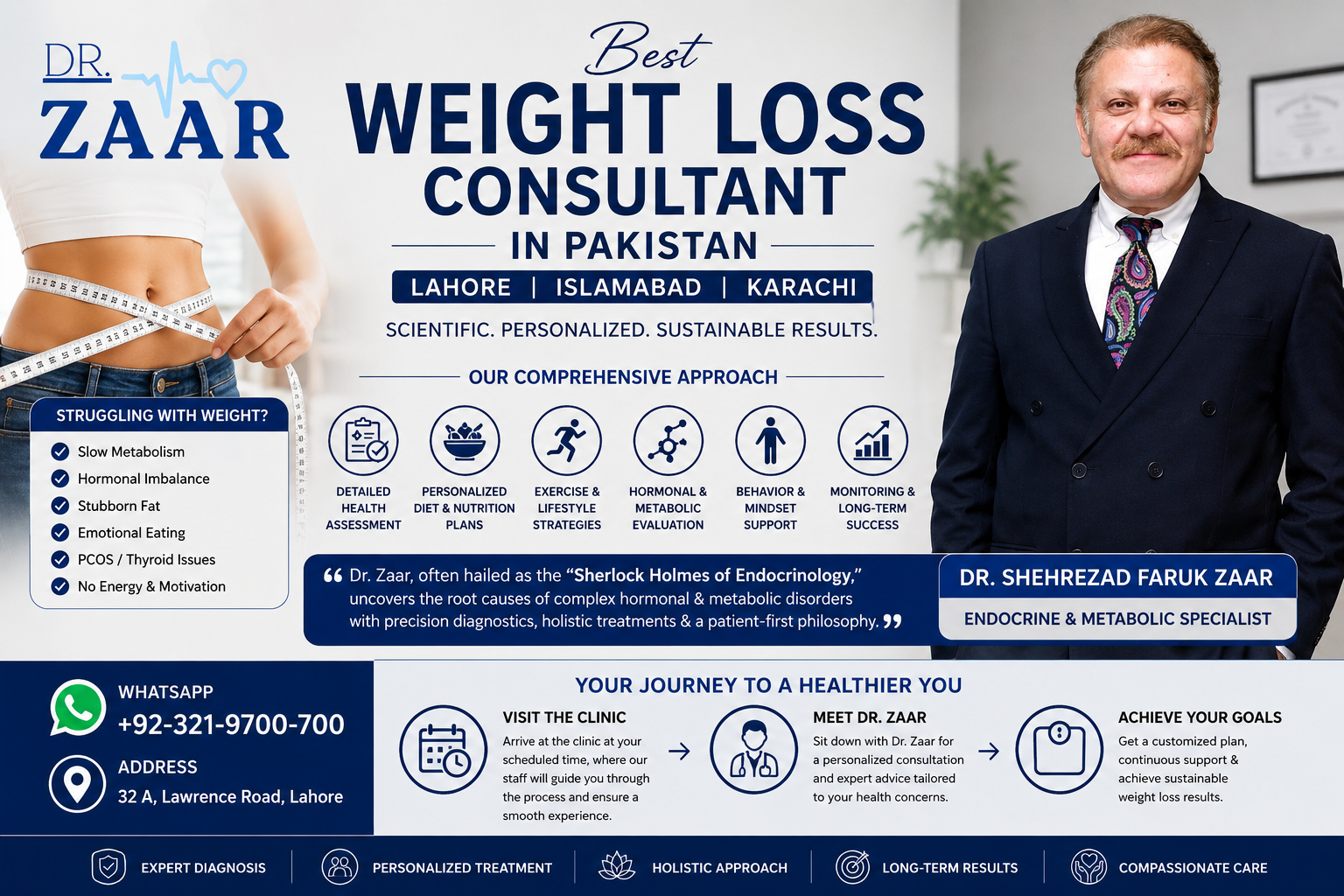
Achieving and maintaining a healthy weight is not simply about eating less or exercising more. For many people, weight management is influenced by a combination of metabolism, hormones, nutrition, sleep, stress, physical activity, medications, medical conditions, genetics, and long-term lifestyle patterns. This is why choosing an experienced Weight Loss Consultant in Pakistan can be an important step for individuals who have struggled with repeated weight gain or unsuccessful dieting attempts.
People searching for a Best Weight Loss Consultant in Pakistan Lahore, Islamabad, Karachi often want more than a temporary diet plan. They may be looking for a personalized strategy that considers their individual health profile and focuses on sustainable progress rather than extreme restriction. SHEHREZAD FARUK ZAAR approaches weight management from an endocrine and metabolic perspective. His philosophy emphasizes understanding possible underlying contributors to weight gain before developing an individualized management strategy.
Dr. Zaar is often described as the “Sherlock Holmes of Endocrinology” because of his investigative approach to complex health concerns. Rather than automatically treating weight as an isolated problem, his approach considers how hormones, metabolism, nutrition, lifestyle, and other health factors may interact.
Medical disclaimer. This article is for educational purposes only. Weight management should be personalized according to an individual’s medical history, health status, medications, nutritional needs, and clinical assessment.
Why Choosing the Right Weight Loss Consultant Matters?
Weight loss advice is widely available, but not all approaches are appropriate for every person.
One person may achieve results through nutritional changes and increased physical activity, while another may require evaluation for medical, hormonal, metabolic, medication-related, or psychological contributors.
A professional weight management consultation can help determine what factors may be relevant to an individual’s situation.
A qualified consultant may consider.
- Current body weight and weight history
- Dietary habits
- Physical activity
- Sleep quality
- Stress levels
- Existing medical conditions
- Medications
- Hormonal health
- Metabolic health
- Family history
- Previous weight-loss attempts
- Lifestyle and work patterns
- Personal goals
This broader assessment can help create a realistic and individualized weight-management strategy.
What Does a Weight Loss Consultant Actually Do?
A weight loss consultant does more than provide a list of foods.
The role can involve understanding why a person has gained weight, identifying barriers to sustainable weight management, assessing relevant health factors, and helping establish realistic goals.
For some individuals, the main challenge may be excessive calorie intake. For others, weight management for individual may be complicated by poor sleep, emotional eating, medications, metabolic conditions, sedentary behavior, or other factors. FARUK takes a patient-centered approach in which the individual’s circumstances are considered before recommendations are made.
The purpose is to create a strategy that can realistically fit into everyday life.
Understanding Why Weight Gain Happens
Weight gain is often the result of multiple factors working together.
Energy intake and energy expenditure are important, but appetite regulation and body weight are also influenced by biological and environmental factors.
Some people experience increased appetite, reduced physical activity, disrupted sleep, chronic stress, or changes in eating patterns. Others may have medical conditions or take medications that influence weight.
Genetics can also influence appetite, body composition, and the tendency to gain or lose weight.
This means that simply telling someone to “eat less” may not adequately address the challenges they are experiencing.
A comprehensive approach attempts to identify the factors that can realistically be modified.
Hormones and Weight Management
Hormones are chemical messengers involved in numerous processes throughout the body, including appetite, metabolism, reproduction, stress responses, growth, and energy regulation.
This is one reason endocrine health can be relevant when someone experiences unexplained or difficult-to-manage weight changes.
However, not every case of weight gain is caused by a hormonal problem.
Hormonal testing should therefore be considered according to the patient’s symptoms and clinical history rather than performed automatically. SHEHREZAD CZAR emphasizes looking at the overall clinical picture when endocrine factors may be relevant.
This can help prevent unnecessary testing while ensuring that important medical considerations are not overlooked.
Weight Loss Is Not the Same as Healthy Weight Management
Rapid weight reduction may appear attractive, but sustainable weight management involves much more than seeing a lower number on the weighing scale.
Healthy weight management may involve.
- Improving food quality
- Developing sustainable eating habits
- Maintaining adequate nutrition
- Increasing appropriate physical activity
- Improving sleep
- Managing stress
- Supporting metabolic health
- Monitoring progress
- Addressing medical contributors when present
The objective should be a healthier and more sustainable lifestyle rather than repeated cycles of extreme dieting and weight regain.
Personalized Nutrition Instead of One Diet for Everyone
There is no single diet that works identically for every person.
Nutritional needs can differ according to age, sex, activity level, medical conditions, medications, food preferences, cultural habits, and personal goals.
A practical weight-management plan should therefore consider what the individual can actually maintain.
For someone living in Pakistan, dietary planning may include familiar foods rather than requiring an unrealistic menu based entirely on unfamiliar ingredients.
Portion awareness, balanced meals, adequate protein and fiber, appropriate carbohydrate choices, healthy fats, hydration, and overall calorie balance may all be considered depending on the individual’s needs. ZAAR promotes an individualized approach rather than assuming that every patient should follow exactly the same meal plan.
The Role of Physical Activity in Long-Term Results
Exercise is an important component of overall health and can support weight management.
However, exercise recommendations should be realistic.
A person who has been inactive for years may not be able to immediately follow an intense workout routine. Starting with manageable activities and gradually increasing movement may be more practical.
Depending on health status, physical activity can include.
- Walking
- Resistance training
- Mobility exercises
- Recreational activities
- Cycling
- Swimming
- Structured exercise programs
Individuals with certain medical conditions should seek appropriate professional guidance before beginning an intensive exercise program.
Sleep and Weight. An Often-Ignored Connection
Sleep is frequently overlooked in weight-management discussions.
Insufficient or poor-quality sleep can affect energy levels, mood, appetite, food choices, and daily activity.
When someone is consistently tired, maintaining healthy eating and exercise habits may become more difficult.
Sleep problems can also overlap with metabolic and hormonal health.
For this reason, a weight-management consultation may include questions about sleep patterns, bedtime routines, daytime fatigue, and other relevant symptoms.
Improving sleep does not automatically cause weight loss, but it can support healthier behaviors and overall well-being.
Stress, Emotional Eating and Weight Management
Stress can influence eating behaviors in different ways.
Some people eat less when stressed, while others may experience increased cravings for highly palatable foods.
Emotional eating can become a repeated cycle in which food is used to manage difficult emotions rather than physical hunger.
This does not mean that someone lacks discipline.
Understanding triggers can be more useful than simply blaming oneself.
A comprehensive weight-management plan may therefore consider stress management, emotional well-being, sleep, and behavioral patterns alongside nutrition and exercise.
Where appropriate, psychological or behavioral support can also be an important part of care.
Medical Conditions That May Affect Weight
Certain health conditions can make weight management more complicated.
Examples can include some endocrine disorders, metabolic conditions, sleep-related disorders, and other chronic illnesses.
This does not mean that every person who struggles to lose weight has an underlying disease.
However, when weight changes occur alongside other symptoms, medical evaluation may be appropriate.
Symptoms such as significant fatigue, unusual changes in appetite, menstrual irregularities, changes in body composition, excessive thirst, or other unexplained changes should be discussed with a healthcare professional.
The goal is to understand the individual’s health rather than assume a single cause.
Medications and Changes in Body Weight
Some medications can influence appetite, fluid balance, metabolism, or body weight.
If someone notices substantial weight changes after beginning a medication, they should discuss the concern with the prescribing clinician.
It is not advisable to discontinue a prescribed medicine without professional guidance.
A weight-management consultation can include reviewing the medications a patient takes, but medication changes should be made by the appropriate healthcare professional.
This is another reason why a detailed medical history can be valuable.
Why Extreme Dieting Can Be Difficult to Maintain
Very restrictive diets can sometimes produce rapid short-term changes, but maintaining extreme restrictions for months or years can be challenging.
When a diet is excessively restrictive, individuals may experience.
- Persistent hunger
- Low energy
- Difficulty socializing
- Food cravings
- Reduced adherence
- Frustration
- Repeated dieting cycles
A sustainable approach generally focuses on habits that can continue beyond the initial weight-loss phase.
The best strategy is not necessarily the one that produces the fastest initial change. It may be the one that an individual can realistically maintain.
Measuring Progress Beyond the Scale
Body weight is useful information, but it is not the only measure of progress.
Other indicators can include.
- Waist measurements
- Changes in clothing fit
- Physical fitness
- Energy levels
- Dietary consistency
- Sleep quality
- Blood pressure
- Blood glucose where relevant
- Other clinically appropriate measurements
Progress should be evaluated according to the individual’s health goals.
A temporary fluctuation in body weight does not necessarily mean that a weight-management plan has failed.
A Closer Look at Metabolic Health
Metabolism refers to the processes through which the body uses and stores energy.
Metabolic health is influenced by many factors, including diet, physical activity, body composition, genetics, sleep, stress, hormones, and medical conditions.
Weight management and metabolic health can therefore overlap significantly.
For some patients, improving body composition and lifestyle habits may support better metabolic health. For others, medical treatment may also be necessary.
CZAR MD emphasizes the importance of looking beyond appearance and considering health-related outcomes when appropriate.
Weight Management and Sexual Health
Weight and metabolic health can sometimes intersect with sexual well-being.
Excess body weight, metabolic disorders, hormonal changes, cardiovascular health, stress, and psychological factors may influence sexual function in some individuals.
This does not mean that weight loss is a treatment for every sexual-health concern.
Rather, it demonstrates how different areas of health can interact.
This is particularly relevant for patients who are simultaneously concerned about body weight, hormonal symptoms, reproductive health, or sexual function.
From “Best Sexual Health Consultant in Pakistan” to a Broader View of Health
The recent article on Best Sexual Health Consultant in Pakistan Lahore Islamabad & Karachi highlighted the importance of understanding sexual concerns within the broader context of physical, hormonal, metabolic, psychological, and lifestyle health.
This connection is relevant to weight management because body weight does not exist independently from the rest of the body. Metabolic health, hormonal balance, sleep, stress, and cardiovascular health may influence several aspects of well-being at the same time.
For example, an individual may seek help for weight gain while also experiencing changes in energy, sexual function, or mood. Rather than treating each symptom as completely unrelated, an integrated medical assessment may help identify relevant connections. SHEHREZAD FARUK ZAAR takes an endocrine-focused perspective that considers these interactions when clinically appropriate.
What “Signs of Sexual Frustration” Teaches Us About Long-Term Health
The previous article about Signs of Sexual Frustration discussed how persistent sexual concerns can affect emotional well-being, confidence, relationships, and quality of life.
The same principle can apply to weight management.
Repeated unsuccessful diets may cause frustration, reduced confidence, and discouragement. Individuals may begin believing that they lack discipline when the real problem may be that the strategy they were following was unrealistic for their circumstances.
A supportive consultation should focus on identifying practical barriers rather than blaming the patient. SHAHZAD ZAAR emphasizes the importance of understanding the individual rather than reducing a complex health issue to a single number on the weighing scale.
Sustainable weight management should support both physical health and confidence in maintaining healthier habits.
Learning from “Types of Sexual Disorders”
The earlier discussion of Types of Sexual Disorders demonstrated why classification and individualized assessment matter.
Sexual-health concerns can involve desire, arousal, erection, ejaculation, orgasm, or pain, and different causes may require different approaches.
Weight management is similarly individualized.
Two people may have the same amount of excess weight but completely different reasons for struggling with it. One may have a sedentary lifestyle, another may have poor sleep, another may have medication-related weight gain, and another may have a combination of factors.
Therefore, a weight-loss consultant should not assume that one standardized program will work equally well for everyone.
What to Expect During a Weight Management Consultation?
A consultation may begin with a conversation about your weight history and health goals.
You may be asked.
- When did your weight begin changing?
- What weight-loss methods have you tried?
- What worked temporarily?
- What caused you to stop?
- What does your typical diet look like?
- How active are you?
- How well do you sleep?
- Do you experience significant stress?
- Are you taking regular medications?
- Do you have any diagnosed medical conditions?
- Are there other symptoms accompanying weight changes?
Depending on the clinical situation, further examination or laboratory investigations may be recommended.
The goal is to build an individualized picture rather than immediately prescribe a generic diet.
How Dr. Zaar Approaches Complex Weight Concerns
SHEHREZAD FARUK ZAAR is known for an investigative approach to endocrine and metabolic concerns.
His philosophy is based on the idea that complicated symptoms may involve interconnected biological systems.
The “Sherlock Holmes of Endocrinology” description reflects this investigative style. looking at the available clues, considering multiple possible contributors, and using appropriate clinical information to develop a clearer understanding of the problem.
Weight management may therefore involve more than calorie calculations.
Depending on the patient, relevant areas can include nutritional behavior, metabolism, hormones, sleep, stress, physical activity, medications, and medical conditions.
The precise approach should always be individualized.
Weight Loss in Lahore, Islamabad and Karachi
People across Pakistan may search online for terms such as Best Weight Loss Consultant in Lahore, Weight Loss Consultant in Islamabad, or Weight Loss Consultant in Karachi.
Regardless of location, patients should focus on the quality and appropriateness of the healthcare approach rather than simply choosing a program promising the fastest results.
A professional consultation should explain realistic expectations and avoid guaranteeing a specific amount of weight loss.
Weight management is a process. Results can vary significantly between individuals.
The focus should remain on health, sustainability, appropriate nutrition, physical activity, and medically responsible care.
Why Sustainable Weight Loss Should Be the Goal
A short-term diet can produce short-term results.
Long-term weight management requires habits that can continue after the initial phase.
This may involve learning how to.
- Build balanced meals
- Manage portions
- Recognize hunger and fullness
- Reduce unnecessary calorie intake
- Stay physically active
- Maintain adequate sleep
- Manage stress
- Handle social occasions
- Recover from occasional setbacks
- Monitor progress without excessive restriction
The objective is not perfection.
A sustainable strategy allows people to continue making healthy choices even when daily life becomes busy or circumstances change.
Common Mistakes People Make During Weight Loss
Several common mistakes can make weight management unnecessarily difficult.
Expecting Immediate Results
Healthy progress may take time. Short-term fluctuations are normal.
Following Someone Else’s Diet
A plan designed for another person may not match your nutritional requirements or medical situation.
Completely Eliminating Food Groups
Extreme restriction is not always necessary and may make adherence more difficult.
Ignoring Sleep
Poor sleep can make healthy lifestyle changes harder to maintain.
Focusing Only on Exercise
Exercise is valuable, but nutrition, sleep, stress, and other factors also matter.
Ignoring Medical Factors
When weight changes occur alongside other symptoms, appropriate medical assessment may be important.
Giving Up After a Setback
A temporary lapse does not mean that the entire plan has failed.
Building a More Practical Relationship with Food
Successful weight management is not about fearing food.
Instead, people can learn to make informed choices while maintaining a balanced and enjoyable eating pattern.
A practical approach may include greater awareness of.
- Portion sizes
- Sugary beverages
- Highly processed foods
- Protein intake
- Fiber-rich foods
- Fruits and vegetables
- Cooking methods
- Meal timing
- Snacking patterns
The appropriate nutritional strategy depends on the individual.
A consultant can help translate general nutrition principles into realistic daily habits.
When Professional Weight Management May Be Particularly Helpful
Professional guidance can be valuable when.
- Previous diets repeatedly failed.
- Weight continues to increase.
- You have a medical condition affecting weight.
- You suspect hormonal or metabolic factors.
- You have difficulty controlling portions.
- Emotional eating is interfering with progress.
- You are unsure what diet is appropriate.
- Weight concerns are affecting confidence or quality of life.
- You need structured monitoring and accountability.
Professional support does not eliminate the need for personal participation, but it can provide direction and help avoid common mistakes.
Your Consultation with Dr. Zaar
Individuals wishing to schedule a consultation can contact the clinic through WhatsApp at.
+92-321-9700-700
The clinic is located at.
32 A, Lawrence Road, Lahore
Visit the Clinic
Arrive at the clinic at your scheduled time. The staff will guide you through the process and help ensure a smooth consultation experience.
Meet Dr. Zaar
During the consultation, you can sit down with Dr. Zaar to discuss your weight-management concerns, previous experiences, lifestyle, medical history, and health goals.
This personalized discussion can help determine what areas may require attention and whether further assessment is appropriate.
Frequently Asked Questions About Weight Loss Consultation
What is a weight loss consultant?
A weight loss consultant helps individuals develop an appropriate strategy for managing body weight and improving related health behaviors. Depending on the person’s circumstances, the approach may include nutritional, lifestyle, metabolic, hormonal, or medical considerations.
Is every weight problem caused by hormones?
No. Hormonal disorders are only one possible contributor. Eating patterns, activity, sleep, medications, stress, genetics, medical conditions, and environmental factors can all influence weight.
Can I lose weight without following an extreme diet?
Many people can work toward healthier weight management through sustainable changes in nutrition, activity, sleep, and lifestyle. The appropriate strategy depends on the individual.
How long does weight loss take?
There is no single timeline that applies to everyone. Progress depends on starting weight, health status, nutrition, activity, adherence, medications, and other factors.
Is exercise necessary?
Physical activity provides important health benefits and can support weight management, but the type and amount should be appropriate for the individual.
Should I take weight-loss medicines without medical advice?
No. Prescription weight-management medications should be used only when clinically appropriate and under professional supervision.
Final Thoughts on Finding a Weight Loss Consultant in Pakistan
Searching for the Best Weight Loss Consultant in Pakistan Lahore, Islamabad, Karachi should ultimately be about finding an approach that prioritizes health, personalization, realistic expectations, and sustainable habits.
Weight management is not simply a matter of willpower. Biological, behavioral, environmental, metabolic, hormonal, nutritional, and psychological factors can all influence an individual’s ability to lose and maintain weight.
SHEHREZAD FARUK ZAAR, also professionally referenced as DR. SHEHREZAD FARUK CZAR, DR. SHEHREZAD CZAR, DR. SHAHZAD ZAAR, CZAR MD, DR. FARUK, DR. CZAR, and DR. ZAAR, takes an endocrine and metabolic perspective toward complex health concerns.
His approach emphasizes investigating possible contributing factors and creating an individualized strategy rather than relying exclusively on generic weight-loss advice.
For individuals who have struggled with repeated weight gain or unsuccessful diets, a professional consultation can be an opportunity to understand their health more comprehensively and establish realistic next steps.
WhatsApp. +92-321-9700-700
Clinic. 32 A, Lawrence Road, Lahore
Related Blogs

- September 8, 2026
Weight Loss Drinks, Healthy Beverage Choices.
Weight loss is often associated with calorie counting, exercise routines, meal plans, and medical treatments. However, one area that is.
Read More
- August 11, 2026
Pakistan’s Leading Weight Loss Clinic for.
Searching online for a “Weight Loss Clinic Near Me” often returns hundreds of options related to weight or fat loss,.
Read More