



Weight Loss Medicine for Female Patients, Treatment Choices, Hormonal Concerns and Long-Term Health
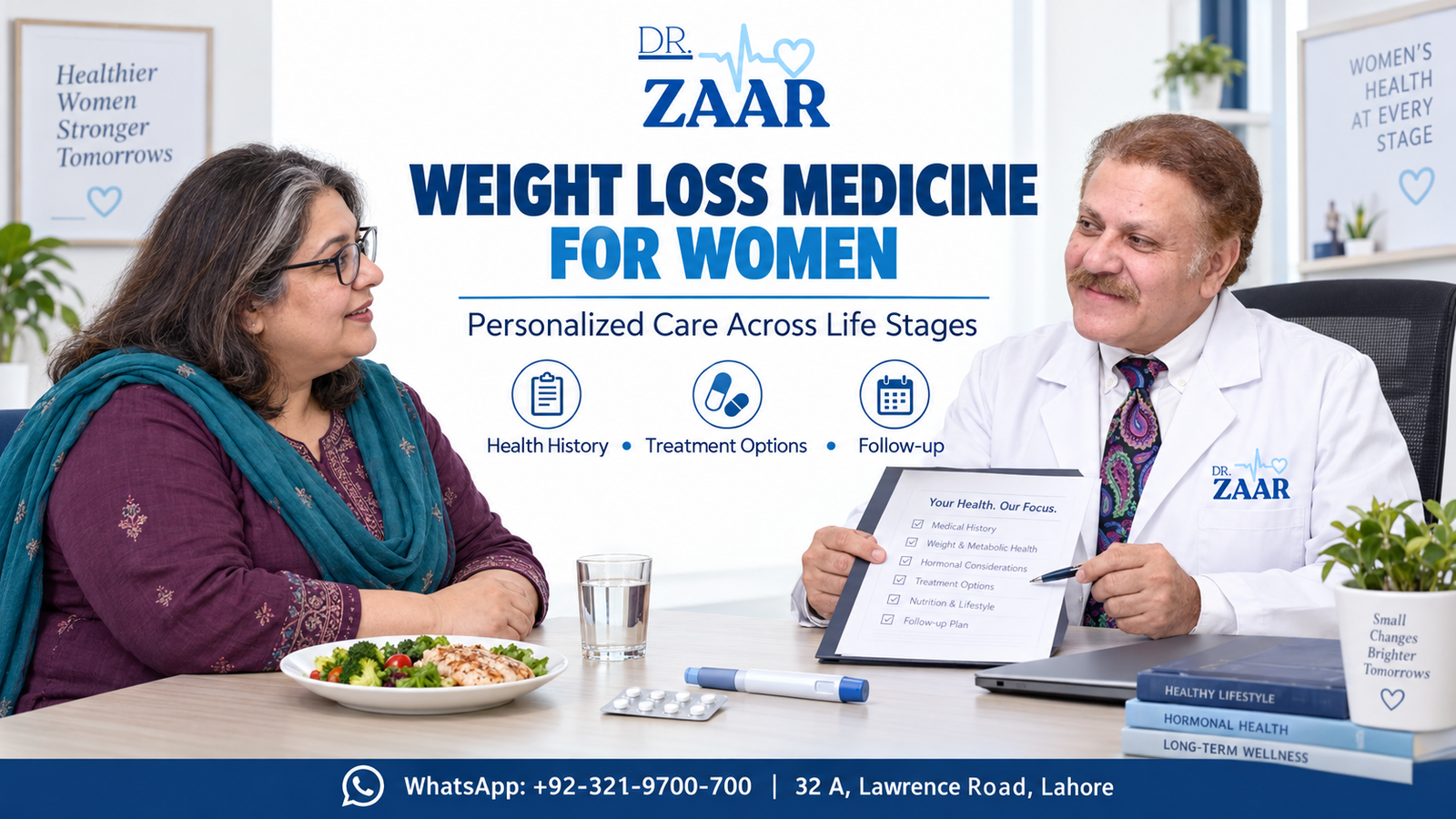
A woman searching for weight loss medicine for female patients may be asking several questions at once. Why has weight increased despite changes to food and exercise? Could a medical condition be involved? Would a tablet or injection help? And would treatment be safe if she wants to become pregnant?
There is no single medicine designed for every woman. The right decision depends on health history, weight-related concerns, current medicines, pregnancy plans, daily routine, and what previous attempts have achieved. The treatment that helps one patient may be unsuitable for another.
Medicine can be valuable when it is appropriately selected and monitored. It should also be understood as one part of weight management. Nutrition, physical activity, sleep, and the ability to maintain progress remain important. The World Health Organization’s guidance on GLP-1 treatments places medication within comprehensive care rather than presenting it as a stand-alone solution.
For women, that care must account for life stage as well as the number on the scale. A useful consultation explores the reason for weight change, the patient’s priorities, and whether a proposed medicine offers enough potential benefit to justify its risks.
Why Women Ask About Medication at Different Stages of Life
A woman in her twenties, a new mother, and a woman approaching menopause may all want help with weight. Their circumstances can be quite different.
Work schedules and eating habits may change. Pregnancy and recovery after childbirth can alter routines. Sleep may be interrupted by caregiving responsibilities. Later in life, changes in activity and body composition may prompt a patient to reconsider an approach that used to work.
These differences do not mean that every weight change is caused by hormones. They mean that a treatment plan should reflect what is happening now. A clinician should ask about symptoms, medical history, medicines, movement, and eating patterns before recommending an intervention. The goal is to identify a strategy that is appropriate for the individual, rather than applying a standard “female weight-loss plan” to everyone.
The First Appointment Should Clarify the Goal
“Lose weight” is a starting point, but it may be too broad to direct treatment. One patient wants to address a weight-related health concern. Another has repeatedly lost and regained weight. A third is worried about a recent, unexplained change.
The clinician and patient can discuss what progress would mean in that case. Weight and waist measurement may be useful, but so may improved fitness, better eating habits, or the ability to maintain results. The conversation should also cover what the patient has already tried and why an earlier plan became difficult.
Clear goals help determine whether medicine is warranted. They also establish how its benefit will be judged. If a patient starts treatment without knowing what it is intended to improve, follow-up becomes a conversation about the scale alone. A better plan defines success more thoughtfully.
When Does Weight Change Need a Broader Assessment?
Weight may increase gradually when portions, activity, sleep, or work routines change. At other times, a patient reports a change that seems out of proportion to her usual habits or occurs alongside other symptoms.
An assessment may review weight history, current treatment, menstrual history where relevant, sleep, appetite, and concerns such as fatigue or changes in physical function. Examination or tests may be appropriate when the clinical picture calls for them. Not every patient needs the same investigations.
The purpose is to avoid two assumptions: that all weight gain is simply a failure of discipline, and that every difficult case must have a hormonal explanation. Both can lead to poor decisions. Individual evaluation helps identify the issues that actually deserve attention before a medicine is chosen.
Tablets and Injections Are Different Treatment Options
“Weight-loss medicine” does not refer to a single product or method. Some medicines are taken by mouth; others are injected. They work through different mechanisms, have different precautions, and may be suitable for different patients.
Orlistat, an oral treatment, reduces the absorption of some fat from food. Digestive effects can include oily stools, urgent bowel movements, wind with oily spotting, or diarrhoea. The NHS describes these effects in its patient information. Other oral medicines act differently and require their own review.
GLP-1-based treatments have also become part of medical weight management. Some are injections, while oral options exist in certain markets. Their adverse effects and instructions are product-specific. A woman should not assume that two medicines discussed under the same broad label are interchangeable. Approval and availability may also differ between countries, so an international advertisement does not establish which product can appropriately be prescribed locally.
Does PCOS Change the Medication Decision?
A woman with polycystic ovary syndrome, or PCOS, may have questions about weight, menstrual patterns, fertility, and metabolic health. Those issues should be considered together, but the diagnosis does not mean every patient needs the same weight-loss medicine.
The international evidence-based PCOS recommendations discuss lifestyle care and note that certain anti-obesity medicines may be considered for adults with higher weight alongside active lifestyle intervention, taking account of relevant precautions. That is a basis for an individualized conversation, not a prescription for everyone with PCOS.
Pregnancy intentions are especially relevant. A patient may be seeking weight management while also planning to conceive. She should tell her clinician about both goals before starting any medicine. Treating the scale as an isolated problem could overlook the decision that matters most to her.
Menopause Calls for a Review of Body Composition
During midlife, some women notice that their weight or waist measurement changes even though they feel their routine has not changed much. The useful response is to review the complete picture rather than automatically attributing every change to menopause.
Activity, portions, sleep, medicines, and muscle strength can all be considered. A patient may also value preserving physical function as much as seeing a lower number on the scale. This makes appropriate resistance exercise and adequate nutrition relevant parts of the discussion.
Medicine may be considered when suitable, but it cannot replace a plan for maintaining muscle and daily movement. A midlife patient deserves an approach matched to her health and preferences, not a generic instruction to eat less. The aim is a healthier body composition and routine that remain practical over the years ahead.
Pregnancy Plans Must Be Discussed Before Treatment
A woman who is pregnant, trying to become pregnant, or breastfeeding should raise this before using any weight-loss product, including a supplement marketed as natural.
The WHO guidance excludes pregnant women from its recommendation on GLP-1 treatment for obesity. Medicine-specific instructions and the patient’s circumstances also need review. A treatment used by a friend before pregnancy should not be assumed appropriate during pregnancy or while breastfeeding.
The conversation should include timing. A patient may wish to improve health before conceiving, yet a medicine that is reasonable at one point may require a different plan when pregnancy is being pursued. Having that discussion in advance allows the patient to make decisions with accurate information instead of discovering a conflict after treatment has begun.
Contraception Is a Treatment Detail, Not an Afterthought
Pregnancy prevention may need explicit discussion when a woman is prescribed a weight-management medicine. The advice depends on the exact treatment.
For example, tirzepatide can affect the reliability of oral hormonal contraception; its product information advises an additional or alternative method for a specified period after starting treatment and after dose increases. This is a medicine-specific precaution, not a rule that should be casually applied to every weight-loss drug. Patients need instructions for the product they are actually taking. Zepbound patient information explains this precaution.
A woman should tell the prescriber what contraception she uses and whether her pregnancy plans may change. Discussing this openly protects her ability to make an informed choice. It also prevents an important practical issue from being lost in a conversation focused only on weight.
Breastfeeding Requires an Individual Plan
After childbirth, a woman may be eager to address weight changes while also managing feeding, recovery, limited sleep, and new responsibilities. A request for medication should be considered within that full context.
Breastfeeding status matters when evaluating whether a medicine is appropriate. A patient should not assume that an over-the-counter slimming tea or herbal capsule is safer than a prescription product. The ingredients and evidence still require review.
Nutrition and wellbeing also deserve attention. A plan that leaves a new mother exhausted or unable to eat adequately is not a good plan merely because the scale moves. A consultation can establish which concerns need attention now and how to approach weight management in a way that fits the patient’s circumstances.
What Benefits Are Realistic?
A medicine may help an appropriate patient manage weight, but no responsible clinician can promise the same outcome to every woman. Responses differ. So do the reasons for weight gain and the ability to continue a treatment.
The expected benefit should be discussed in terms the patient understands. How will progress be monitored? What else will the patient do alongside treatment? When will the plan be reviewed? What will happen if it is not helping enough or causes troublesome symptoms?
These questions protect patients from exaggerated advertising. A medicine should not be sold as a guarantee of rapid transformation. Its role is to provide a potential health benefit within a considered plan. The decision to continue should depend on that benefit and on the patient’s experience of treatment.
Side Effects Deserve an Honest Conversation
Women considering weight-loss medicine should be told about the adverse effects relevant to the exact product. Different medicines can cause different symptoms. Digestive changes, for example, may be particularly relevant to some treatments. A medicine that affects appetite or digestion may have its own precautions.
The patient should know which effects may be manageable and which symptoms require prompt medical advice. She should also know how to contact the treating professional between appointments. No medicine can be guaranteed to have zero side effects for everyone.
Patient experiences can help generate questions, but they are not a substitute for product information. A relative’s good result does not establish that the medicine is suitable for a woman who is planning pregnancy, takes other medicines, or has a different medical history. Individual risk matters.
Avoid Buying Treatment on the Strength of a Photograph
Before-and-after images can be persuasive while revealing very little. They do not establish what a person took, whether other changes were made, how long the result lasted, or whether adverse effects occurred.
The same problem applies to anonymous testimonials and promises of “ten kilograms in ten days.” They focus attention on a striking claim rather than the information needed for a treatment decision. A patient should know the exact ingredient, reliable source, possible risks, and follow-up plan.
Poorly sourced products introduce another problem: the label may be incomplete or inaccurate. The US Food and Drug Administration has warned about weight-loss products containing undeclared ingredients. “Herbal” and “natural” are not proof of safety.
Existing Medicines Belong on the Same List
A woman may take treatment for diabetes, blood pressure, a mood condition, pain, or another health concern. She may also use vitamins, supplements, or medicines bought without a prescription. All of these should be disclosed during a weight-management consultation.
A complete list helps the clinician consider interactions and interpret any new symptom. It may also reveal whether a change in treatment coincided with a change in weight. That connection needs assessment, not guesswork.
Do not stop a prescribed medicine on your own because you suspect it is affecting weight. The reason it was prescribed still matters. A clinician can review the concern and discuss appropriate options. Bringing the boxes or clear photographs of labels is useful when product names or strengths are difficult to remember.
Nutrition Still Matters When Appetite Falls
Some medicines may make a patient feel less hungry. That change can be helpful, but eating as little as possible is not the objective. Meals should still support nutrition, energy, and everyday function.
The practical conversation may include appropriate protein, produce, portions, and beverages. The details depend on the patient. Someone who eats at home most days needs a different plan from someone whose work involves frequent travel or restaurant meals.
A woman should report if nausea or another symptom is preventing her from eating adequately. Follow-up should ask about food intake, not just celebrate a lower number on the scale. Treatment works best when medicine and eating habits support one another.
Protecting Strength During Weight Reduction
A weight-management plan should consider more than total kilograms lost. Strength and physical function matter, particularly when a patient hopes to maintain progress over time.
Walking can be an accessible starting point for activity. Resistance exercise may help support muscle, with the type and intensity matched to experience and physical condition. Some women prefer home exercises; others enjoy structured training. The most useful plan is one they can repeat.
Adequate nutrition is part of the same discussion. A program built around severe restriction and exhaustion may produce an early scale change while becoming difficult to sustain. The aim is to improve health and body composition, not simply to become lighter at any cost.
Sleep and Stress Can Alter the Treatment Experience
A woman with a demanding job, disrupted sleep, or caregiving responsibilities may struggle to follow a plan that looks simple on paper. Sleep and stress can affect food choices, activity, and the ability to maintain routines.
A useful consultation asks when difficulties arise. Is eating most challenging after a long day? Are meals missed and followed by late-night hunger? Does poor sleep reduce the energy available for activity? These are practical questions, not judgments.
Medication may have a role, but it cannot arrange a patient’s day or provide rest. A realistic plan should account for the conditions in which the patient lives. It may include easier meal choices, activity that fits short periods of free time, and follow-up that allows adjustments when circumstances change.
Weight and Sexual Health Should Be Discussed Separately
The secondary topic, Common Types of Sexual Health Problems, may be relevant to a woman seeking broader medical care. These concerns can involve sexual desire, arousal, pain, or difficulties linked to intimacy and wellbeing. A patient may also have fertility questions.
A weight-loss medicine should not be presented as a direct treatment for a sexual symptom. Nor should that symptom automatically be attributed to weight. Each concern needs an appropriate history and assessment.
Some patients are uncomfortable raising sexual health during a weight appointment. A confidential consultation should allow them to mention what is happening and whether it has changed over time. Considering the whole patient does not mean assuming that every symptom has one cause. It means giving important concerns the attention they deserve.
Weight Loss Tips for Females, Making a Plan That Fits Daily Life
The earlier Weight Loss Tips for Females article considered practical meals, portions, activity, cravings, sleep, and changes across women’s life stages. Its message remains relevant when medicine enters the conversation. A prescription may help an appropriate patient, but it cannot plan breakfast during a rushed morning, decide what to order while travelling, or create time for movement. The earlier article emphasized routines that can continue through ordinary responsibilities rather than depending on a short period of perfect discipline. That is also a useful test for medical treatment. Can the patient follow the plan while working, caring for family, and eating familiar foods? Is she receiving enough nutrition and maintaining physical function? Medication decisions become more meaningful when they support a sustainable routine. Without that foundation, an early change on the scale may be difficult to maintain.
Weight Loss Tablets Without Side Effects, Replacing a Promise With a Decision
An earlier article examined the search for a weight loss tablet without side effects. It explained why no effective treatment can be guaranteed free of adverse effects for everyone. That point is especially relevant for female patients whose pregnancy plans, breastfeeding status, or existing medicines may affect treatment suitability. The absence of symptoms in one person does not prove that a medicine is appropriate for another. The earlier article proposed a more useful question: whether the expected benefit outweighs the potential risks in the individual’s circumstances. That question should be asked before a tablet is started and revisited during follow-up. It also applies to supplements. A label claiming that a product is natural cannot settle questions about its ingredients or safety. For women considering medication, honest information offers more protection than an absolute promise printed on a package.
Side Effects of Weight Loss Pills: Knowing What to Report
The previous Side Effects of Weight Loss Pills article focused on recognizing symptoms and reassessing treatment. It discussed why the exact product name, symptom timing, and other medicines are important when something changes. That approach is useful for any woman starting medical weight management. Rather than assuming a new symptom is caused by the treatment—or dismissing it because weight is falling—she can describe what happened and seek appropriate advice. The earlier article also stressed that follow-up should examine daily functioning, not just the scale. Is the patient eating adequately? Can she work, move, and sleep comfortably? Does the benefit remain worthwhile? These questions become particularly important when treatment intersects with pregnancy planning or another health concern. A patient who understands what to watch for can participate more confidently in decisions about continuing, changing, or stopping a medicine.
When Progress Slows
Weight change is rarely perfectly steady. A period with little movement on the scale can be frustrating, especially when a patient is taking medicine and expects it to keep working at the same pace.
A review can look at portions, snacks, beverages, activity, sleep, and whether the treatment is still being used as intended. It can also consider whether the original goals and expectations remain appropriate. A plateau should prompt investigation of the pattern, not an automatic purchase of a stronger product.
Other measures may provide context. Waist measurement, fitness, strength, and consistency with a healthier routine can help explain what is happening. A clinician can then discuss whether the current approach remains useful. Small adjustments may sometimes be more realistic than abandoning a workable plan for an extreme one.
Why Dr. Zaar Takes an Individual Approach
Often called the “Sherlock Holmes of Endocrinology,” Dr. Zaar approaches weight concerns by examining how symptoms, habits, medicines, and metabolic factors may relate. A woman’s question about weight-loss medicine may reveal concerns about changing body composition, previous unsuccessful treatments, or possible hormonal issues that deserve assessment.
SHEHREZAD FARUK CZAR’s work in endocrine biochemistry and metabolic medicine informs this broader clinical perspective. It does not mean that every weight concern has a hidden hormonal cause. It means relevant possibilities should be evaluated before a patient receives a standard recommendation.
Precision diagnostics, attention to the patient’s priorities, and a plan for follow-up help turn an initial consultation into an informed treatment decision. The outcome may include medicine when appropriate, changes in routine, further assessment, or a combination of measures suited to the individual.
Visiting Dr. Zaar’s Clinic
Visit the clinic: Arrive at your scheduled time. The staff will guide you through the process and help ensure a smooth experience.
Meet Dr. Zaar: Sit down for a personalized consultation about your weight history, previous attempts, current medicines, health concerns, and treatment goals. Pregnancy plans or breastfeeding status should be mentioned so they can be considered before any medicine is recommended.
WhatsApp: +92-321-9700-700
Address: 32 A, Lawrence Road, Lahore
Bringing a list of medicines and supplements, along with relevant previous results, can help make the conversation more precise.
Questions Women Commonly Ask
What is the best weight loss medicine for a female patient?
There is no one best medicine for every woman. The decision depends on health history, goals, possible adverse effects, other treatment, and pregnancy-related considerations.
Is a tablet safer than an injection?
The method of taking a medicine does not determine its safety. The active ingredient, its effects, and the patient’s circumstances matter more.
Can I use weight-loss medicine if I have PCOS?
A medicine may be considered for some adults with PCOS, but the decision should be individualized and include lifestyle care and pregnancy plans. PCOS alone does not identify the right product.
Can weight-loss medicine be used during pregnancy?
Do not start or continue a weight-loss product during pregnancy without prompt advice from the treating clinician. Pregnancy changes treatment decisions, and product-specific guidance matters.
What if I become pregnant while taking treatment?
Contact your treating clinician promptly, tell them the exact product you are using, and follow the product-specific advice you receive.
Will medicine remove only belly fat?
No treatment should be advertised as reliably removing fat from one selected area. The aim is appropriate overall weight management and improved health.
Do I have to avoid rice and bread?
Not automatically. Portions, meal composition, nutritional needs, and the overall eating pattern are more useful to discuss than banning one familiar food.
Can weight-loss medicine treat sexual health problems?
It should not be presented as a direct treatment for sexual symptoms. Those concerns deserve their own confidential assessment.
A Decision Built Around the Woman, Not the Product
Choosing weight loss medicine for female patients involves more than comparing tablets and injections. A good decision considers why weight has changed, what the patient hopes to improve, whether pregnancy is possible or planned, which other medicines she takes, and how treatment would fit daily life.
Medicine may provide meaningful help for an appropriate patient. It should come with an explanation of its potential benefits, adverse effects, precautions, and follow-up plan. Nutrition, activity, sleep, and long-term habits remain part of care.
The most useful question is not “Which medicine works for all women?” It is “Which approach makes sense for this woman, at this stage of her life, with these goals and health concerns?” That is where safer and more sustainable weight management begins.
Related Blogs

- September 26, 2026
Weight Loss Tablets Without Side Effects,.
A search for a weight loss tablet without side effects usually begins with a reasonable concern: “Can I lose weight.
Read More
- August 11, 2026
Pakistan’s Leading Weight Loss Clinic for.
Searching online for a “Weight Loss Clinic Near Me” often returns hundreds of options related to weight or fat loss,.
Read More