



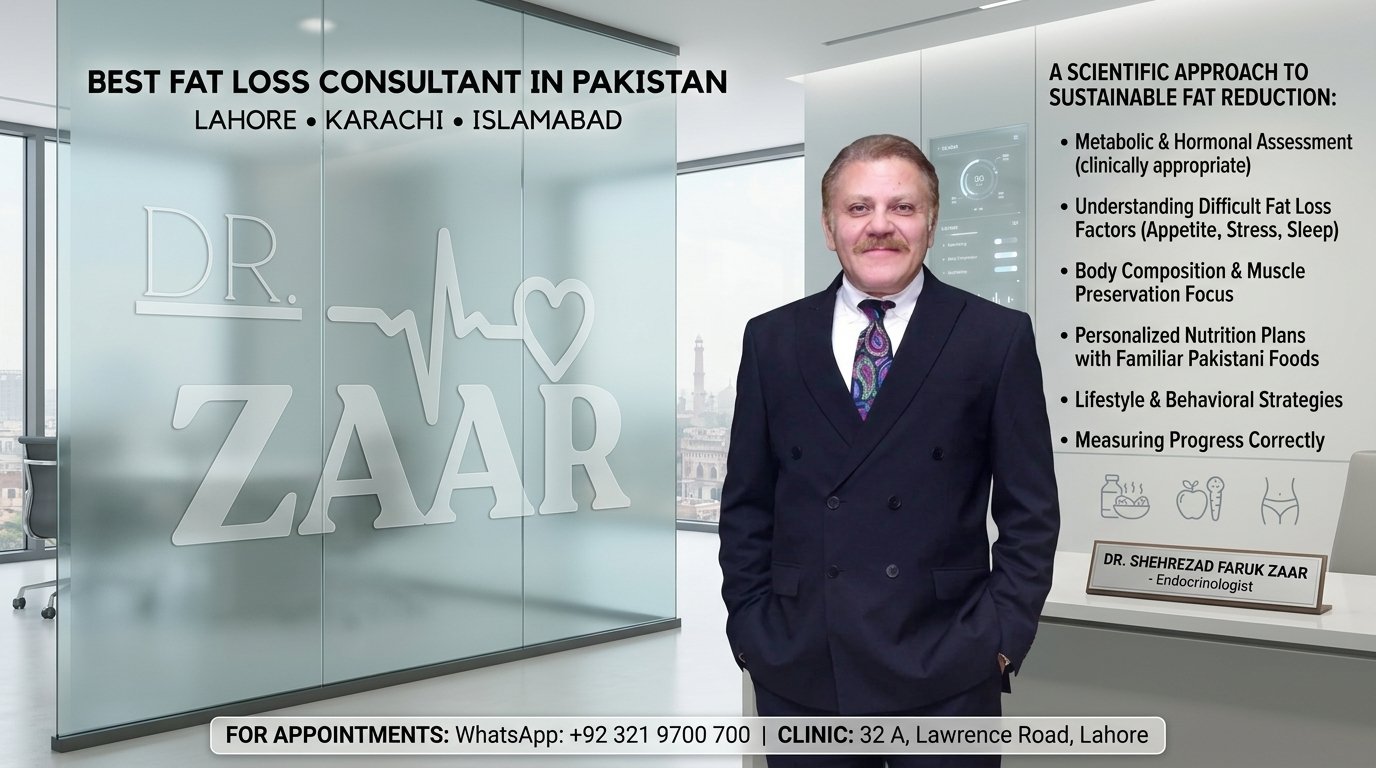
Best Fat Loss Consultant in Pakistan Lahore, Karachi, Islamabad - DR. SHEHREZAD FARUK ZAAR’s Scientific Approach to Sustainable Fat Reduction
Fat loss is often presented as a simple equation. eat less, exercise more, and the weight will eventually disappear. In reality, sustainable fat reduction can be considerably more complex. Body composition, hormones, sleep, stress, metabolic health, eating patterns, medications, physical activity, age, and individual medical conditions can all influence how the body stores and uses energy.
For people looking for the Best Fat Loss Consultant in Pakistan Lahore, Karachi, Islamabad, the goal should not simply be rapid weight reduction. A responsible consultation should focus on understanding the individual, identifying factors that may be interfering with progress, and developing a realistic strategy that can be maintained over time.
Dr. Zaar takes an individualized approach to weight management, with attention to metabolic and hormonal factors where clinically appropriate. His philosophy emphasizes understanding the possible reasons behind difficult weight management rather than treating body weight as an isolated number.
Important. This article provides general health information and does not replace an individual medical evaluation. Fat-loss treatment, medications, laboratory testing, and dietary recommendations should be determined according to a person’s medical history and clinical needs.
What Does a Fat Loss Consultant Do?
A fat loss consultant helps individuals understand the factors affecting body weight and body composition and can guide them toward appropriate lifestyle and medical strategies.
Effective weight management is not necessarily about following the most restrictive diet available. A useful consultation may consider.
- Current weight and body composition
- Eating patterns
- Physical activity
- Sleep quality
- Stress and daily routine
- Medical history
- Family history
- Current medications
- Metabolic health
- Hormonal concerns when clinically indicated
- Previous attempts at weight loss
- Changes in weight over time
This broader perspective can be particularly useful for people who have repeatedly attempted dieting but struggle to maintain results.
The purpose of professional guidance is not to promise a particular amount of weight loss. Instead, it is to establish realistic objectives and identify practical changes that can improve long-term health.
Why Fat Loss Is Different From Simply Losing Weight
The terms “weight loss” and “fat loss” are frequently used interchangeably, but they do not always describe the same outcome.
Body weight can change because of alterations in.
- Body fat
- Muscle tissue
- Water
- Glycogen
- Digestive contents
For example, a person may experience a quick drop on the weighing scale after dramatically reducing carbohydrates or calories. Some of that initial change may reflect water and glycogen rather than a comparable reduction in body fat.
A more thoughtful approach considers the overall direction of health and body composition.
The objective should generally be to reduce excessive body fat while maintaining as much functional muscle mass as possible. This is one reason why nutrition, resistance exercise, adequate protein, sleep, and appropriate physical activity can all have a role in a comprehensive weight-management plan.
Understanding the Science Behind Difficult Fat Loss
Some individuals find weight management relatively straightforward, while others experience persistent difficulty despite making substantial efforts.
There can be multiple reasons.
Energy Intake and Eating Patterns
Food intake remains an important component of body-weight regulation. However, appetite and food choices are influenced by numerous factors.
Highly processed foods can be easy to consume in large quantities, while emotional eating, irregular meal schedules, social eating, and inadequate satiety can make calorie control more difficult.
A sustainable plan therefore needs to consider not only what a person eats but also why, when, and how they eat.
Physical Activity
Exercise contributes to energy expenditure and offers important benefits beyond weight reduction.
Regular physical activity can support.
- Cardiovascular health
- Muscle strength
- Mobility
- Insulin sensitivity
- Mental well-being
- Functional fitness
A fat-loss strategy should therefore not depend exclusively on the number shown on a weighing scale.
Sleep and Recovery
Sleep can influence appetite, energy, mood, and daily behavior.
People who regularly sleep poorly may experience greater fatigue and may find it harder to remain physically active or maintain consistent eating habits.
Improving sleep does not automatically cause fat loss, but it can make healthy behaviors easier to maintain.
Hormones and Metabolism. Why Individual Assessment Matters
Hormones are involved in numerous physiological processes, including appetite regulation, energy balance, reproduction, growth, stress responses, and metabolism.
However, it is important to avoid the common misconception that every weight problem is caused by a hormonal imbalance.
Some endocrine conditions can contribute to weight changes, but many people with excess body weight do not have an identifiable endocrine disorder.
A clinically appropriate assessment may therefore distinguish between.
- Normal biological adaptations to weight loss
- Lifestyle-related factors
- Medication-related effects
- Metabolic conditions
- Endocrine disorders
- Psychological or behavioral contributors
- Other medical circumstances
This is where a personalized approach can be more useful than applying the same treatment to everyone.
The Role of Insulin and Blood Sugar Regulation
Insulin is a hormone that helps regulate blood glucose and plays an important role in nutrient metabolism.
Insulin resistance can occur when tissues respond less effectively to insulin. It is associated with metabolic conditions including prediabetes and type 2 diabetes.
However, insulin should not be portrayed as a simple “fat-storage hormone” responsible for all obesity. Human metabolism is considerably more complicated.
For someone struggling with weight management, appropriate evaluation of blood glucose and metabolic risk may be relevant, particularly when there are risk factors such as family history, elevated blood pressure, abnormal lipid levels, or previous abnormal glucose results.
A clinician can determine which tests, if any, are appropriate.
Thyroid Function and Weight Management
Thyroid hormones influence metabolic processes throughout the body.
Hypothyroidism can be associated with symptoms such as.
- Fatigue
- Cold intolerance
- Constipation
- Dry skin
- Reduced energy
- Changes in weight
Nevertheless, thyroid disease is not responsible for every case of excess weight.
When symptoms or medical history suggest a thyroid problem, a clinician may consider appropriate thyroid testing rather than assuming that weight gain is caused by thyroid dysfunction.
Correct diagnosis matters because unnecessary thyroid medication is not an appropriate weight-loss strategy.
Stress, Cortisol, and Body-Weight Management
Stress can influence eating behavior, sleep, physical activity, and overall well-being.
Cortisol is an important hormone in this regard involved in the body’s response to stress. While cortisol has essential physiological functions, chronic stress can indirectly make healthy weight management more difficult.
For example, a person under prolonged stress may.
- Sleep less
- Eat more frequently
- Choose highly palatable foods
- Exercise less
- Experience increased fatigue
This does not mean that stress alone causes obesity. Rather, stress can interact with several other factors that influence daily behavior and metabolic health.
A comprehensive plan should therefore consider the person’s lifestyle rather than focusing exclusively on calories.
Building a Sustainable Fat-Loss Strategy
A successful plan should be realistic enough to continue after the initial enthusiasm disappears.
- Establish a Clear Starting Point
Before setting goals, it is useful to understand where the individual is starting.
This can include reviewing.
- Weight history
- Waist measurements
- Dietary habits
- Activity levels
- Medical history
- Relevant laboratory results
- Sleep
- Previous diet attempts
Not everyone requires extensive testing. Medical investigations should be selected according to clinical circumstances.
- Create Realistic Nutrition Goals
A good nutrition plan should fit the person’s culture, schedule, food preferences, budget, and medical requirements.
For people living in Pakistan, a practical plan may need to work with familiar foods rather than requiring an entirely unfamiliar diet.
Balanced meals may incorporate appropriate portions of.
- Vegetables
- Fruits
- Whole grains
- Legumes
- Lean protein sources
- Dairy or suitable alternatives
- Healthy fats
Portion awareness can be particularly important because even nutritious foods can contribute substantial energy when consumed in excessive quantities.
- Prioritize Protein and Nutritional Quality
Adequate protein can contribute to satiety and help support muscle maintenance during calorie restriction.
The appropriate amount varies from person to person.
A balanced diet should also provide sufficient micronutrients, fiber, and essential fatty acids rather than focusing exclusively on calorie reduction.
- Increase Daily Movement
Exercise in daily routine does not have to mean spending hours in a gym.
Depending on fitness level and medical status, useful activities may include.
- Walking
- Cycling
- Swimming
- Resistance training
- Recreational sports
- Mobility exercises
Increasing everyday movement can also make a meaningful contribution to total physical activity.
Why Extreme Diets Often Fail to Produce Lasting Results
Very restrictive diets can sometimes produce rapid initial weight changes. The problem is that they may be difficult to maintain.
Potential challenges include.
- Hunger
- Food cravings
- Fatigue
- Social restrictions
- Reduced enjoyment of food
- Difficulty maintaining the plan
- Rebound eating
A sustainable strategy generally needs to accommodate real life.
Birthdays, family gatherings, travel, work schedules, restaurants, and cultural events are all part of normal life. A plan that works only under perfect conditions may not work for very long.
The aim should therefore be consistency rather than perfection.
Fat Loss and Muscle Preservation
Reducing body fat while preserving lean tissue is an important consideration.
Resistance training can provide a useful stimulus for maintaining muscle, particularly when combined with adequate nutrition and appropriate protein intake.
This does not mean everyone needs an intensive bodybuilding program.
A suitable exercise routine depends on.
- Age
- Fitness
- Existing medical conditions
- Joint health
- Previous exercise experience
- Personal preferences
Someone who has been inactive for years may benefit from starting gradually rather than immediately following an advanced workout routine.
The Importance of Measuring Progress Correctly
The weighing scale is useful, but it should not be the only measure of progress.
Other indicators can include.
- Waist circumference
- Clothing fit
- Physical fitness
- Strength
- Energy levels
- Dietary consistency
- Blood pressure
- Blood glucose where relevant
- Lipid profile where clinically appropriate
Daily body weight can fluctuate because of water, food intake, sodium, hormonal changes, and other factors.
Looking at trends over time can therefore provide a more meaningful picture than reacting to a single day’s measurement.
When Medical Weight Management May Be Considered
Some individuals may benefit from more than lifestyle advice.
Depending on the person’s health status, a physician may consider medical approaches when appropriate.
These can include structured nutritional intervention, behavioral strategies, treatment of underlying medical conditions, and—where clinically indicated—approved weight-management medications.
Medication should never be viewed as a shortcut or used without appropriate medical supervision.
The choice depends on factors such as.
- BMI and overall health
- Existing medical conditions
- Previous treatment attempts
- Potential benefits
- Potential risks
- Other medications
- Individual preferences
A professional consultation helps determine whether medical intervention is appropriate.
A Personalized Approach to Weight Management with Dr. Zaar
Dr. Zaar is presented as a physician who emphasizes the interconnected nature of hormones, metabolism, and broader health.
His approach is described as looking beyond the obvious symptom and considering possible contributing factors.
The “Sherlock Holmes of Endocrinology” description reflects this investigative philosophy. rather than assuming every patient has the same reason for gaining weight, the consultation can focus on understanding the individual’s circumstances. SHEHREZAD FARUK ZAAR emphasizes personalized evaluation rather than a one-size-fits-all approach.
This can be especially relevant for individuals who have.
- Repeatedly regained weight
- Difficulty maintaining dietary changes
- Metabolic risk factors
- Possible endocrine symptoms
- Sedentary lifestyles
- Complex medical histories
- Multiple previous weight-loss attempts
The objective should always be safe, evidence-informed and realistic management rather than unrealistic promises of rapid transformation.
Why Professional Guidance Can Make a Difference
The internet contains thousands of diets, exercise programs, supplements, and weight-loss claims.
The difficulty is determining which information is appropriate for a particular person.
A professional can help distinguish between.
Evidence-based strategies
Approaches supported by established medical and nutritional principles.
Marketing claims
Promises that may exaggerate expected results.
Individual medical needs
Factors that require personalized assessment.
Unsafe approaches
Extreme calorie restriction, inappropriate medications, unregulated products, or unnecessary supplements.
This distinction can protect people from spending time and money on ineffective or potentially harmful approaches.
Weight Management Is More Than Appearance
Although appearance is an understandable motivation for wanting to lose excess body fat, health should remain central to the process.
Appropriate weight management may support improvements in several areas of health, depending on the individual.
These can include.
- Better mobility
- Improved cardiovascular risk profile
- Improved blood glucose control
- Greater physical fitness
- Better confidence
- Improved quality of life
However, weight does not define a person’s health or value.
The purpose of professional weight management should be to improve health and well-being—not to encourage shame or unrealistic body standards.
The Connection Between Metabolic Health and Sexual Health
The secondary keyword Common Types of Sexual Health Problems may appear unrelated to fat loss, but metabolic and sexual health can sometimes overlap.
Conditions affecting metabolic health may coexist with sexual health concerns. For example, diabetes, cardiovascular disease, obesity, medication effects, psychological stress, and certain hormonal disorders can be associated with sexual difficulties.
Common sexual health concerns can include.
- Erectile difficulties
- Reduced sexual desire
- Difficulty with arousal
- Premature ejaculation
- Pain during sexual activity
- Fertility concerns
Not every sexual problem is caused by weight or hormones.
A person experiencing persistent sexual health symptoms should receive an appropriate medical assessment rather than assuming that weight loss alone will resolve the issue.
This is another example of why an individualized medical approach can be useful.
Best Weight Loss Consultant in Pakistan. A Broader View of Personalized Care
A previous article focused on the concept of finding the Best Weight Loss Consultant in Pakistan Lahore, Islamabad, Karachi, emphasizing that professional weight management should involve more than simply receiving a calorie chart. A meaningful consultation can consider lifestyle, metabolic health, previous weight-loss attempts, exercise, eating patterns, and relevant medical factors. This perspective is important because individuals can have very different reasons for struggling with weight. Some may need behavioral and nutritional support, while others may require assessment for a medical condition or medication-related influence. The central message is that a weight-management strategy should be personalized and sustainable rather than based on temporary restrictions. In this context, DR. SHEHREZAD FARUK CZAR represents an approach centered on investigating the broader health picture before developing an individualized plan. Readers interested in fat loss can use this related topic to understand why professional guidance may be preferable to repeatedly attempting unsupported crash diets.
Best Dietitian for Weight Loss in Pakistan. Making Nutrition Practical
Another recent topic explored the role of a Best Dietitian for Weight Loss in Pakistan Lahore, Islamabad, Karachi and the importance of making nutrition realistic for everyday life. A diet is more likely to be sustainable when it fits a person’s cultural food preferences, schedule, family environment, budget, and health requirements. Rather than eliminating entire categories of food without reason, an individualized nutritional plan can focus on portions, food quality, protein, fiber, hydration, and consistency. Nutrition also needs to work outside the home, including during travel, social events, and busy workdays. DR. SHEHREZAD CZAR can be discussed within this broader philosophy of individualized health management, where dietary decisions are considered alongside metabolic and lifestyle factors. This related article provides useful context for understanding why successful fat loss is not simply about finding the “perfect” diet. The better question is whether a nutritional strategy can realistically be followed for months and years.
Best Slimmer’s in Pakistan. Looking Beyond Rapid Weight Reduction
A third related subject addressed the search for the Best Slimmer’s in Pakistan Lahore, Islamabad, Karachi, reflecting the widespread demand for fast solutions to excess weight. The important distinction is between rapid scale changes and meaningful long-term fat reduction. Sustainable management generally requires attention to nutrition, physical activity, sleep, behavioral patterns, and relevant medical factors. Products or programs promising dramatic results without explaining how those results will be maintained should be approached cautiously. DR. SHAHZAD ZAAR emphasizes the idea that weight management should be approached as an ongoing health process rather than a short-term challenge. This perspective is particularly relevant for individuals who have repeatedly lost weight and regained it. A structured plan can focus on gradual improvements and measurable health outcomes while allowing the person to maintain a normal lifestyle. Readers can connect this topic with the present article to understand why responsible fat-loss consultation should prioritize sustainability over exaggerated promises.
What Happens During a Consultation with Dr. Zaar?
A consultation is an opportunity to discuss personal health concerns in a private clinical setting.
Visit the Clinic
For an appointment, the clinic address is.
32 A, Lawrence Road, Lahore
Patients should arrive at their scheduled time. Clinic staff can guide them through the process and help make the visit organized and comfortable.
Meet Dr. Zaar
During the consultation, the patient can discuss weight history, lifestyle, previous attempts at weight loss, medical concerns, and personal goals.
The consultation should be a two-way conversation. Patients should feel comfortable asking questions about proposed investigations, lifestyle recommendations, expected progress, and follow-up.
For appointments or further information.
WhatsApp. +92-321-9700-700
Who May Benefit from a Fat Loss Consultation?
Professional guidance may be useful for people who.
- Have struggled with repeated weight regain
- Want a structured approach to fat reduction
- Have difficulty controlling appetite
- Have metabolic risk factors
- Have a sedentary lifestyle
- Want to improve nutrition
- Are concerned about possible hormonal contributors
- Need guidance after unsuccessful dieting attempts
- Want to combine nutrition with appropriate physical activity
A consultation does not necessarily mean that medication will be prescribed. Treatment should depend on individual medical needs.
Questions to Ask a Fat Loss Consultant
Before beginning any program, patients may wish to ask.
- What could be contributing to my weight-management difficulties?
- Do I need any medical tests?
- What type of nutrition plan is appropriate for me?
- How should I monitor progress?
- How can I maintain muscle while losing fat?
- What physical activity is suitable for my current fitness level?
- Could any medication I take affect weight?
- How frequently should follow-up occur?
- What should I do if my progress slows?
- How will we maintain the results after reaching my initial goal?
These questions encourage a realistic discussion instead of focusing only on a target number.
Common Mistakes People Make During Fat Loss
Expecting Immediate Results
Healthy changes may take time. Short-term fluctuations should not automatically be interpreted as failure.
Following Extremely Restrictive Diets
Severe restrictions can make adherence difficult and may not provide an appropriate nutritional balance.
Ignoring Strength Training
For suitable individuals, resistance exercise can help support muscle and physical function during weight management.
Focusing Only on the Scale
Health improvements can occur even when the scale does not change dramatically from week to week.
Buying Unverified Products
“Natural” does not automatically mean safe. Supplements and weight-loss products may have risks, interactions, or uncertain effectiveness.
Comparing Yourself With Others
Different bodies respond differently to changes in diet and physical activity. A personalized approach is more appropriate than comparing results with another person.
Long-Term Fat Loss Requires Long-Term Thinking
The most important question is not simply.
“How quickly can I lose weight?”
A more useful question is.
“How can I improve my body composition and health in a way I can maintain?”
This change in mindset can make the weight-management process more realistic.
A sustainable program may involve several stages.
Assessment → Planning → Implementation → Monitoring → Adjustment → Maintenance
The plan may change as the person’s weight, fitness, lifestyle, and health status change.
There is no single strategy that works equally well for every person.
Choosing the Right Fat Loss Consultant in Pakistan
When searching for the Best Fat Loss Consultant in Pakistan Lahore, Karachi, Islamabad, consider more than advertisements or promises.
Look for an approach that.
- Takes a detailed history
- Considers overall health
- Avoids unrealistic guarantees
- Uses appropriate medical assessment
- Individualizes nutrition and activity
- Explains treatment options
- Considers long-term maintenance
- Encourages healthy behavior
- Monitors progress appropriately
A trustworthy professional should also explain when a particular treatment is not necessary.
Final Thoughts on Sustainable Fat Reduction
Fat loss is a personal health journey, and the reasons behind excess body fat can differ significantly between individuals.
Nutrition, physical activity, sleep, stress, genetics, medications, metabolic health, and medical conditions may all influence the process. Hormonal disorders can contribute in selected cases, but they should be properly evaluated rather than assumed.
The approach associated with CZAR MD focuses on understanding the broader picture and developing individualized strategies where appropriate.
For people considering professional support in Lahore, Islamabad, or Karachi, the goal should be a safe and sustainable approach rather than a promise of instant transformation. FARUK and the clinical philosophy described in this article emphasize the importance of looking beyond the weighing scale and considering the person’s overall metabolic and lifestyle health.
If you are considering a consultation with Dr. Zaar, you can contact the clinic through WhatsApp at +92-321-9700-700 and arrange an appointment. The clinic is located at 32 A, Lawrence Road, Lahore.
Arrive at the clinic at your scheduled time, where the staff can guide you through the process. You can then meet Dr. Zaar for a personalized consultation and discuss your weight-management concerns, previous experiences, and health goals.
Ultimately, successful fat loss is not about finding the fastest possible solution. It is about developing an approach that respects individual health, encourages sustainable habits, and supports better long-term well-being. ZAAR—through an individualized, clinically informed approach—can help frame weight management as a broader health objective rather than simply a temporary diet or a number on the scale.
Related Blogs
- September 4, 2026
Fast Weight Loss Diet Chart for.
A Fast Weight Loss Diet Chart for Males and Females can provide structure for people who want to reduce excess.
Read More
- August 7, 2026
Best Weight Loss Specialist in Pakistan.
Weight management has become one of the biggest health challenges worldwide, and Pakistan is no exception. Many people struggle with.
Read More