



Best Fat Loss Treatment in Pakistan Lahore Islamabad Karachi - A Personalized Medical Approach to Healthy Fat Reduction, Metabolic Wellness and Long-Term Weight Control
Fat loss is often treated as a simple matter of eating fewer calories and exercising more. Yet for many people, reducing excess body fat is considerably more complicated. Weight can be influenced by eating habits, physical activity, sleep, stress, hormones, medications, genetics, metabolic health and the surrounding environment.
For people searching for the Best Fat Loss Treatment in Pakistan Lahore Islamabad Karachi, the most important question should not simply be, “How quickly can I lose weight?” A better question is, “Why am I gaining or retaining excess fat, and what treatment approach is appropriate for my health?”
A medically guided fat-loss program can look beyond the weighing scale. It can assess body composition, lifestyle, metabolic risk factors and possible medical contributors before establishing a personalized plan.
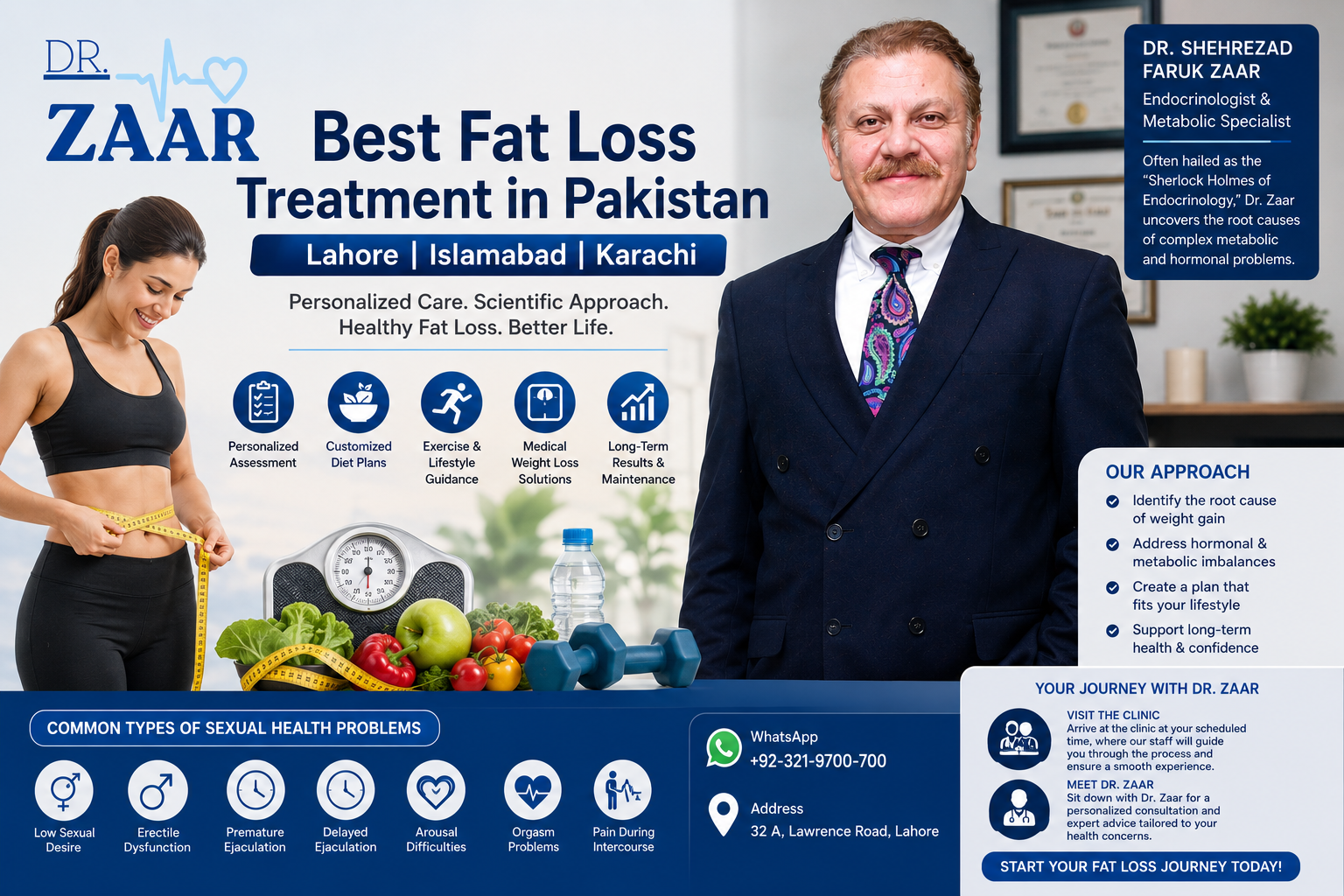
SHEHREZAD FARUK ZAAR, often hailed as the “Sherlock Holmes of Endocrinology,” is described as having an investigative approach to complex endocrine and metabolic concerns. His approach focuses on understanding how different systems of the body can interact rather than treating weight gain as an isolated problem.
Combining clinical assessment, individualized recommendations, lifestyle management and appropriate medical interventions when indicated can create a more structured path toward healthier weight and body composition.
WhatsApp: +92-321-9700-700
Address: 32 A, Lawrence Road, Lahore
Fat Loss Begins With Understanding Your Individual Health
Every person’s body is different.
Two people can have similar body weights while having completely different levels of body fat, muscle mass, waist circumference, metabolic health and lifestyle patterns.
One person may have gained fat because of years of sedentary behavior and high-calorie eating. Another may struggle because of poor sleep and emotional eating. Someone else may have diabetes, medication-related weight gain or an endocrine condition that requires attention.
Therefore, a good fat-loss strategy should begin with assessment.
A consultation may explore:
- Current body weight and height
- Waist circumference
- Previous weight history
- Dietary habits
- Physical activity
- Sleep patterns
- Stress levels
- Existing medical conditions
- Medication use
- Family history
- Blood glucose
- Blood pressure
- Previous weight-loss attempts
- Relevant hormonal symptoms
This approach can help distinguish between factors that can be addressed through lifestyle changes and situations where additional medical evaluation may be appropriate.
What Makes Fat Loss Different From Ordinary Weight Loss?
The word weight includes more than body fat.
Changes on the weighing scale can reflect fluctuations in:
- Body water
- Glycogen
- Muscle tissue
- Food volume
- Fat tissue
Consequently, losing several kilograms does not automatically mean that the same amount of body fat has disappeared.
For many patients, the objective should be healthier body composition rather than simply achieving the lowest possible scale reading.
A well-designed fat-loss program may therefore monitor several indicators instead of relying exclusively on weight.
These can include waist circumference, physical fitness, strength, metabolic markers and overall wellbeing.
SHEHREZAD FARUK CZAR emphasizes the importance of looking at the broader clinical picture when evaluating difficult weight and fat-loss cases.
Why Excess Body Fat Deserves Medical Attention
Excess body fat is not simply a cosmetic concern.
Obesity is recognized as a chronic disease involving complex interactions between biological, environmental and behavioral factors. Excess body weight can increase the risk of several health conditions, including type 2 diabetes and cardiovascular disease.
Central or abdominal fat can also be particularly relevant to metabolic health.
This is why a fat-loss consultation should focus on health as well as appearance.
For some patients, reducing excess fat may support improvements in:
- Blood glucose
- Blood pressure
- Mobility
- Physical fitness
- Metabolic health
- Sleep
- Quality of life
The appropriate target differs from person to person.
There is no universally correct number of kilograms that every patient should lose.
Why Some People Cannot Lose Fat Easily
A common frustration is:
“I have tried everything for fat loss, but my fat keeps coming back.”
This situation is more common than many people realize.
Several factors may contribute.
Inconsistent Calorie Intake
People often underestimate calories from drinks, sauces, cooking oils, snacks and weekend meals.
Sedentary Lifestyle
Even someone who exercises occasionally may spend most of the day sitting.
Poor Sleep
Insufficient or disrupted sleep can make healthy eating and exercise more difficult.
Emotional Eating
Stress and emotional triggers in your life can encourage overeating even without physical hunger.
Medication Effects
Some medications can influence appetite or body weight.
Metabolic Conditions
Diabetes, insulin resistance and other metabolic problems can complicate weight management.
Endocrine Disorders
Certain hormonal disorders can affect body weight, although they are not responsible for every case of obesity.
Previous Extreme Dieting
Repeated cycles of severe restriction and overeating can make long-term adherence difficult.
Identifying the combination of factors is often more useful than blaming one single cause.
The Endocrine Perspective on Fat Reduction
The endocrine system influences numerous processes involved in metabolism and energy regulation.
Depending on a patient’s symptoms and history, a physician may consider whether there are clinically relevant concerns involving:
- Thyroid function
- Glucose metabolism
- Insulin regulation
- Cortisol-related disorders
- Reproductive hormones
- Other endocrine pathways
However, not everyone who struggles with fat loss has a hormonal disorder.
This distinction matters.
Online discussions frequently describe almost every weight problem as a “hormonal imbalance.” In reality, endocrine conditions are specific medical diagnoses that require appropriate assessment.
FARUK takes an investigative approach in which symptoms, medical history and clinical findings help determine whether endocrine testing is warranted.
Thyroid Health and Difficult Fat Loss
The thyroid gland of the individual plays an important role in regulating metabolism.
Hypothyroidism can be associated with symptoms such as:
- Fatigue
- Feeling cold
- Constipation
- Dry skin
- Mood changes
- Weight gain
However, weight gain alone does not establish hypothyroidism.
Many people with excess body fat have normal thyroid function.
If thyroid dysfunction is suspected, appropriate testing can help clarify whether the thyroid is contributing to the patient’s symptoms.
Thyroid medication should not be used as a general fat-loss treatment in people who do not have a medical indication.
This is one reason professional evaluation is preferable to self-treatment.
Insulin Resistance, Blood Sugar and Excess Fat
Insulin helps regulate blood glucose.
When insulin resistance develops, the body’s tissues respond less effectively to insulin. It is commonly associated with obesity and metabolic disorders.
Some people may have metabolic abnormalities without experiencing obvious symptoms.
A medical evaluation may therefore consider blood glucose and other appropriate metabolic measurements when indicated.
This can be particularly important when excess abdominal fat occurs alongside:
- Family history of diabetes
- Elevated blood glucose
- High blood pressure
- Abnormal cholesterol
- Increasing waist circumference
For patients with diabetes, weight management should be coordinated with diabetes treatment because changes in diet, physical activity and body weight can affect glucose levels and medication requirements.
Abdominal Fat and Metabolic Risk
Body-fat distribution matters.
Excess fat concentrated around the abdomen can be associated with increased metabolic risk.
This is why waist measurement can provide useful information alongside BMI.
BMI is a screening tool rather than a complete description of body composition. Someone with considerable muscle mass, for example, may have a high BMI without having excessive body fat.
A comprehensive consultation can therefore consider multiple measurements.
The purpose is to understand the patient’s health profile rather than simply placing them into a category based on one number.
Nutrition: The Foundation of Sustainable Fat Loss
Nutrition is central to reducing excess body fat.
However, the most effective nutritional strategy is not necessarily the most restrictive.
A plan that eliminates large numbers of foods may produce short-term results but become impossible to maintain.
A sustainable nutrition strategy can instead focus on:
- Appropriate portion sizes
- Protein-rich foods
- Vegetables
- Fiber-rich foods
- Whole or minimally processed foods
- Appropriate fruit intake
- Healthy fats in suitable quantities
- Hydration
- Reduced intake of sugary beverages
- Reasonable meal structure
For patients in Pakistan, dietary planning should also consider familiar foods and cultural eating habits.
There is little value in creating a meal plan that looks perfect on paper but is impossible for the patient to follow at home.
Pakistani Food Habits and Personalized Fat-Loss Planning
A successful plan does not necessarily require abandoning traditional foods.
Instead, portions, cooking methods, meal combinations and frequency can be considered.
Depending on the patient’s health and nutritional requirements, a plan may incorporate appropriate amounts of:
- Daal
- Vegetables
- Chicken
- Fish
- Eggs
- Yogurt
- Whole grains
- Fruit
- Beans
- Nuts
Foods high in refined carbohydrates, added sugars and excessive fats may need to be moderated where appropriate.
The exact dietary strategy should be individualized.
A person with diabetes may require a different approach from someone without glucose-related problems. Likewise, someone who exercises extensively may have different nutritional needs from someone with a sedentary lifestyle.
Why Protein and Muscle Matter During Fat Loss
Fat reduction should not mean indiscriminate loss of all body tissue.
Maintaining healthy muscle is important for strength, mobility and physical function.
Adequate protein intake can be one component of a well-designed nutrition plan, although individual protein requirements vary.
Resistance exercise can also support muscle preservation and physical function.
The combination of appropriate nutrition and physical activity can therefore be more useful than pursuing the lowest possible calorie intake.
Exercise: Supporting Fat Loss and Better Health
Exercise is not merely a method of burning calories.
Regular physical activity can improve:
- Cardiovascular fitness
- Muscle strength
- Mobility
- Insulin sensitivity
- Mood
- Sleep
- Functional capacity
A fat-loss program can incorporate different forms of movement.
Walking
Brisk walking may be a practical starting point for many people.
Resistance Training
Strength exercises can help maintain muscle and improve functional fitness.
Aerobic Activity
Cycling, swimming and other aerobic activities can improve cardiovascular conditioning.
Daily Movement
Standing, walking during breaks and reducing prolonged sitting can also contribute to overall activity.
The safest exercise program depends on the person’s age, fitness, medical history and physical limitations.
Sleep Can Influence Your Fat-Loss Journey
Sleep is often overlooked when people discuss body-fat reduction.
Poor sleep can affect energy, food choices, motivation and daily routines.
A person who sleeps poorly may find it harder to:
- Exercise consistently
- Prepare healthy meals
- Control cravings
- Maintain regular eating patterns
- Manage stress
Sleep apnea is also important in some people with obesity.
Potential warning signs include loud snoring, witnessed pauses in breathing during sleep, morning headaches and excessive daytime sleepiness.
If these symptoms are present, professional assessment may be appropriate.
Stress and Emotional Eating
Not every desire to eat comes from physical hunger.
Food can become associated with:
- Stress
- Boredom
- Anxiety
- Loneliness
- Frustration
- Social situations
- Fatigue
Someone may follow a structured diet successfully during the working week and then overeat during periods of stress.
This does not necessarily mean the individual lacks discipline.
It means that behavior and environment are influencing food intake.
A successful fat-loss strategy should identify these patterns rather than simply demanding more restriction.
Understanding Cortisol Without the Internet Myths
Cortisol is a hormone involved in the individual’s body in the body’s stress response.
It is often blamed online for abdominal fat, cravings and almost every difficult weight-loss experience.
The reality is more nuanced.
Certain disorders involving abnormal cortisol production can cause characteristic clinical findings and require medical diagnosis.
But ordinary stress should not automatically be interpreted as a cortisol disorder.
This is where an endocrinology-based approach can help separate genuine medical concerns from internet speculation.
CZAR focuses on the clinical context rather than assuming that every patient needs hormonal treatment.
Weight Management for Men
Men may experience increasing body fat because of changes in activity, diet, sleep, work patterns and age.
Some men also become concerned about testosterone when they experience:
- Reduced energy
- Changes in muscle mass
- Reduced sexual desire
- Erectile difficulties
- Increasing abdominal fat
These symptoms can have many possible causes.
Low testosterone should not be diagnosed solely from body weight or fatigue.
When clinically appropriate, hormonal assessment can be considered as part of a broader evaluation.
Weight management itself may also be important because obesity and metabolic disease can coexist with sexual and hormonal concerns.
Weight Management for Women
Women can experience unique challenges with body composition during different stages of life.
Weight and fat distribution may change around:
- Pregnancy
- The postpartum period
- Perimenopause
- Menopause
Sleep, stress, activity levels, nutrition and hormonal changes can interact.
A personalized approach may therefore need to consider the woman’s current life stage rather than applying the same diet to everyone.
Any prescription treatment should also take pregnancy status and other individual medical factors into account.
Menopause and Changing Body Composition
During and around menopause, some women notice that body fat becomes more concentrated around the abdomen.
Several factors may contribute, including hormonal changes, aging, reduced muscle mass, changes in physical activity and sleep disruption.
The solution is not necessarily a single hormone treatment.
A comprehensive strategy can involve:
- Appropriate nutrition
- Resistance training
- Aerobic activity
- Sleep improvement
- Stress management
- Medical evaluation where indicated
The goal is to support healthy body composition and overall wellbeing.
Can Medications Make Fat Loss More Difficult?
Certain medicines can contribute to weight gain in some individuals.
If weight gain began after starting or changing a medication, this should be discussed with the treating physician.
Patients should provide information about:
- Current medications
- Dosages
- When medications were started
- Recent changes
- Timing of weight gain
- Other symptoms
A prescribed medicine should never be stopped independently because of suspected weight effects.
The physician can determine whether an adjustment or alternative is appropriate.
Medical Weight-Loss Treatment When Lifestyle Changes Are Insufficient
Lifestyle management remains an important foundation, but some patients require additional support.
Depending on individual circumstances, treatment may include:
Structured Lifestyle Intervention
Professional guidance can provide accountability, monitoring and adjustments.
Prescription Weight-Loss Medicines
Selected patients may be candidates for pharmacological treatment.
Treatment of Associated Conditions
Diabetes, thyroid disorders, sleep apnea and other health problems may need simultaneous management.
Metabolic and Bariatric Surgery
For appropriately selected patients with significant obesity, surgical options may be considered.
The right treatment is determined by the patient’s clinical situation rather than by popularity on social media.
Understanding Weight-Loss Medicines
Modern prescription treatments can help some appropriately selected patients reduce body weight.
Some medications affect appetite and satiety pathways, while others influence glucose metabolism or nutrient absorption.
However, these treatments are not appropriate for everyone.
Before prescribing medication, a physician may consider:
- BMI and body composition
- Existing health conditions
- Diabetes status
- Current medications
- Potential contraindications
- Side-effect profile
- Previous treatment attempts
- Long-term goals
Patients should avoid purchasing prescription weight-loss products from unreliable sources.
Medical supervision is important for both safety and appropriate follow-up.
When Could Bariatric Surgery Be Considered?
Metabolic and bariatric surgery can provide substantial weight reduction for selected people with significant obesity.
It is not simply a cosmetic procedure.
Potential candidates require comprehensive assessment and should understand:
- Benefits
- Surgical risks
- Nutritional requirements
- Long-term follow-up
- Lifestyle changes
- Potential complications
The decision must be individualized.
Surgery should be considered within an overall medical strategy rather than as an emergency solution for rapid weight loss.
Fat Loss and Sexual Wellbeing
Weight and metabolic health can sometimes intersect with sexual health.
This is particularly relevant when obesity occurs alongside diabetes, cardiovascular risk factors or hormonal concerns.
The Common Types of Sexual Health Problems include:
- Low sexual desire
- Erectile dysfunction
- Premature ejaculation
- Delayed ejaculation
- Difficulty with sexual arousal
- Orgasm difficulties
- Pain during sexual activity
These conditions have many potential causes, and body weight is only one possible factor.
However, when patients experience both metabolic concerns and sexual-health symptoms, it may be useful for their overall health assessment to consider whether there are shared underlying factors.
SHAHZAD ZAAR approaches such interconnected concerns from a broader endocrine and metabolic perspective.
Why Crash Diets Are Usually Not the Long-Term Answer
Rapid weight-loss programs can be appealing because they promise dramatic results.
But an extremely restrictive diet may be difficult to maintain.
Potential problems can include:
- Severe hunger
- Fatigue
- Poor adherence
- Nutritional inadequacy
- Loss of lean tissue
- Social difficulties
- Weight regain
A sustainable program should therefore ask not only:
“How much weight can I lose?”
but also:
“How can I maintain healthier habits after the initial weight loss?”
Long-term maintenance is a fundamental part of successful weight management.
Tracking Progress Beyond the Scale
A patient’s progress can be assessed using several measures.
These may include:
- Body weight
- Waist circumference
- Body composition
- Blood pressure
- Blood glucose
- Exercise capacity
- Strength
- Sleep quality
- Energy
- Lifestyle adherence
Daily weight can fluctuate naturally because of hydration, food intake and other factors.
Therefore, looking at longer-term trends can be more informative than reacting to every change from one day to the next.
What a Personalized Fat-Loss Consultation Can Look Like
A consultation with DR. SHEHREZAD CZAR can begin with your story.
The discussion may cover:
Your Weight History
When the weight gain began, previous maximum weight and previous attempts to lose fat.
Your Eating Habits
Meal patterns, portions, beverages, snacks and cravings.
Your Activity Level
Exercise, occupation and daily movement.
Your Sleep
Sleep duration, quality and possible symptoms of sleep apnea.
Your Medical History
Diabetes, thyroid disease, hypertension and other conditions.
Your Medications
Medicines that may influence weight or metabolic health.
Your Symptoms
Fatigue, hormonal symptoms, appetite changes and other concerns.
Your Goals
The outcomes you want to achieve and the obstacles that have prevented success previously.
This information helps create a more individualized treatment direction.
The Investigative Philosophy Behind Dr. Zaar’s Approach
ZAAR, often described as the “Sherlock Holmes of Endocrinology,” approaches difficult cases by examining connections between different aspects of health.
A patient may arrive with a seemingly straightforward complaint of excess body fat but also report:
- Poor sleep
- Fatigue
- High blood sugar
- Abdominal obesity
- Sexual-health concerns
- Medication-related weight changes
- Hormonal symptoms
- Emotional eating
These findings do not automatically indicate a single disease.
Instead, they provide clues that can help determine what requires further assessment.
The philosophy is therefore to investigate before assuming.
This patient-first approach can help distinguish lifestyle challenges from situations where medical assessment is warranted.
How to Build a Sustainable Fat-Loss Strategy
A practical long-term strategy can follow a sequence:
Assessment → Personalized Goals → Nutrition → Physical Activity → Medical Management When Needed → Monitoring → Adjustment → Maintenance
This process recognizes that treatment is not necessarily static.
If progress slows, the plan can be reviewed.
If hunger becomes difficult to control, the strategy can be reconsidered.
If a medical condition is identified, treatment can be incorporated.
If weight has been successfully reduced, attention can shift toward maintaining the result.
This is very different from following a fixed diet chart indefinitely.
When Should You Consider Professional Fat-Loss Treatment?
Professional evaluation may be particularly useful when:
- You repeatedly lose and regain weight
- Your waist size continues increasing
- You have obesity-related health concerns
- You have prediabetes or diabetes
- You have high blood pressure
- You suspect thyroid dysfunction
- You experience unexplained fatigue
- You have symptoms of sleep apnea
- Your weight increased after medication
- You experience persistent hunger
- You have tried several diets for that without lasting success
- Excess body fat is affecting mobility
- You want to explore medical weight-loss options
Seeking help is not an admission of failure.
It is a decision to approach weight management as a health issue that deserves proper evaluation.
Your Clinic Visit with Dr. Zaar
If you are searching for the Best Fat Loss Treatment in Pakistan Lahore Islamabad Karachi, the next step can be a personalized consultation.
Visit the Clinic
Arrive at the clinic at your scheduled time, where our staff will guide you through the process and help ensure a smooth experience.
Meet Dr. Zaar
Sit down with CZAR MD for a personalized consultation and expert advice tailored to your health concerns.
During your consultation, you can discuss your weight history, lifestyle, metabolic health, previous treatment attempts and concerns that may be making fat loss difficult.
WhatsApp: +92-321-9700-700
Frequently Asked Questions About Fat Loss Treatment
What is the best fat loss treatment in Pakistan?
There is no single treatment that is ideal for every patient. The appropriate approach depends on body composition, health conditions, lifestyle, previous weight-loss attempts and individual goals.
Is fat loss the same as weight loss?
No. Weight includes water, muscle, glycogen and other tissues as well as fat. A fat-loss strategy aims to reduce excessive body fat while supporting healthy body composition.
Can hormones prevent fat loss?
Certain endocrine disorders can contribute to weight changes, but most obesity has multiple contributing factors. Hormonal testing should be based on symptoms and clinical assessment.
Can thyroid problems cause weight gain?
Hypothyroidism can contribute to weight gain, but weight gain alone does not mean that a person has a thyroid disorder.
Is exercise necessary for fat loss?
Physical activity provides important health benefits and can support fat loss, although the appropriate amount and type depend on individual circumstances.
Can weight-loss medication help?
Prescription medication can help appropriately selected patients. It should only be considered after appropriate medical evaluation and used under professional supervision.
Why does abdominal fat matter?
Excess abdominal fat can be associated with increased metabolic risk. Waist measurement can therefore provide useful information alongside other health assessments.
Why do people regain fat after dieting?
Weight regain can result from biological adaptations, appetite changes, lifestyle pressures, stress, sleep problems and difficulty maintaining highly restrictive diets.
Can obesity affect sexual health?
Obesity and associated metabolic conditions may coexist with some sexual-health problems, but sexual disorders have many possible causes and require individual evaluation.
Do all patients need hormone testing?
No. Hormone testing should be clinically indicated rather than performed automatically for everyone seeking fat loss.
Final Thoughts on Finding the Best Fat Loss Treatment in Pakistan
The search for the Best Fat Loss Treatment in Pakistan Lahore Islamabad Karachi should not be based solely on dramatic before-and-after photographs, extreme diets or promises of instant transformation.
Effective fat reduction is personal.
One patient may benefit primarily from nutritional and lifestyle changes. Another may need structured medical weight management. Someone else may require treatment of an underlying condition, prescription medication or consideration of an advanced intervention.
The key is determining what is appropriate for the individual.
SHEHREZAD FARUK ZAAR brings an endocrine and metabolic perspective to difficult weight-management concerns, with an emphasis on investigating potential contributing factors rather than assuming that every patient needs the same solution.
The goal should extend beyond a temporary reduction in scale weight.
A successful approach should aim toward healthier body composition, improved metabolic health, better physical function and habits that can be maintained over the long term.
If you have tried multiple diets, repeatedly regained weight or feel that something is making fat loss unusually difficult, a personalized professional assessment can help provide a clearer direction.
WhatsApp: +92-321-9700-700
Address: 32 A, Lawrence Road, Lahore
Fat loss is not about following the most extreme plan. It is about finding a medically appropriate strategy that works with your health, lifestyle and long-term goals.