



Best Premature Ejaculation Treatment in Pakistan, Causes, Diagnosis, Medicines and Personalized Care in Lahore, Islamabad and Karachi
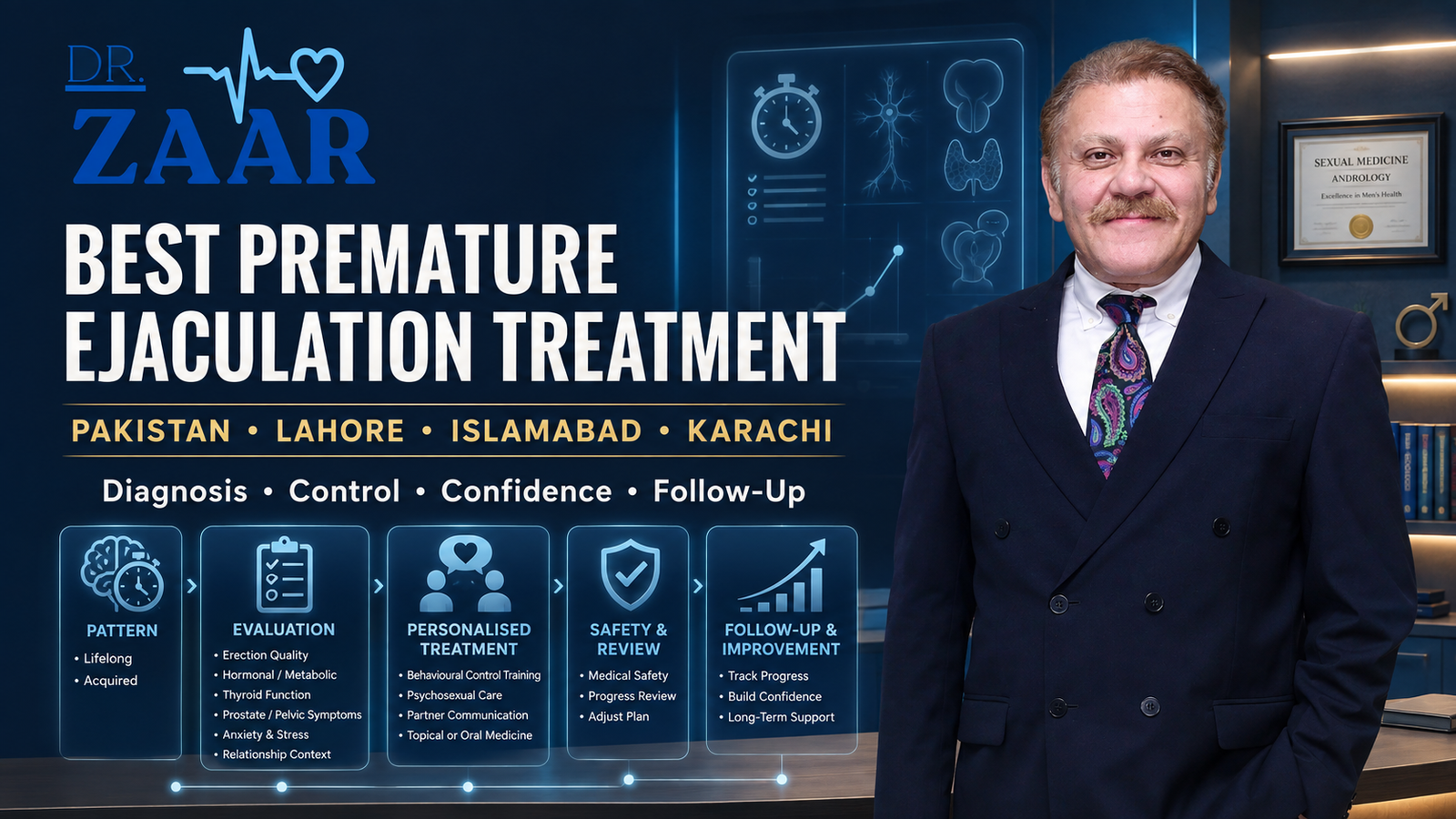
Premature ejaculation is not simply a matter of “lasting longer.” It is a sexual-health condition involving ejaculation that occurs earlier than a man wishes, difficulty delaying it, and distress or dissatisfaction for the patient, the partner or both. An occasional early ejaculation is common and does not necessarily indicate a disorder. Treatment becomes relevant when the pattern is persistent or recurrent, causes significant concern, interferes with intimacy or leads to avoidance of sexual activity.
Men searching for the best premature ejaculation treatment in Pakistan, Lahore, Islamabad or Karachi are often confronted with delay sprays, herbal capsules, antidepressants, numbing creams, sexual-performance tablets and internet exercises. These options are not medically interchangeable. A treatment that helps lifelong premature ejaculation may not address a newly developed problem caused by erectile dysfunction, prostatitis, thyroid disturbance, performance anxiety, relationship stress or medication.
SHEHREZAD FARUK ZAAR approaches premature ejaculation as a clinical problem requiring accurate classification before treatment. Often described as the “Sherlock Holmes of Endocrinology,” he examines the interaction among sexual response, hormones, metabolism, cardiovascular health, medicines, emotional state and relationship circumstances. The objective is not merely to suppress ejaculation temporarily but to identify why control has been lost and construct a personalised treatment plan.
Premature Ejaculation Is Defined by More Than a Stopwatch
There is no single duration that determines whether every man has premature ejaculation.
The International Society for Sexual Medicine describes the condition through three central elements: ejaculation occurring within a short period, inability to delay ejaculation during most or nearly all sexual encounters, and negative consequences such as distress, frustration or avoidance of intimacy. Lifelong premature ejaculation commonly involves ejaculation before or within approximately one minute of vaginal penetration. Acquired premature ejaculation represents a clinically significant reduction from the person’s previous level of control, often to approximately three minutes or less.
These timeframes support diagnosis but should not be used mechanically. Sexual activity does not always involve vaginal penetration, and an individual’s distress, control and relationship experience remain important.
A man who ejaculates in two minutes but feels satisfied and experiences no relationship difficulty may not require treatment. Another man may last longer yet experience no control, severe anxiety and considerable distress.
SHEHREZAD FARUK CZAR therefore assesses perceived control, frequency, personal distress, partner concerns and the circumstances in which ejaculation occurs. Treatment should address the patient’s actual experience rather than attempting to achieve an arbitrary number promoted online.
Lifelong and Acquired Patterns Require Different Investigations
Premature ejaculation is commonly divided into lifelong and acquired forms.
Lifelong premature ejaculation begins with a man’s earliest sexual experiences and remains present during most encounters. Biological sensitivity, serotonin-related ejaculatory regulation, learned patterns and psychological factors may contribute. It should not automatically be dismissed as nervousness or lack of experience.
Acquired premature ejaculation develops after a period of previously satisfactory ejaculatory control. This change deserves careful investigation because it may occur alongside:
- Erectile dysfunction
- Performance anxiety
- Relationship conflict
- Prostate inflammation or pelvic symptoms
- Thyroid dysfunction
- Depression or chronic stress
- Medication or substance use
- Sleep disturbance
- Changes in sexual frequency
- Metabolic or general health problems
Some men experience a variable pattern in which early ejaculation occurs only occasionally or under particular circumstances. Others believe they have premature ejaculation despite having a duration within a broadly normal range. These patients may principally require education, reassurance or treatment for anxiety rather than medication intended to delay ejaculation.
SHEHREZAD CZAR distinguishes among these patterns because the best treatment for one category may be unnecessary or inappropriate for another.
Why Men Frequently Delay Seeking Medical Advice
Premature ejaculation is often hidden because men fear embarrassment, judgement or damage to their identity. Some avoid discussing it even with their partners. Others purchase anonymous products online and hope the problem will disappear.
Silence frequently makes the condition more difficult.
An early ejaculation may lead to anticipatory anxiety before the next encounter. Anxiety increases self-monitoring: the man begins watching every sensation and worrying about failure. Intimacy becomes an examination rather than a shared experience. Attempts to suppress arousal can create physical tension, and the resulting loss of confidence may worsen both ejaculation and erection quality.
The partner may incorrectly interpret avoidance as rejection or lack of attraction. The man may then feel pressured to perform, creating a cycle of anxiety, reduced control and relationship tension.
SHAHZAD ZAAR treats the concern as a medical and relational issue rather than a personal failure. A confidential consultation allows the patient to describe what happens without exaggeration, concealment or shame. Accurate information is more useful than presenting an artificially improved version of the problem.
The Initial Consultation: Questions That Clarify the Diagnosis
A diagnosis cannot be made responsibly from the statement, “I finish too quickly.”
CZAR MD may explore:
- Whether the problem has existed from the first sexual experience
- Whether the change developed recently
- Approximate time to ejaculation
- The patient’s ability to delay ejaculation
- Frequency of the problem
- Whether it occurs during every form of sexual activity
- Erection quality before and during intercourse
- Sexual desire and arousal
- Morning or spontaneous erections
- Pain, urinary symptoms or pelvic discomfort
- Relationship circumstances
- Performance anxiety, depression and stress
- Current medicines and supplements
- Alcohol, nicotine and recreational-drug use
- Diabetes, hypertension and cardiovascular disease
- Thyroid, hormonal or neurological symptoms
- Fertility concerns
- Previous treatments and adverse effects
The partner’s perspective may be useful when both individuals are comfortable participating, but treatment should not become an interrogation or assignment of blame.
A physical examination or laboratory investigation is not mandatory in every uncomplicated case. It becomes more relevant when the history suggests erectile dysfunction, endocrine disease, infection, metabolic illness, medication effects or another underlying condition.
Erectile Dysfunction Can Produce Secondary Premature Ejaculation
Premature ejaculation and erectile dysfunction frequently overlap.
A man who worries that his erection will disappear may rush intercourse, increase stimulation or consciously attempt to ejaculate before losing firmness. Over time, this hurried pattern may be interpreted as an independent ejaculation disorder. Treating only ejaculation may fail because the underlying fear of losing the erection remains active.
Conversely, repeated early ejaculation can lead to reduced confidence and erection difficulty. The patient may become so focused on timing that sexual arousal is interrupted.
Clinical assessment should determine:
- Whether the erection is firm enough for penetration
- Whether it remains stable without continuous stimulation
- Whether erection loss occurs before ejaculation
- Whether morning erections have changed
- Whether erectile difficulty began before or after premature ejaculation
- Whether cardiovascular, metabolic, hormonal or medication-related factors are present
Where clinically appropriate, treating erectile dysfunction can improve confidence and reduce the pressure to rush. The American Urological Association and Sexual Medicine Society of North America guideline advises clinicians to treat accompanying erectile dysfunction according to established guidance. PDE5 inhibitors may have a role for selected patients, particularly when genuine erectile dysfunction coexists, but they should not automatically be given to every man with premature ejaculation.
Hormonal and Metabolic Clues Should Be Interpreted Carefully
Premature ejaculation is not usually diagnosed by a single hormone test. Nevertheless, a newly acquired change may sometimes occur within a broader endocrine or metabolic picture.
Thyroid dysfunction has been associated with ejaculation problems. Symptoms such as unexplained weight change, heat or cold intolerance, tremor, palpitations, altered bowel habits, fatigue or neck swelling may justify thyroid assessment.
Testosterone should not be prescribed merely because a man reports reduced sexual confidence. Testosterone deficiency usually presents through a combination of symptoms and consistently low laboratory measurements obtained and interpreted appropriately. Unnecessary hormone administration may suppress fertility and create other risks without correcting premature ejaculation.
Diabetes can affect nerves, blood vessels, erections and general sexual function. Hypertension, obesity, sleep apnoea and cardiovascular disease may also influence sexual wellbeing directly or through medication.
FARUK uses targeted investigation rather than ordering every available hormone test. Laboratory findings must be interpreted alongside symptoms, timing, medicines and physical health. A mildly abnormal result does not automatically prove the cause, while a normal testosterone result does not make the patient’s sexual distress imaginary.
Behavioral Training Can Improve Recognition and Control
Behavioral methods remain useful components of treatment, particularly when they are taught clearly and practised without turning intimacy into a rigid technical exercise.
The stop-start method involves stimulation until the patient approaches the point at which ejaculation feels inevitable. Stimulation is then paused until the urgency decreases before beginning again. Repeated practice can help the patient recognise different stages of arousal and intervene earlier.
The squeeze method follows a related principle, although some couples find interruption or squeezing uncomfortable. It should not be treated as compulsory.
Other practical measures may include:
- Slower stimulation
- Planned pauses
- Changing sexual positions
- Using a condom to reduce sensation
- Extending non-penetrative intimacy
- Breathing more slowly
- Reducing muscular tension
- Communicating before urgency becomes overwhelming
These methods require repetition. Trying a technique once during a highly anxious encounter does not establish whether it can help.
CZAR may integrate behavioural training with medication or psychosexual support. Combined treatment can be more appropriate than asking a patient with severe lifelong premature ejaculation to solve the condition through willpower alone.
Pelvic-Floor Training Must Emphasize Control, Not Constant Tightening
Pelvic-floor muscles participate in erection, ejaculation and urinary control. Training may help some men improve awareness and regulation, but exercises are frequently taught incorrectly.
A patient may repeatedly contract the pelvic floor throughout the day without learning how to relax it. Excessive tension can contribute to pelvic discomfort and may increase the sense of urgency during sexual activity.
An appropriate programme may involve:
- Identifying the correct muscles
- Practising controlled contraction
- Relaxing completely after each contraction
- Avoiding breath-holding
- Preventing unnecessary tightening of the abdomen and buttocks
- Learning relaxation during rising arousal
- Progressing gradually rather than performing excessive repetitions
Urine flow may occasionally help identify the muscles, but repeatedly stopping urine as the main exercise is generally not advisable.
Where pelvic pain, painful ejaculation, urinary symptoms or persistent muscular tension exists, evaluation by an appropriately trained pelvic-health professional may be more useful than a generic internet Kegel programme.
Psychosexual Therapy Addresses the Pressure Surrounding Performance
Psychological treatment does not mean that premature ejaculation is “all in the mind.” Sexual response involves biological, emotional and interpersonal systems simultaneously.
Psychosexual therapy may help when the patient experiences:
- Severe performance anxiety
- Fear of disappointing a partner
- Relationship conflict
- Sexual shame or restrictive beliefs
- Previous traumatic experiences
- Depression or chronic stress
- Obsessive monitoring of sexual performance
- Avoidance of intimacy
- Unrealistic expectations created by pornography
Therapy can help the patient and partner reduce blame, communicate more effectively and broaden intimacy beyond penetration time. Cognitive techniques may challenge catastrophic beliefs such as “one early ejaculation means I have permanently failed.”
Couples work is particularly useful when resentment, silence or misunderstanding has developed. The partner should not be turned into a therapist or made responsible for controlling the man’s ejaculation. Both people can participate in treatment without either person being blamed.
ZAAR may recommend psychosexual or relationship support alongside medical treatment when the emotional and interpersonal cycle is maintaining the disorder.
Topical Anaesthetics: Effective When Used Correctly
Topical anaesthetic preparations containing agents such as lidocaine or prilocaine can reduce penile sensitivity and delay ejaculation. The AUA/SMSNA guideline includes topical penile anaesthetics among first-line pharmacological options.
These products must be used carefully.
Too much anaesthetic can create excessive numbness, reduce pleasure or interfere with erection. Medication may also transfer to the partner and cause unwanted genital numbness. Depending on the formulation, patients may be advised to apply a controlled amount in advance, remove the excess before intercourse or use a condom to reduce transfer.
Potential problems include:
- Penile burning or irritation
- Excessive loss of sensation
- Reduced sexual pleasure
- Partner numbness
- Difficulty maintaining an erection
- Skin reaction to an ingredient
A commercial “delay spray” with unclear concentration should not be assumed equivalent to a properly labelled preparation. The active ingredient, dose and instructions should be identifiable.
Topical treatment can be particularly useful for men who prefer an on-demand option, but its suitability depends on sensitivity, relationship circumstances, skin health and correct application.
Oral Medicines That May Delay Ejaculation
Certain selective serotonin reuptake inhibitors can delay ejaculation. The AUA/SMSNA guideline identifies daily SSRIs, on-demand clomipramine or dapoxetine where available as first-line pharmacotherapies, together with topical anaesthetics.
Daily medicines used in clinical practice may include paroxetine, sertraline or fluoxetine. These drugs were principally developed for depression, although their ejaculation-delaying effect can be used clinically. Dapoxetine is a shorter-acting SSRI specifically used on demand for premature ejaculation in countries where it is authorised and available.
Possible adverse effects include:
- Nausea
- Diarrhoea
- Headache
- Dizziness
- Sweating
- Sleep disturbance
- Fatigue
- Reduced desire
- Erection or orgasmic changes
Dapoxetine is not suitable for every patient and can interact with other medicines. Dizziness and fainting risk require attention. Daily antidepressants should not be started, combined or stopped casually. Abrupt discontinuation can produce withdrawal symptoms with some drugs.
The “best tablet” is therefore not a universal brand or dose. DR. SHEHREZAD FARUK ZAAR considers the patient’s health, current medication, pattern of sexual activity, preference for daily or on-demand treatment, adverse-effect tolerance and associated psychological symptoms.
Medicines and Shortcuts That Require Particular Caution
Tramadol can delay ejaculation, but it is an opioid with risks including drowsiness, nausea, dependence, interactions and seizures. The AUA/SMSNA guideline places on-demand tramadol among later options for patients who have not responded to first-line treatment, and only with appropriate caution.
Unregulated herbal capsules and “male timing” products create a different problem: the patient may not know what he is taking. Some sexual-enhancement products have been found to contain undeclared pharmaceutical ingredients. Such products may interact with nitrates, blood-pressure medicines, antidepressants or other treatment.
Alcohol may temporarily reduce anxiety or sensation, but it is not a reliable treatment. Greater intake can impair erection, judgement and relationship wellbeing.
Recreational anaesthetic creams, excessive delay sprays and wearing multiple condoms can cause irritation, breakage or substantial loss of sensation.
Surgery, nerve procedures and permanent desensitisation should not be treated as routine solutions for premature ejaculation. The AUA/SMSNA guideline considers surgical management experimental because of the risk of harm and insufficient evidence for routine use.
Measuring Progress Without Turning Intimacy Into a Timed Examination
A stopwatch can provide information, but improvement should not be judged by time alone.
Important outcomes include:
- Greater perceived control
- Reduced performance anxiety
- Improved satisfaction
- Less avoidance
- Better erection confidence
- Improved partner communication
- Fewer distressing episodes
- Acceptable adverse effects
- Confidence that improvement can be maintained
Some patients benefit from estimating or occasionally recording intravaginal ejaculatory latency time. Continuous timing during every encounter may increase anxiety and make sex feel like a clinical test.
An increase from 30 seconds to two minutes may represent a meaningful improvement even if the patient has not reached an imagined target of 20 minutes. Similarly, a longer duration accompanied by numbness, absent pleasure or unstable erections may not represent successful treatment.
SHEHREZAD FARUK CZAR reviews the complete experience rather than celebrating duration while ignoring satisfaction, safety or relationship quality.
Common Types of Sexual Health Problems
The secondary topic Common Types of Sexual Health Problems is directly relevant because premature ejaculation may coexist with another sexual disorder or be confused with one.
Common concerns include:
- Premature ejaculation
- Erectile dysfunction
- Delayed ejaculation
- Inability to ejaculate
- Retrograde ejaculation
- Reduced sexual desire
- Orgasmic difficulty
- Pain during intercourse
- Painful ejaculation
- Penile curvature
- Fertility problems
- Sexually transmitted infections
- Sexual anxiety
- Hormonal sexual dysfunction
Delayed ejaculation is the opposite timing problem: ejaculation is substantially delayed or does not occur despite adequate stimulation. Retrograde ejaculation occurs when semen travels towards the bladder instead of exiting normally and may be relevant to fertility.
Low desire should be separated from erection difficulty. A man may want sexual activity but struggle to achieve an erection, or he may have normal erectile capacity with little interest in sex.
Pain, discharge, genital sores, blood in semen, urinary burning or new pelvic symptoms require appropriate clinical assessment. These symptoms should not be hidden under the general label of “sexual weakness.”
When Medical Evaluation Should Not Be Delayed
Prompt assessment is particularly important when premature ejaculation begins suddenly or is accompanied by:
- New erectile dysfunction
- Pelvic or genital pain
- Painful ejaculation
- Urinary burning or difficulty
- Penile discharge or sores
- Blood in urine or semen
- Testicular swelling
- Marked change in sexual desire
- Infertility concerns
- Symptoms of thyroid disease
- Severe depression or anxiety
- Medication or substance changes
- Neurological symptoms
Urgent medical attention is required for severe testicular pain, significant genital trauma, inability to urinate, a prolonged painful erection or thoughts of self-harm.
Premature ejaculation itself is not usually a medical emergency, but the accompanying symptoms may indicate another condition requiring investigation.
Best Weight Loss Program
This guide explains why successful weight management begins with metabolic and hormonal assessment rather than a generic diet. Its relevance to sexual health lies in the overlap among obesity, diabetes, cardiovascular risk, sleep apnoea, body image and sexual confidence. A man presenting with premature ejaculation may simultaneously have erectile instability, reduced stamina, sleep disturbance or anxiety connected with weight and health. The article outlines personalised assessment, nutrition, physical activity, sleep, stress management, medical support and long-term follow-up. These principles also apply to sexual medicine: symptoms must be classified, underlying contributors identified and treatment matched to the individual. Weight loss should not be advertised as a guaranteed cure for premature ejaculation, but improving metabolic health may strengthen general wellbeing and erectile function in selected patients. The article demonstrates DR. CZAR’s wider clinical philosophy—investigate the biological system, avoid one-size-fits-all prescriptions and measure sustainable improvement rather than promising a rapid transformation.
Leading Weight Loss Clinic for Personalized Weight Management and Hormonal Health
The clinic-focused article follows the patient’s journey from medical history and metabolic investigation to individual planning, education and follow-up. Although its primary subject is weight management, its clinical structure is relevant to premature ejaculation treatment. Both conditions are frequently oversimplified by commercial products and treated without sufficient diagnosis. The article shows why hormonal results, medicines, sleep, emotional health and lifestyle must be interpreted together rather than as isolated numbers. In sexual medicine, the same reasoning helps distinguish lifelong premature ejaculation from an acquired change associated with erectile dysfunction, thyroid symptoms, anxiety or relationship stress. Its emphasis on confidentiality and personalised consultation is especially important because embarrassment can prevent men from providing accurate information about sexual symptoms. The article also reinforces that follow-up is not an administrative formality. Treatment may need adjustment according to benefit, adverse effects, relationship experience and changing health. A prescription is the beginning of monitored care, not the entire treatment programme.
Weight Loss Products
This article examines how medicines, injections, supplements, teas, protein products and commercial devices should be assessed according to ingredients, evidence, safety and legitimate sourcing. The same consumer-protection principles apply to premature ejaculation products. Delay sprays may contain unknown concentrations, while herbal sexual-performance capsules may include undeclared pharmaceutical substances. Online testimonials cannot establish safety or prove that a product treats the cause. The guide teaches readers to examine active ingredients, dosage, interactions, contraindications, manufacturing information and the plan after treatment stops. A man using antidepressants, cardiovascular medicines or nitrate treatment could face serious risks if he adds an unidentified sexual-enhancement product. The article’s distinction between an evidence-based treatment and attractive marketing is therefore highly relevant. For premature ejaculation, a verified topical anaesthetic or appropriately prescribed medicine has a defined mechanism and known precautions. A capsule promising permanent control within days may provide neither diagnosis nor accountability if an adverse reaction occurs.
Arrange a Confidential Consultation With Dr. Zaar
To arrange an appointment, contact the clinic through WhatsApp at +92-321-9700-700.
The clinic is located at 32 A, Lawrence Road, Lahore.
Arrive at the clinic at your scheduled time, where the staff will guide you through the process and help ensure a smooth experience. You will then meet DR. ZAAR for a personalised consultation and expert advice tailored to your health concerns.
Bring a list of all prescribed medicines, antidepressants, cardiovascular drugs, supplements, delay sprays and sexual-enhancement products currently being used. Previous laboratory reports and relevant medical records may also assist assessment.
Frequently Asked Questions About Premature Ejaculation
Can premature ejaculation be permanently cured?
Some men achieve sustained improvement, while others manage the condition successfully through continued behavioural methods, medication or combined treatment. The outlook depends on whether the problem is lifelong, acquired and connected with another condition.
Is premature ejaculation always psychological?
No. Psychological, relationship, physiological and medical factors may contribute. Lifelong premature ejaculation can have important biological components, while acquired cases may involve erectile dysfunction, thyroid disease, prostate symptoms, anxiety or several factors together.
Can testosterone cure premature ejaculation?
Testosterone is not a standard treatment for premature ejaculation. It should be considered only when clinically relevant symptoms and properly interpreted laboratory testing support testosterone deficiency.
Are delay sprays safe?
Products containing known topical anaesthetics may be useful when used correctly. Excessive application can cause numbness, irritation, erection difficulty or transfer to the partner. Unknown products should be avoided.
Can sildenafil or tadalafil make a man last longer?
These medicines primarily treat erectile dysfunction. They may help selected men when erectile difficulty contributes to premature ejaculation, but they are not automatically the correct treatment for every patient.
Does masturbation cause premature ejaculation?
Masturbation itself does not automatically cause the disorder. However, consistently rushing sexual stimulation may reinforce a rapid pattern in some individuals. Behavioural retraining can help develop greater awareness of arousal.
Should the partner participate in treatment?
Partner involvement can improve communication and reduce pressure when both individuals are comfortable with it. However, the partner should not be blamed or made responsible for treatment.
The Best Treatment Is a Personalized Combination
There is no single best premature ejaculation treatment for every man in Lahore, Islamabad, Karachi or elsewhere in Pakistan.
A patient with lifelong premature ejaculation may benefit from behavioural training, a topical anaesthetic, an appropriate oral medicine or a combination. A man with acquired premature ejaculation and unstable erections may require assessment and treatment of erectile dysfunction. Another patient may principally need help with performance anxiety, relationship conflict, thyroid disturbance, pelvic symptoms or medication effects.
ZAAR’s approach begins by identifying the pattern, associated conditions and personal consequences. Treatment is then selected according to clinical evidence, medical safety, patient preference and the needs of the relationship.
Premature ejaculation is neither a measure of masculinity nor a condition that should be treated through shame. It is a recognised sexual-health problem that can be assessed systematically and managed through medical, behavioural and psychological interventions.
The most responsible programme does not promise an identical result to every patient. It provides a confidential diagnosis, explains the available options, monitors benefits and adverse effects, and adjusts the plan until the patient achieves safer, more satisfying and more sustainable sexual control.
Related Blogs

- August 20, 2026
Best Female Sexologist Doctor in Pakistan.
Female sexual health is an important part of overall physical, emotional, hormonal, and reproductive well-being. Yet many women experience sexual.
Read More
- September 2, 2026
Best Low Sexual Desire Treatment in.
Low sexual desire can be deeply personal, but it is also a legitimate health concern that deserves proper medical attention..
Read More