



Why Hypothyroidism Weight Gain Happens Even When Thyroid Tests Are Normal
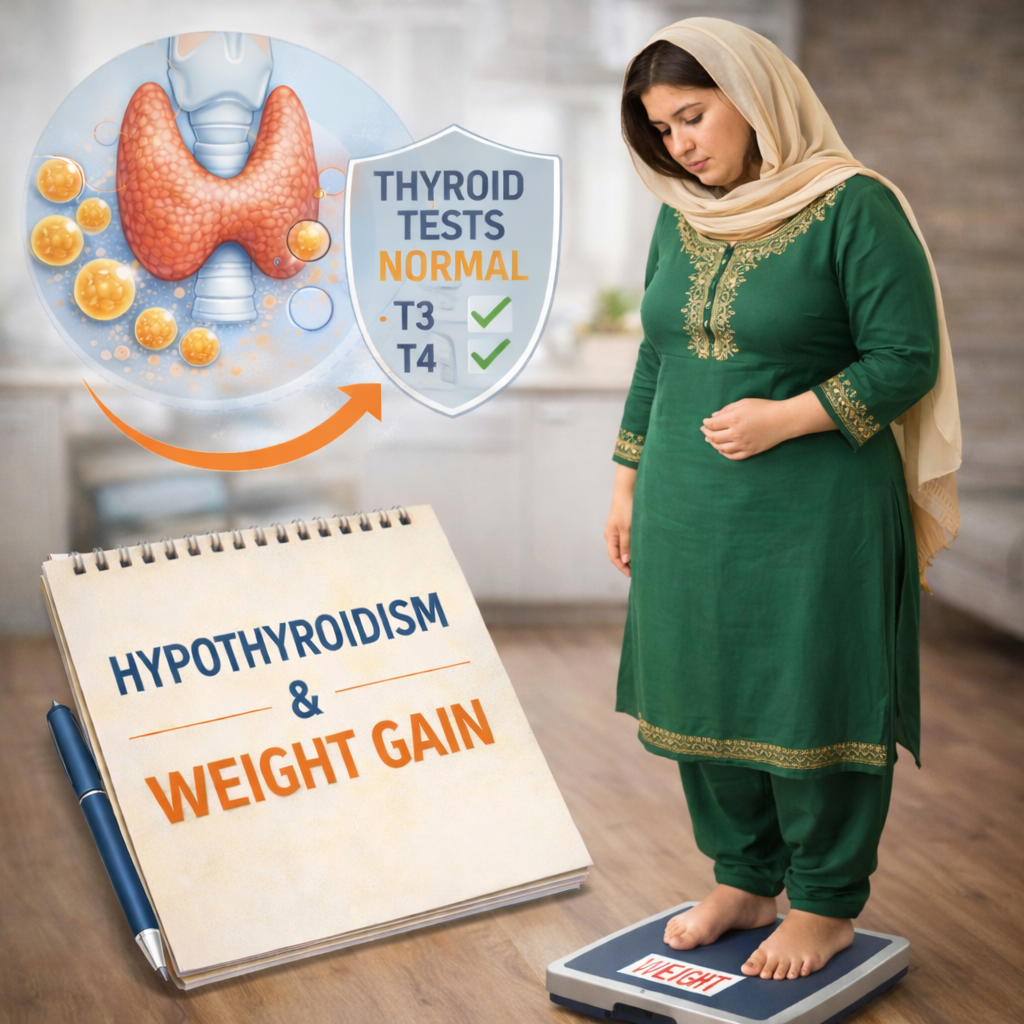
Have you been struggling with hypothyroidism weight gain even though your lab reports say your thyroid is normal? Many patients feel confused and frustrated when the scale keeps rising despite dieting and exercise. The truth is simple. Normal lab ranges do not always mean your thyroid is working optimally. There is a gap between “normal” and “healthy,” and that gap often explains stubborn weight gain.
At Dr. Zaar’s clinic, we frequently see patients dealing with unexplained hypothyroidism weight gain. Most of them were told their TSH is within range. But symptoms tell a different story. Fatigue, bloating, hair thinning, mood swings, and slow metabolism are not random. They are signals your body needs deeper evaluation.
Hypothyroidism Weight Gain With Normal TSH
Most doctors rely only on TSH testing. If your level falls between 0.4 and 4.5 mIU/L, it is labeled normal. However, many patients begin experiencing symptoms when TSH rises above 2.5. This is where hidden metabolic imbalance begins.
The Subclinical Gap
Subclinical hypothyroidism means your thyroid is under stress but not failing completely. Your hormones may sit inside the reference range, yet your cells are not receiving enough active thyroid hormone. This creates slow fat burning and energy decline, often requiring targeted weight loss treatment.
Many cases of hypothyroidism weight gain start in this grey zone. You feel off, but standard tests do not flag a disease.
Sluggish Thyroid Slows Your Metabolism
Thyroid hormones regulate how fast your body burns calories. When they drop, even slightly, your metabolic rate decreases. You burn fewer calories at rest. Fat storage increases. Losing weight becomes harder than it should be.
Water retention also increases. Many patients gain several kilos from fluid buildup alone. This makes hypothyroidism weight gain look worse and feel more frustrating.
Insulin resistance is another hidden factor. Low thyroid function affects how your body handles sugar. Excess glucose is stored as fat. Over time, this worsens metabolic health.
This is why focusing only on TSH misses the full picture.
Common Causes of Hypothyroidism Weight Gain
Understanding the root causes of hypothyroidism weight gain is essential before starting treatment. Weight gain does not happen randomly. It is driven by hormonal shifts inside the body. Below are the most common reasons patients struggle with thyroid-related weight gain.
- Slow Metabolism From Low T3
T3 is the active thyroid hormone responsible for fat burning. When T3 levels drop, your body burns fewer calories at rest. Even small reductions can slow your metabolic rate and trigger gradual weight gain. - Poor Conversion of T4 to T3
Some patients produce enough T4 but cannot convert it properly into active T3. Stress, nutrient deficiencies, and chronic dieting can block this conversion. This leads to persistent hypothyroidism weight gain despite normal lab reports. - Water Retention and Fluid Buildup
Low thyroid function causes the body to retain sodium and water. This results in puffiness, bloating, and rapid weight increase that feels like fat but is often fluid accumulation. - Insulin Resistance
Thyroid hormones influence how your body processes sugar. When hormone levels are low, insulin sensitivity decreases. Excess glucose is stored as fat, worsening hypothyroidism weight gain. - Autoimmune Thyroid Disease
Hashimoto’s thyroiditis is a common autoimmune cause of thyroid dysfunction. Inflammation damages thyroid tissue over time, slowing hormone production and metabolism. - Chronic Stress and High Cortisol
Long-term stress raises cortisol levels. High cortisol interferes with thyroid hormone activation and promotes abdominal fat storage.
Essential Thyroid Tests for Hypothyroidism Weight Gain
Understanding hypothyroidism weight gain requires deeper testing. A full thyroid panel gives clarity about hormone production, activation, and autoimmune triggers.
Key Thyroid Markers
TSH shows how hard your brain is signaling the thyroid.
Free T4 reflects the storage hormone level.
Free T3 measures the active hormone responsible for fat burning.
Reverse T3 acts like a brake on metabolism.
Thyroid antibodies detect autoimmune thyroid disease such as Hashimoto’s.
Many patients with persistent hypothyroidism weight gain have normal TSH but low Free T3 or elevated Reverse T3. Without checking these markers, the root cause remains hidden.
Thyroid Test Comparison
| Test Name | Function in Body | Impact on Weight |
| TSH | Signals thyroid stimulation | High-normal levels may slow metabolism |
| Free T4 | Storage thyroid hormone | Must convert to T3 to burn fat |
| Free T3 | Active fat-burning hormone | Low levels reduce calorie burning |
| Reverse T3 | Blocks active thyroid hormone | High levels stop weight loss |
| TPO Antibodies | Detect autoimmune thyroid attack | Ongoing inflammation worsens metabolism |
This complete evaluation helps explain why standard treatment often fails to resolve hypothyroidism weight gain.
Manage Hypothyroidism Weight Gain Safely and Effectively
Managing thyroid-related weight gain requires strategy. Extreme dieting does not work. Over-exercising often backfires. The goal is hormone optimization, not starvation, and proper thyroid treatment.
First, hormone levels must be adjusted to optimal ranges, not just acceptable ranges. Even small improvements in Free T3 can significantly improve energy and fat burning.
Second, nutrition must support thyroid conversion. The thyroid depends on selenium, zinc, iodine, iron, and protein. Without these nutrients, hormone activation suffers.
Third, stress must be controlled. Chronic stress raises cortisol. High cortisol interferes with thyroid hormone conversion and increases abdominal fat storage.
Fourth, sleep plays a critical role. Poor sleep reduces insulin sensitivity and increases hunger hormones. This intensifies hypothyroidism weight gain.
Recovery is not about eating less. It is about restoring hormonal balance.
Nutritional Support for Thyroid Function
Supporting your thyroid requires targeted nutrients. A balanced, anti-inflammatory diet improves hormone conversion and metabolic stability.
- Selenium supports T4 to T3 conversion
- Zinc assists hormone synthesis
- Iodine builds thyroid hormones
- Iron supports oxygen transport and metabolism
- Vitamin D improves immune balance
- High-quality protein maintains muscle mass
Muscle preservation is essential because muscle burns calories even at rest. When muscle declines, metabolism slows further. This cycle makes hypothyroidism weight gain more persistent.
When to See an Endocrinologist
If you experience unexplained weight gain, constant fatigue, dry skin, hair thinning, irregular periods, depression, or cold intolerance, do not ignore these signs. They may indicate deeper thyroid dysfunction.
Persistent hypothyroidism weight gain is not simply about willpower. It is a hormonal imbalance that requires medical evaluation. A specialist in endocrinology can analyze hormone patterns and design a personalized treatment plan.
Stop Guessing and Start Healing
Living with hypothyroidism weight gain can feel discouraging. Many patients blame themselves. They try harder diets. They increase workouts. Yet the results do not change.
The truth is simple. If your thyroid hormones are not optimized, your metabolism cannot function properly. Weight gain becomes a biological response, not a personal failure.
The solution begins with deeper testing, individualized care, and hormone optimization. Once balance is restored, energy improves. Metabolism strengthens. Sustainable weight loss becomes possible.
If you are struggling despite normal reports, it may be time to look beyond basic lab ranges and address the real cause. Book an appointment with Dr Zaar to receive a comprehensive thyroid evaluation and personalized treatment plan tailored to your metabolic health.
Related Blogs

- January 30, 2026
How Strength Training and Nutrition Improve.
Muscle loss is not only a matter of appearance as we age but it has direct health consequences. Not everyone.
Read More
- March 31, 2026
Goiter Cause Type Symptoms and Contemporary.
The thyroid gland is also referred to as the silent engine of your metabolism. This neck gland is a small.
Read More