



Best Weight Loss Treatment in Pakistan, Lahore, Islamabad and Karachi, Guide to Root Causes, Diagnosis, Medicines and Long-Term Weight Control

Searching for the best weight loss treatment in Pakistan, Lahore, Islamabad and Karachi can lead patients into a confusing market of restrictive diets, imported injections, slimming tablets, herbal powders, fat-burning drips, detox plans and promises of rapid transformation. Some programmes focus entirely on calorie counting. Others prescribe medication without investigating why weight gain occurred or whether the treatment is medically safe.
There is no single treatment that is best for every patient.
One person may gain weight because of excessive calorie intake and physical inactivity. Another may be affected by insulin resistance, diabetes, sleep apnoea, polycystic ovary syndrome, medication, depression, menopause, thyroid disease or abnormal eating behaviour. Many patients have several factors operating simultaneously.
The best weight loss treatment is therefore not necessarily the newest injection, the strictest diet or the most expensive package. It is a medically supervised plan based on the patient’s biology, health risks, eating patterns, psychological circumstances and ability to maintain the result.
Dr. Zaar, often described as the “Sherlock Holmes of Endocrinology,” approaches weight gain as a potentially interconnected metabolic and hormonal problem. His work in endocrine biochemistry and metabolic medicine focuses on identifying the mechanisms that influence hunger, energy use, fat storage, blood glucose, sleep, stress and long-term weight regulation.
Weight Gain Is More Complex Than Lack of Willpower
Body weight changes when energy intake, energy expenditure and biological regulation remain out of balance over time. That description is scientifically useful, but it does not mean that every patient gains weight simply because of weak discipline.
Appetite is affected by hormones, sleep, medication, stress, food availability, learned behaviour, mood and the brain’s reward pathways. Physical activity is influenced by work, pain, disability, cardiovascular health, fatigue, environment and available time. Genetics can affect appetite, fat distribution and susceptibility to weight gain.
The World Health Organization defines overweight and obesity as abnormal or excessive fat accumulation that presents a risk to health. In adults, body mass index is commonly used for initial classification, with a BMI of 25 or above generally considered overweight and 30 or above considered obesity. However, BMI does not directly measure body fat or show where fat is stored. Waist circumference, metabolic health and clinical context remain important.
Telling every patient to “eat less and move more” may be technically relevant but clinically incomplete. A useful medical plan asks why appetite is excessive, why energy is low, why previous weight loss returned and which health conditions make treatment urgent.
What Makes a Weight Loss Treatment Truly Effective?
A successful programme should accomplish more than a temporary reduction on the weighing scale.
Effective treatment should reduce excess body fat while protecting muscle, nutritional status and general health. It should improve or reduce the risk of diabetes, hypertension, abnormal cholesterol, fatty liver disease, sleep apnoea, mobility problems and cardiovascular disease. It should also provide a strategy for maintaining the result.
The treatment must be realistic enough to continue. A diet that produces rapid weight loss for three weeks but cannot be sustained may lead to repeated loss and regain. Similarly, medication may reduce hunger effectively, but the patient still requires a plan for nutrition, activity, adverse-effect monitoring and long-term management.
The best programme should consider:
- The amount and distribution of excess weight
- Previous weight-loss attempts
- Appetite, cravings and eating patterns
- Diabetes and insulin resistance
- Blood pressure and cardiovascular health
- Hormonal and reproductive symptoms
- Sleep quality and possible sleep apnoea
- Medicines that may promote weight gain
- Mental health and emotional eating
- Physical limitations and exercise capacity
- Fertility plans and pregnancy considerations
- The patient’s financial and practical circumstances
The objective is not to force every patient into the same protocol. It is to match the treatment intensity to the person’s medical needs.
Why Weight Distribution Matters
Two people with the same weight and BMI may have different health risks.
Fat stored predominantly around the abdomen is associated with insulin resistance and metabolic disease. A larger waist circumference can therefore provide useful information beyond total body weight. Fat may also accumulate around internal organs and in the liver even when a person does not appear severely obese.
South Asian populations may develop type 2 diabetes and cardiovascular risk at comparatively lower BMI levels than some other populations. This makes waist measurement, family history, blood glucose, lipid levels and blood pressure particularly relevant when assessing patients in Pakistan.
SHEHREZAD FARUK ZAAR may examine the relationship between weight, waist size, blood pressure, metabolic markers and symptoms rather than treating the weighing scale as the only measure of health.
Body composition is also relevant. A patient can lose weight by losing water or muscle without achieving the desired reduction in body fat. Conversely, resistance training may preserve or increase muscle while fat decreases, producing a smaller change on the scale than expected.
Progress should therefore be judged using several indicators, including weight, waist circumference, body composition where appropriate, laboratory findings, fitness, symptoms and medication requirements.
The First Consultation: Finding the Drivers of Weight Gain
A detailed weight history can reveal information that no single blood test can provide.
The clinician may ask when weight gain began, whether it occurred gradually or suddenly, and which life events surrounded it. Pregnancy, menopause, injury, surgery, depression, night-shift work, smoking cessation, medication changes and reduced mobility can all alter weight.
Eating patterns require more than asking what a patient eats at lunch. The assessment may explore meal timing, portion size, sugary drinks, restaurant food, late-night eating, snacking, cravings, binge episodes and whether eating is triggered by hunger, habit, boredom, stress or emotional distress.
Previous weight-loss attempts are equally important. A patient may have lost considerable weight several times but regained it after stopping an extreme diet. Another may have experienced little response despite sustained effort, suggesting that medication, sleep, endocrine disease or inaccurate assumptions require review.
Sleep duration, snoring, witnessed breathing pauses and daytime sleepiness may suggest obstructive sleep apnoea. Menstrual irregularity, acne and excess facial hair may point towards polycystic ovary syndrome. Constipation, cold intolerance and fatigue may justify thyroid assessment, although these symptoms are not specific.
SHEHREZAD FARUK CZAR’s root-cause evaluation aims to distinguish ordinary weight-promoting factors from medical disorders that require specific treatment.
Medical Conditions That Can Affect Weight
Most obesity is not caused by a single endocrine disorder. Nevertheless, medical evaluation is important because several conditions can influence weight, appetite or the ability to lose fat.
Hypothyroidism
An underactive thyroid can contribute to fatigue, fluid retention, reduced energy expenditure and modest weight gain. However, hypothyroidism does not explain every case of severe obesity. Thyroid hormone should only be used when clinically indicated because unnecessary treatment can produce palpitations, bone loss and abnormal heart rhythms.
Polycystic Ovary Syndrome
Polycystic ovary syndrome may be associated with irregular periods, excess androgen activity, infertility, insulin resistance and weight gain. Weight management can improve metabolic and reproductive health, but treatment should address the patient’s individual symptoms and fertility plans.
Cushing Syndrome
Cortisol excess is uncommon but important. It may produce central weight gain, muscle weakness, easy bruising, wide purple stretch marks, hypertension, diabetes and changes in appearance. Routine indiscriminate cortisol testing is not appropriate for every overweight patient, but suggestive clinical features require investigation.
Hypogonadism and Menopause
Sex-hormone changes may affect muscle mass, fat distribution, energy, sleep and wellbeing. Hormone treatment is not a universal slimming therapy. It should follow proper diagnosis and consideration of benefits, risks and reproductive goals.
Diabetes and Insulin Resistance
Insulin resistance can promote a cycle involving increased hunger, abnormal glucose regulation, fatigue and progressive weight gain. Some diabetes medicines may support weight reduction, while others can promote weight gain. Treatment selection should consider glucose control, cardiovascular health, kidney function and the patient’s overall metabolic profile.
Medication-Related Weight Gain
Patients often blame themselves for weight gain that began after a treatment was introduced.
Certain antidepressants, antipsychotic medicines, corticosteroids, insulin regimens, anticonvulsants and other drugs can affect appetite, metabolism or fluid balance. This does not mean that the medicine should be stopped without medical advice. Abrupt discontinuation can be dangerous.
The prescribing clinician can determine whether the timing supports a medication effect, whether an alternative exists and whether the benefits of the original treatment outweigh its effect on weight.
CZAR MD may also ask about non-prescribed products, including gym hormones, steroids, herbal medicines and supplements. Some preparations contain undeclared ingredients or stimulants that may affect blood pressure, glucose, liver health and mood.
A complete medication review should form part of weight-loss assessment, particularly when gain was rapid or occurred after a clear change in treatment.
Diagnostic Testing Should Answer Specific Questions
No universal “obesity test package” is appropriate for everyone.
Testing may include fasting glucose or HbA1c, lipid profile, liver enzymes, kidney function and thyroid-stimulating hormone. Additional investigations can be selected according to symptoms, examination, medication and medical history.
Possible tests may include:
- Fasting glucose or HbA1c
- Lipid profile
- Liver and kidney function
- Thyroid function
- Blood count when indicated
- Vitamin or nutritional measurements in selected patients
- Reproductive hormones when relevant
- Cortisol investigations when clinical features suggest cortisol excess
- Sleep assessment for suspected obstructive sleep apnoea
- Pregnancy testing before certain medicines or procedures
A large number of laboratory tests does not necessarily represent superior care. Testing becomes valuable when the result can confirm a suspected diagnosis, exclude a dangerous condition or alter treatment.
The updated NICE guideline on overweight and obesity management emphasises assessment of BMI, central adiposity, associated conditions, individual needs and appropriate treatment rather than reliance on weight alone.
Nutrition Without Punishment or Starvation
A reduced-calorie eating plan remains central to weight loss, but it should not be confused with starvation.
The appropriate plan depends on body size, health, food preferences, cultural practices, diabetes treatment, kidney or liver disease, and the patient’s daily routine. Pakistani diets can contain nutritious foods, but portion size, cooking oil, refined flour, sweetened tea, sugary drinks, desserts and frequent restaurant meals can raise calorie intake substantially.
A practical programme may increase vegetables, pulses, lean protein and minimally processed foods while controlling added sugar, refined carbohydrates and energy-dense fats. Protein intake is particularly important during weight loss because it can support satiety and help preserve lean tissue when combined with appropriate resistance exercise.
Rigid rules are not always necessary. Some patients respond well to structured meals; others prefer calorie awareness, portion control or time-restricted eating. Intermittent fasting is a scheduling strategy, not metabolic magic. It can help when it reduces overall intake, but it may be unsuitable for some patients taking glucose-lowering medicines, during pregnancy or in the presence of an eating disorder.
SHEHREZAD CZAR’s nutritional strategy should be tailored to the patient rather than copied from a celebrity diet or social-media transformation.
Physical Activity: More Than Burning Calories
Exercise supports weight management, but its benefits extend well beyond the calories burned during a session.
Aerobic activity can improve cardiovascular fitness, glucose regulation, blood pressure and mood. Resistance training helps preserve or build muscle, which is especially important during calorie restriction or medication-assisted weight loss.
The United States National Institute of Diabetes and Digestive and Kidney Diseases describes comprehensive weight-management programmes as including an individualised eating plan, physical activity, self-monitoring and regular professional support. Its general guidance includes at least 150 minutes of moderate-intensity aerobic activity per week, adjusted for the person’s condition and abilities.
An inactive patient does not need to begin with punishing workouts. Walking, chair-based exercise, swimming, cycling and progressive resistance training can be introduced according to mobility and cardiovascular safety.
Patients with chest pain, severe breathlessness, unstable heart disease, uncontrolled blood pressure or significant physical limitations require appropriate medical assessment before intensive exercise.
The right activity plan begins at a safe level and progresses gradually.
Sleep, Stress and the Biology of Hunger
Poor sleep can make weight control substantially more difficult.
Insufficient or disrupted sleep may alter hunger, food preference, energy, mood and decision-making. Obstructive sleep apnoea can cause loud snoring, repeated breathing interruptions, morning headache and daytime sleepiness. It is strongly associated with obesity and may also worsen blood pressure and glucose regulation.
Chronic stress can increase emotional eating and preference for high-calorie foods. It may also reduce sleep and physical activity. Some patients use food as immediate relief from anxiety, loneliness, frustration or exhaustion.
This is not solved simply by instructing the patient to stop emotional eating. Treatment may require identifying triggers, modifying the home environment, developing alternative coping responses and treating depression, anxiety or binge-eating disorder.
SHAHZAD ZAAR may incorporate psychological and sleep-related factors into the medical plan because appetite does not operate separately from the brain and emotional state.
Prescription Medicines for Weight Management
Weight-loss medication may be appropriate when lifestyle treatment alone has not produced sufficient improvement and the patient meets clinical criteria.
Medicines should be considered as part of chronic disease management, not as cosmetic shortcuts. Selection depends on BMI, associated diseases, contraindications, other medicines, previous response, adverse effects, availability and cost.
Internationally recognised long-term treatments include orlistat, liraglutide, semaglutide, tirzepatide, naltrexone-bupropion and phentermine-topiramate, although approvals and availability differ between countries.
The fact that a medicine exists does not mean that it is appropriate for every patient. Pregnancy, breastfeeding, pancreatitis history, gallbladder disease, gastrointestinal symptoms, kidney or liver problems, psychiatric history, cardiovascular conditions and interactions with other medicines may influence selection.
Patients should never purchase an injection merely because a relative or online influencer achieved weight loss with it.
Semaglutide, Tirzepatide and GLP-1-Based Treatment
GLP-1-based medicines have transformed modern obesity treatment by reducing appetite, increasing satiety and helping many patients consume less food.
Semaglutide and tirzepatide are different medicines with different regulatory indications and dosing schedules. Certain formulations are approved for diabetes, while others are specifically approved for chronic weight management in eligible patients. Product names and indications on the product should not be treated as interchangeable.
The FDA approved tirzepatide for chronic weight management in adults with obesity or overweight plus at least one weight-related condition, alongside reduced-calorie eating and increased physical activity.
Possible adverse effects include nausea, vomiting, diarrhoea, constipation, abdominal discomfort and reduced appetite. More serious risks and contraindications require medical review. Dose escalation is ordinarily gradual to improve tolerability.
Rapid loss can also reduce muscle if nutrition and activity are neglected. Adequate protein, resistance exercise and clinical monitoring remain important.
The FDA has warned about fraudulent or unapproved compounded GLP-1 products carrying false labels or uncertain ingredients. Patients should obtain medication through legitimate medical and pharmaceutical channels.
FARUK’s role is not simply to prescribe an injection. It is to determine whether treatment is indicated, select an appropriate strategy and monitor the patient’s response.
Why Weight Often Returns After Treatment Stops
Weight regain does not automatically mean that the patient failed.
During weight loss, the body may adapt through changes in appetite, energy expenditure and hormonal signals. A person may require fewer calories at a lower weight while experiencing increased hunger. Old environmental triggers may also return after a highly structured programme ends.
This is why obesity is increasingly managed for any patient as a chronic condition. Medication may need to continue in selected patients, just as treatment for hypertension or diabetes may continue. The decision to reduce or discontinue medication should be individualised.
Maintenance requires a deliberate plan involving nutrition, activity, sleep, monitoring and early intervention when weight begins to rise. NIDDK notes that metabolism can slow during weight loss and that hormonal and other changes may make maintenance difficult.
A programme that ends when the desired number appears on the scale is incomplete. Long-term follow-up is part of treatment.
When Bariatric and Metabolic Surgery Should Be Considered
Metabolic and bariatric surgery can be an effective treatment for appropriately selected patients with severe obesity or serious weight-related disease.
Procedures include sleeve gastrectomy and gastric bypass, among others. They work through changes in stomach capacity, gastrointestinal physiology, appetite and metabolic signalling.
Surgery is not merely cosmetic. It may improve diabetes, blood pressure, sleep apnoea and quality of life. However, it involves operative risks and requires lifelong attention to nutrition, vitamin status, medical monitoring and eating behaviour.
Suitability depends on BMI, associated illness, previous treatment, surgical risk, psychological readiness and ability to follow postoperative care. Some professional groups consider surgery at lower BMI levels when serious metabolic disease is present.
Patients should understand potential complications, nutritional deficiencies, weight regain, pregnancy timing and the possibility of additional procedures.
CZAR may identify patients who require surgical assessment, but the decision should involve an appropriately qualified multidisciplinary bariatric team.
Common Types of Sexual Health Problems and Their Relationship to Weight
The secondary topic Common Types of Sexual Health Problems is relevant because obesity, diabetes, hormonal disturbance, cardiovascular disease and psychological distress can affect sexual function.
In men, excess abdominal fat and metabolic disease may be associated with erectile dysfunction, reduced testosterone, diminished sexual desire and fertility problems. Vascular disease can reduce penile blood flow, while diabetes can damage both blood vessels and nerves. Sleep apnoea, depression and medication may further reduce energy and sexual interest.
Women may experience reduced desire, body-image distress, painful intercourse or reproductive problems associated with polycystic ovary syndrome and metabolic disease. Sexual symptoms should never automatically be blamed on weight, because relationship factors, medication, endocrine disorders, infection, pain and psychological health may also contribute.
Weight treatment may improve some aspects of metabolic, reproductive and sexual health, but it is not a guaranteed cure for every sexual problem. A confidential sexual history and appropriate medical assessment remain necessary.
The safest approach considers weight and sexual health as connected parts of the patient’s overall wellbeing without using shame, judgment or unrealistic promises.
Best Erectile Dysfunction Treatment in Pakistan, Lahore and Karachi: Causes, Diagnosis and Personalized Treatment Options
This comprehensive guide explains why erection difficulty can reflect vascular disease, diabetes, hormone disorders, neurological impairment, medication effects, performance anxiety or several mechanisms acting together. It reviews the diagnostic process, including sexual history, cardiovascular assessment, blood glucose, lipid levels and morning testosterone. It also discusses oral medicines, the critical nitrate warning, vacuum devices, injection therapy, psychological support, lifestyle improvement and penile implant surgery. The article is particularly relevant to weight management because obesity, insulin resistance, sleep apnoea and cardiovascular disease can affect erectile reliability. Its central message is that the best erectile dysfunction treatment is not one advertised product but the option selected after identifying the dominant cause and protecting the patient’s wider health..
Arranging a Consultation With Dr. Zaar
To arrange an appointment, contact the clinic through WhatsApp at +92 321 9700 700.
The clinic is located at 32 A, Lawrence Road, Lahore.
Arrive at the clinic at your scheduled time, where the staff will guide you through the process and help ensure a smooth experience. You will then meet DR. ZAAR for a personalised consultation and expert advice tailored to your health concerns.
Bring a list of your prescribed medicines, supplements, weight-loss products, hormones and herbal preparations. Previous laboratory reports, weight records and information about earlier treatment attempts may also be helpful.
Patients travelling from Islamabad, Karachi or another city should confirm appointment availability before making travel arrangements and ask which records or investigations they should bring.
Questions Patients Commonly Ask
What is the fastest safe way to lose weight?
There is no universal rate that is safest for every person. The appropriate pace depends on starting weight, medical conditions, treatment method, age and nutritional status. Rapid loss requires supervision because it may increase the risk of muscle loss, gallstones, nutritional deficiency and treatment intolerance.
Is an injection the best weight loss treatment?
Not for everyone. Injectable treatment can be highly effective in eligible patients, but suitability depends on medical history, contraindications, cost, availability and ability to continue treatment. Nutrition, activity and monitoring remain necessary.
Can thyroid treatment make me lose weight?
Thyroid hormone can correct weight-related effects of genuine hypothyroidism. It should not be used as a slimming drug in a person with normal thyroid function.
Can weight loss reverse diabetes?
Substantial weight loss can produce major improvements in type 2 diabetes, and some patients may enter remission. Remission does not mean that future risk disappears, so continued monitoring remains necessary.
Do I need every hormone tested?
No. Tests should be selected according to symptoms, examination and medical history. Indiscriminate testing can produce confusing borderline results that do not explain the patient’s weight.
Is bariatric surgery a failure of diet?
No. Bariatric surgery is a recognised metabolic treatment for selected patients. It should be judged according to medical indications, expected benefits, risks and the patient’s ability to complete long-term follow-up.
Final Perspective
The best weight loss treatment in Pakistan, Lahore, Islamabad and Karachi is not a single diet, injection or operation.
For one patient, structured nutrition, activity and behavioural support may be sufficient. Another may require diabetes treatment, medication review, sleep-apnoea management or endocrine investigation. A third may benefit from an approved anti-obesity medicine. Someone with severe obesity and major metabolic complications may require bariatric surgery.
Many patients need a combination of these approaches.
Dr. Zaar’s patient-first philosophy treats excess weight as a medical and biological concern rather than a moral failure. The purpose of assessment is to determine what is driving weight gain, identify hidden health risks, choose the safest effective intervention and build a realistic strategy for maintaining the result.
The best treatment does not merely help a patient lose weight. It helps the patient understand why weight accumulated, protects muscle and metabolic health, reduces disease risk and creates a plan that can survive beyond the initial period of motivation.
Related Blogs
- August 19, 2026
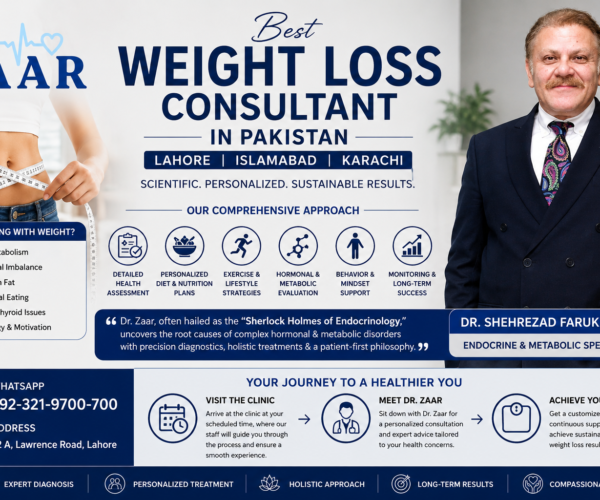
Best Weight Loss Consultant in Pakistan.
Achieving and maintaining a healthy weight is not simply about eating less or exercising more. For many people, weight management.
Read More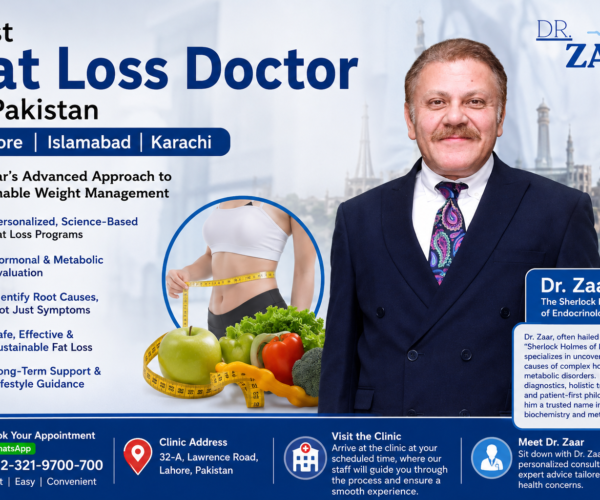
- August 6, 2026
Best Fat Loss Doctor in Pakistan.
Fat loss is not simply about eating less or exercising more. For many individuals, stubborn weight gain, obesity, and difficulty.
Read More